Pumapungo Museum Cuenca: Free Inca Ruins and Shrunken Heads
Halfway down Calle Larga, behind an unremarkable bank building, sits the one stop in Cuenca that gives you real Inca ruins, genuine shrunken heads and a macaw rescue in a single visit. And you pay exactly nothing for it.
The Pumapungo Museum in Cuenca, Ecuador is free to enter and combines a three-floor national museum with the largest Inca ruins inside any Ecuadorian city. It opens Tuesday to Friday 8:00 a.m. to 5:30 p.m. and weekends 10:00 a.m. to 4:00 p.m., closed Mondays. Plan 2 to 3 hours for the ethnographic halls, the Tomebamba ruins and the bird sanctuary.
Cuenca, the Volcanoes and the Galápagos: 14 Day Tour
Need to Know
- Cost: free, everything included (sign the visitor book)
- Hours: Tue to Fri 8:00 to 5:30 p.m., weekends 10:00 to 4:00, closed Mondays
- Time needed: 2 to 3 hours
- Where: Calle Larga y Huayna Capac, a 20-minute walk from Parque Calderon
- Bring: sunscreen for the gardens, a light layer for the air-conditioned halls, no flash for photos
What Is Pumapungo? (And Why It Matters)
Pumapungo means door of the puma, and 500 years ago this hillside was the ceremonial core of Tomebamba, the second capital of the Inca empire. Huayna Capac, the last great emperor before the Spanish arrived, was raised here. Before the Incas, it belonged to the Canari people, which is why Cuenca celebrates both heritages at once.
The Spanish pulled the stones apart to build churches, and the site sat under farmland until archaeologist Max Uhle started digging in the 1920s. Ecuador’s Central Bank took over in 1979 and built the museum on top. That is the short version of how a bank ended up owning shrunken heads.
Today the complex has three parts stacked down the hillside: the museum building on Calle Larga, the archaeological park below it, and the gardens with a bird sanctuary at the bottom, along the Tomebamba river. If you are ticking off things to do in Cuenca Ecuador, this is the one that covers history, nature and a free afternoon in a single stop.
Inside Museo Pumapungo: Floor by Floor
Museo Pumapungo is really three museums wearing one roof. Work top to bottom or bottom to top, but do not skip the second floor.
Ground Floor: The Coin Museum
The numismatic collection tells Ecuador’s money story from hammered colonial coins to the sucre and the 2000 switch to the US dollar. It sounds dry. It is not: the dollarization room explains, better than any economics class, why you are paying for empanadas in dollars this week.
Second Floor: Ethnography and the Shrunken Heads
This floor walks you through every region of Ecuador with life-size scenes: Afro-Ecuadorian houses from Esmeraldas, highland markets, Amazon dwellings. The famous case holds real tzantzas, ceremonial shrunken heads made by the Shuar people. Photos without flash are fine here, and the explanation panels treat the ritual with respect rather than shock value.
Look for the Carlo Crespi collection too. The Italian priest spent decades collecting artifacts in the southern Amazon, and in 2018 the museum recovered 6,445 archaeological pieces that had left the country illegally. Some of the best are displayed on this floor. Not sure where this fits in your itinerary? Send us your dates and we will sort the order out.
One more layer worth knowing as you walk these halls: almost everything here nearly left the country. Ecuador spent decades buying back and reclaiming collections that had been sold abroad, and the museum quietly became the vault where those recovered pieces live. When locals say Pumapungo is the most important museum outside Quito, this floor is what they mean.
Third Floor: Library and Rotating Exhibits
The top floor rotates seven or so temporary exhibits a year. The building hosted 37 original Salvador Dali works in 2019, so check what is on when you visit. There is also a research library with over 160,000 items if rain traps you inside.
TWO WEEKS, FULLY PLANNED
14 Day Ecuador and Galapagos Tour: Volcanoes, Cuenca and the Islands
Quito, Cotopaxi, Quilotoa, Chimborazo, Ingapirca and Cuenca, then a week on Santa Cruz and Isabela with a yacht day.
From $3,390 per person
View itineraryWalk the Pumapungo Ruins and Gardens
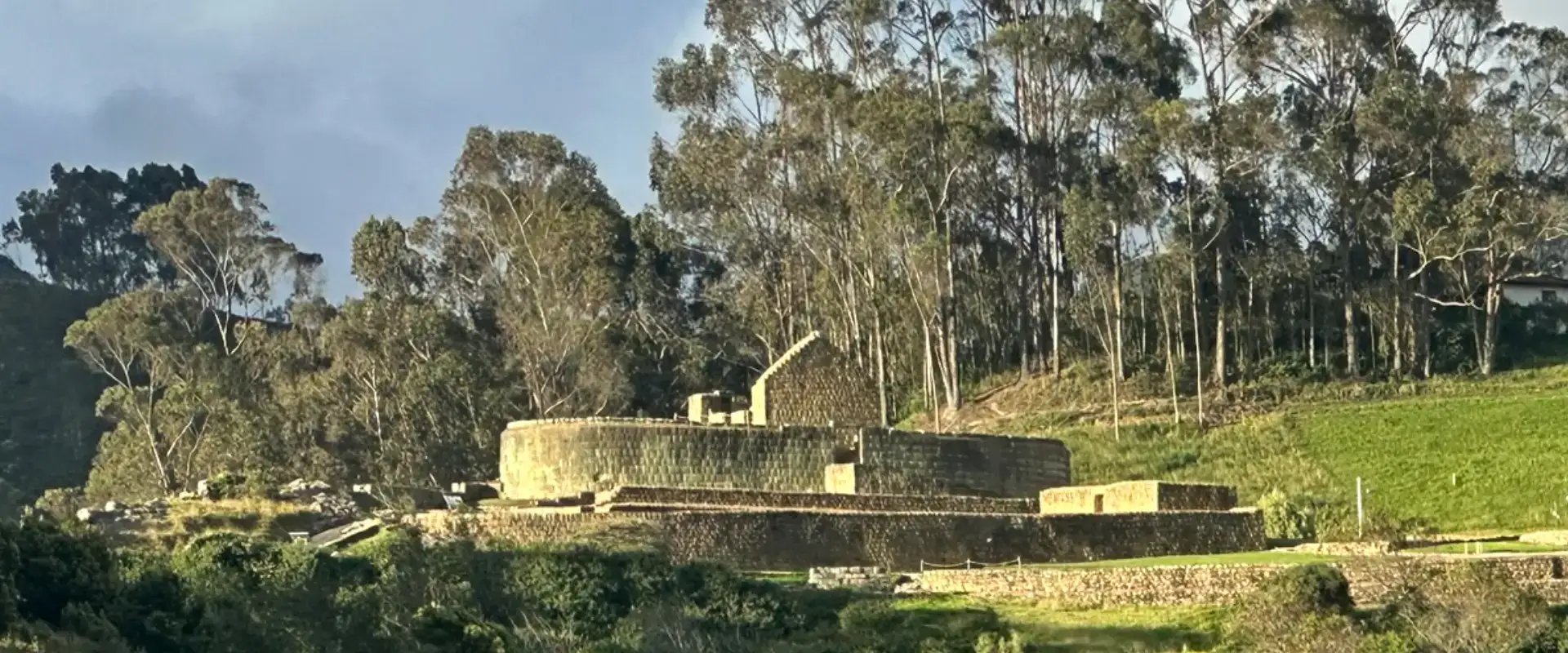
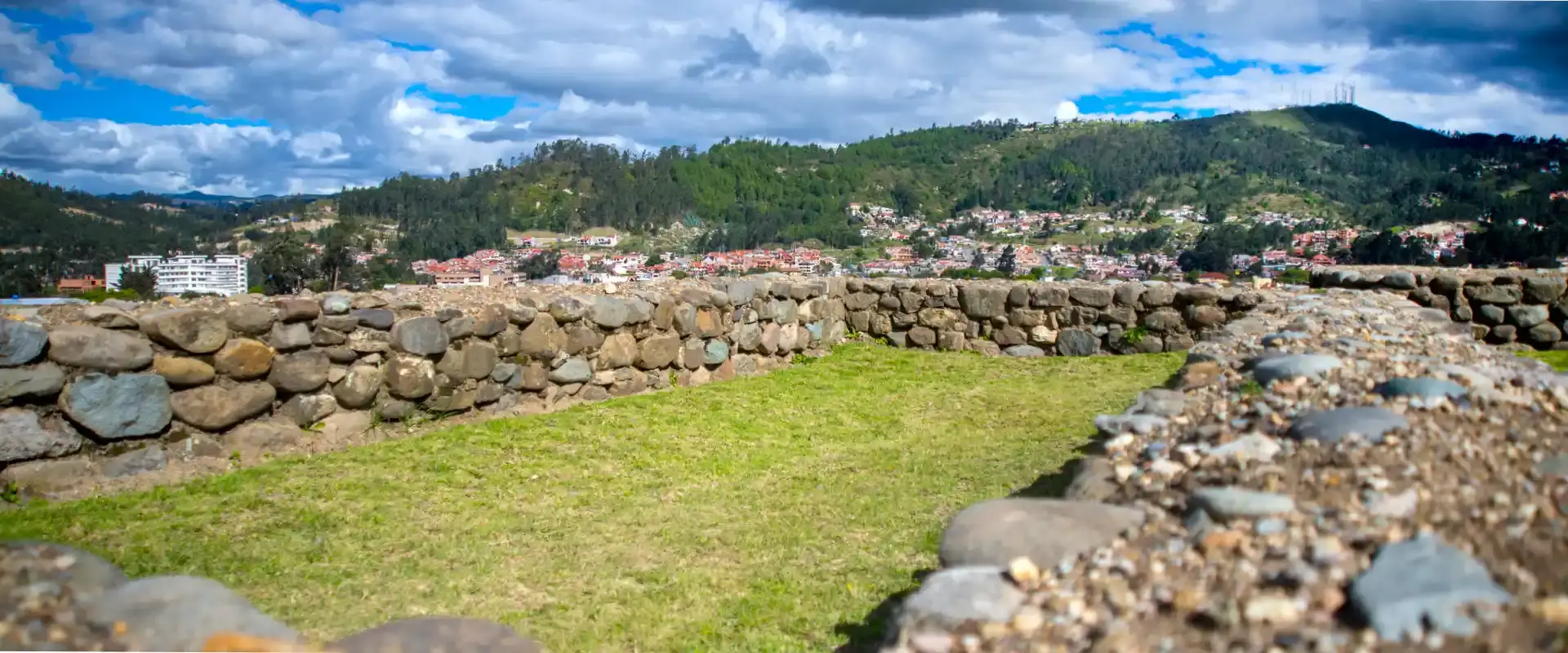
Exit the museum’s back door and the hillside opens into the archaeological park: foundation walls of the Qurikancha temple, a 30-meter tunnel that likely served as a mausoleum, a ritual bath and an Inca aqueduct that still waters the gardens below. These are the largest Inca remains south of the Ingapirca ruins, and you get them without the two-hour drive.
Follow the path down and the site turns green: terraces planted with amaranth, quinoa and corn the way the Incas farmed them, a small llama paddock, and more than 230 plant species in the ethnobotanical garden.
Reading the Ruins (What You Are Actually Looking At)
The walls look modest at first, knee-high foundations in neat lines. Context fixes that. The long terrace held the Qurikancha, the temple of the sun, aligned so ceremonies tracked the solstices; archaeologists believe parts of the complex worked as an astronomical observatory. The dark doorway in the hillside is the 30-meter tunnel, probably a mausoleum for local nobility.
Two details are easy to miss. The ritual bath near the terrace edge still shows its original stone channeling, and the Inca aqueduct beside it is not a replica: the same canal has moved water across this hillside for five centuries and still irrigates the gardens below. Stand at the terrace edge at the end, because the view over the Tomebamba valley is the one the Incas chose this hill for.
The Bird Sanctuary and the Llamas
At the bottom, a circular aviary rehabilitates macaws, parrots and even raptors rescued from trafficking. You walk beside scarlet macaws at eye level, which for most visitors ends up being the surprise highlight. The birds cannot be released, so the sanctuary doubles as their retirement home.
How Do You Get to Museo Pumapungo Cuenca?
Type Pumapungo Cuenca into Google Maps and it pins the main entrance at Calle Larga y Huayna Capac. From Parque Calderon it is a flat 20-minute walk down Calle Larga, doable with a coffee in hand. Some map listings label it Pumapungo Museum Cuenca Ecuador, which is the same place.
- Walking: 20 minutes from the center along Calle Larga (the pretty way)
- Taxi or inDriver: 2 to 3 dollars from anywhere central
- Tranvia: get off near the center and walk down; the line does not stop at the door
- The entrance most visitors never find: a lower garden gate on the Tomebamba river path, open Thursday to Sunday, lets you into the gardens and aviary without climbing to Calle Larga
Pumapungo Museum Hours: What Is Actually Right
Half the blogs online say the museum closes at 5:00, the official schedule says 5:30, and one site swears it closes Sundays. Here is the version confirmed by the museum itself: Tuesday to Friday 8:00 a.m. to 5:30 p.m., Saturday, Sunday and holidays 10:00 a.m. to 4:00 p.m., closed Mondays. Staff start shooing people from the ruins about 30 minutes before closing, so treat 3:00 p.m. as your last comfortable entry for the full circuit.
Mornings are quietest. Cuenca school groups arrive mid-morning on weekdays, and weekend afternoons bring local families for the birds. If you want the ruins to yourself, be at the door at opening.
Is the Guided Tour Worth It?
Tour platforms sell a guided Pumapungo visit for about 35 dollars. You do not need it to enjoy the site, since the signage is bilingual and this guide covers the layout. Where a guide earns their fee is the archaeology: the seques, the astronomical alignments and the Canari-versus-Inca layers are invisible without someone pointing at them. If you are already booking a Cuenca city tour, check whether Pumapungo is included before paying separately.
A middle path: the front desk sometimes has volunteer guides on weekday mornings, free with a tip. Ask when you sign in. And if Spanish is not a problem, the staff archaeologists occasionally run short talks in the ruins on culture dates like Inti Raymi in June, which beats any paid tour.
Pair It With the Rest of Calle Larga
Pumapungo anchors the eastern end of Calle Larga, so build a half day around it. Walk back toward the center past the Todos Santos ruins (a smaller, five-minute site), drop down the stone stairways to the Tomebamba river path, and finish with coffee on the Barranco. If it is your museum day, the Museo de las Conceptas and the Catedral Vieja are both on the way back.
For the bigger picture on the city, the Cuenca Ecuador guide maps out how Pumapungo fits into two or three full days, from the flower market to day trips like Ingapirca and Cajas.
Timing tip for the full half day: museum at 9:00, ruins and birds until noon, lunch on Calle Larga (the almuerzo spots near Todos Santos run 3 to 5 dollars), then the river path west as the afternoon light hits the Barranco houses. If you are visiting on a Thursday through Sunday, reverse it: start at the lower river gate with the gardens, then climb to the museum.
Rainy afternoon instead? The museum swallows three hours happily, and the third-floor library is one of the calmest rooms in Cuenca. Locals treat it as their bad-weather backup plan, and it works just as well for travelers.
Quick Answers
How much does it cost to go to the Pumapungo Museum?
Nothing. The Pumapungo Museum is completely free, including the ruins, the gardens and the bird sanctuary. You just sign the visitor book at the Calle Larga entrance. That makes it the best-value two hours in Cuenca.
What are the Pumapungo Museum hours?
Officially Tuesday to Friday 8:00 a.m. to 5:30 p.m., weekends and holidays 10:00 a.m. to 4:00 p.m., closed Mondays. Arrive before 3:00 p.m. if you want the museum and the ruins without rushing.
Are the shrunken heads at Museo Pumapungo real?
Yes. The tzantzas on the second floor are genuine Shuar shrunken heads from the Amazon, displayed with context about the ritual behind them. They are the single most talked-about exhibit in the building.
How long do you need at Pumapungo?
Plan on 2 to 3 hours: about an hour for the museum floors, then another hour for the ruins, terraces and bird sanctuary. Add 30 minutes if temporary exhibits are on.
What does Pumapungo mean?
It means door of the puma in Kichwa. The site was the ceremonial heart of Tomebamba, the northern Inca capital where Huayna Capac grew up, built over an earlier Canari settlement.
Is Pumapungo good for kids?
Surprisingly yes. The macaws and rescued birds, the llamas on the lower terraces and the tunnel in the ruins keep kids moving while you look at the collections.
Is the Pumapungo Museum wheelchair accessible?
Honestly, no. The museum floors involve steep stairs without handrails, and the path down to the ruins is uneven. The garden level has its own gate on the river path, which helps for a partial visit.
Can you take photos inside?
Yes, without flash, in most permanent halls. Some temporary exhibits restrict photos, so check the sign at each room entrance. Outside in the ruins you can shoot freely.
Is the Pumapungo Museum Cuenca’s most famous attraction?
It is the most complete one outside Quito. Between the ethnographic halls, the coin museum and the only major Inca ruins inside a city center, most travelers rate it above anything else they visit in Cuenca.
Cuenca rewards slow travel, and Pumapungo is the proof: the best afternoon in the city costs nothing at all. If the Andes half of Ecuador wins you over, the islands are the other half of the story.
Before You Go
- Go Tuesday to Friday at 8:00 a.m. or right after lunch; never on a Monday
- Budget 2 to 3 hours and zero dollars
- Second floor first if you are short on time (tzantzas and ethnography)
- Photos without flash; check signs in temporary halls
- Steep stairs inside, so not wheelchair friendly; use the Thu to Sun river gate for the gardens only
- Pair it with Todos Santos and the Barranco walk
- Official info lives at pumapungo.gob.ec; deeper history on Wikipedia