Ingapirca from Cuenca: The Ultimate Guide to Ecuador’s Inca Ruins (2026)
Ingapirca is the largest of the Inca ruins in Ecuador, two hours north of Cuenca, and almost everything the older guides tell you about visiting has changed: the entrance now costs $2 with a mandatory guide included, the site closes Mondays and Tuesdays, and since early 2025 there is an online reservation system with capped group turns. I have pulled the current rules from the official heritage institute so you can plan around reality, not 2019. If you would rather not deal with buses, Ingapirca is a guided stop on our 14 Day Ecuador and Galápagos Tour, on the drive from Chimborazo to Cuenca.
This guide covers the fees, the direct bus, the honest tour-versus-bus math, and what the ruins actually deliver. It is part of our complete guide to Cuenca Ecuador.
Ingapirca at a Glance: Fees, Hours and the New Reservation Rule
- Entrance: $2 adults · $1 students with ID · free under 12, over 65 and visitors with disabilities. Guided tour included.
- Days: Wednesday to Sunday. Closed Monday and Tuesday.
- Turns: guided groups roughly every 30 minutes from 9 am, capped around 20 people.
- Reservations: online via the heritage institute since February 2025; walk-ups wait for a free slot, longest on holidays.
- From Cuenca: ~2 to 2.5 hours each way, by 9 am direct bus ($3.50) or day tour ($49-63 with stops).
- Altitude: about 3,200 meters, noticeably higher and colder than Cuenca. That is 600 m above Cuenca, so it is a real step up: the Cuenca elevation guide explains how to sequence it.
- Languages: included guides run Spanish-first; English turns exist but are not guaranteed every 30 minutes, so ask at the ticket desk.
Source for fees and rules: the official Instituto Nacional de Patrimonio Cultural, which administers the Ingapirca Ecuador complex. If another article quotes $6, it is out of date.
Ingapirca, Cuenca and the Galápagos: 14 Day Ecuador Tour
What Makes the Ingapirca Ecuador Ruins Special
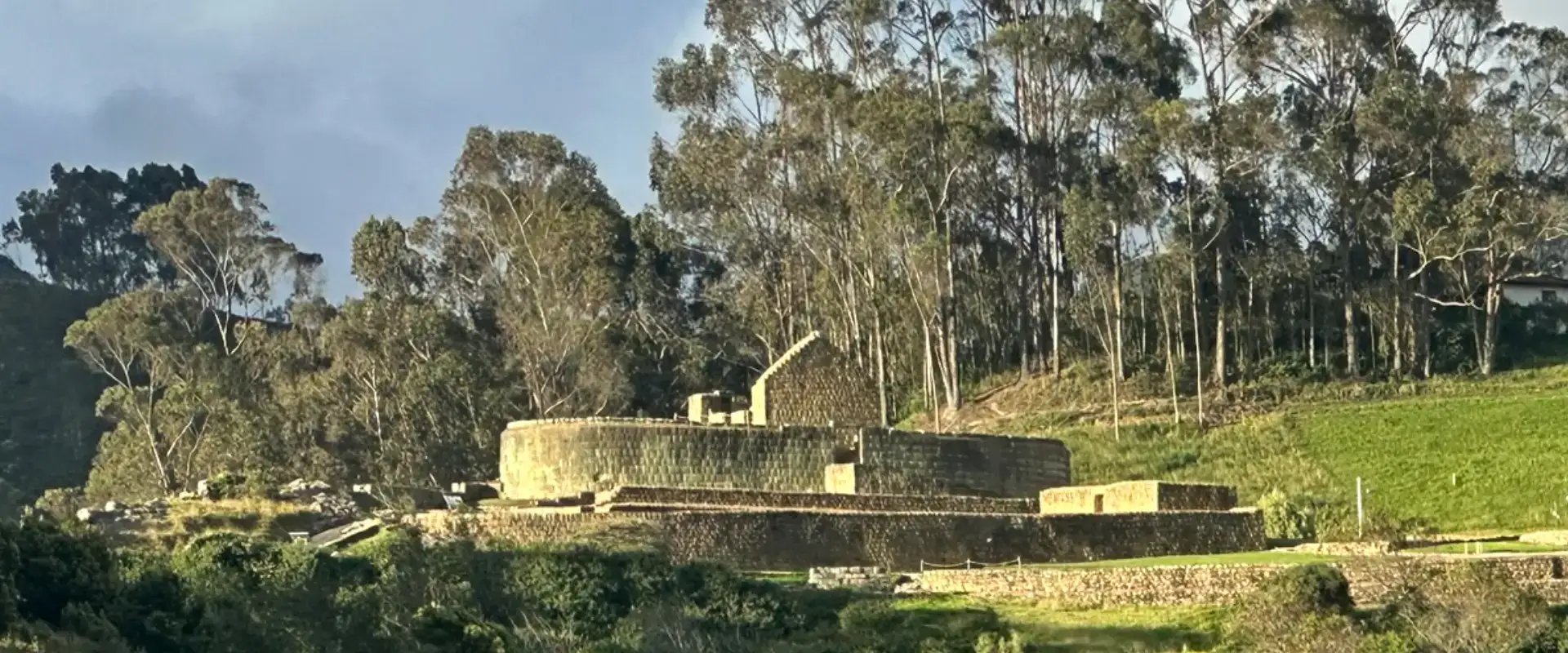
The Ingapirca ruins are the only major site anywhere that shows two Andean civilizations agreeing instead of one erasing the other. The Cañari were here first, with a moon-oriented sacred site; when the Inca expanded north in the 1400s, the union came through alliance and marriage rather than annihilation, and the architecture kept both signatures. The showpiece is the elliptical Temple of the Sun, engineered so that solstice light strikes its doorways, which is why the June Inti Raymi festival packs the site; the December solstice, Kapak Raymi, is marked across Cañar province as well. Not sure how to fit this into a trip? Tell us your dates and we will map it out.
The guided circuit adds the Cañari tomb, the Acllahuasi where chosen women lived, storehouses along the old Ingañan road, and the Cara del Inca, a face in the rock cliff a short walk away. Resident llamas mow the lawns and pose without complaint, and the on-site archaeological museum gives the back story in twenty minutes. The ruins owe their condition to history, not neglect: the complex was damaged in the Inca civil war of 1529-1532, its stones were later quarried for Cuenca churches and haciendas, La Condamine described it scientifically in 1739, and restoration finally opened it to visitors in 1966.
How to Get to Ingapirca from Cuenca
The classic budget route is the direct Transportes Cañar bus from Cuenca’s Terminal Terrestre at 9 am, about $3.50 plus a ten-cent turnstile, arriving just after 11.
A second departure around 12:20 pm is widely reported on weekdays but inconsistently confirmed, which is exactly the point this article keeps making: verify times at the terminal. The catch is the return: the reliable direct bus back leaves early afternoon, and schedules genuinely change, so confirm the last departure the moment you arrive, or use the blue-and-white local buses as the reliable escape route: Ingapirca to El Tambo ($0.75, 25 minutes), El Tambo or Cañar onward, and Cuenca-bound buses every twenty minutes from Cañar until evening. Self-driving is an easy 80 km on good roads if you rented a car for the southern Andes.
Ingapirca Tour or Bus? The Honest Math
Here is the math nobody lays out. The bus costs about $7 round trip but commits you to six hours of transit for a two-hour visit, hostage to a schedule that changes. An organized ingapirca tour runs $49 to $63 from Cuenca and bundles hotel pickup, the entrance, lunch and, in most combos, Gualaceo’s market and Chordeleg’s silver workshops on the return leg. Alone and unhurried, take the bus. Two people with three days in Cuenca? The tour turns a logistics day into a full southern-highlands day, and that is usually the better trade.
Two upgrades worth knowing: if you can pick the day, pick Sunday, when operators add the Cañar indigenous market, fifteen minutes away, where ikat ponchos are still everyday dress rather than souvenirs. And if you want the site utterly to yourself, sleep at Posada Ingapirca, a restored 200-year-old hacienda 300 meters from the ruins with fireplaces and an Andean restaurant, and walk in at opening before the Cuenca vans arrive.
TWO WEEKS, FULLY PLANNED
14 Day Ecuador and Galapagos Tour: Volcanoes, Cuenca and the Islands
Quito, Cotopaxi, Quilotoa, Chimborazo, Ingapirca and Cuenca, then a week on Santa Cruz and Isabela with a yacht day.
From $3,390 per person
View itineraryIs Ingapirca Worth It? The Machu Picchu Question
Someone in your group will ask, so answer it before you go: Ingapirca is not Machu Picchu, and it is not trying to be. It is a compact, quiet, genuinely important archaeological site where the story, two cultures sharing a mountain, is better than the skyline. If you measure it as a half-day out of Cuenca with a $2 ticket, llamas and a solstice-aligned temple, it over-delivers. If you expect a lost city in the clouds, save the disappointment and book Peru separately.
Practical Tips: Altitude, Weather and What to Bring
- Altitude: 3,200 m. If you just arrived from sea level, do Ingapirca on day three, not day one; our Cuenca elevation notes explain the acclimatization ladder.
- Weather: four seasons in two hours. Sun protection and a rain layer in the same daypack, always.
- Cash: the ticket, the $2.50 almuerzo and the craft stalls are cash-only country.
- Timing: aim for the first turns after 9 am; clouds and tour groups both build after noon.
- Season: June to September runs driest and clearest; October to May brings afternoon rain. Inti Raymi week around June 17-23 is spectacular and packed, so reserve.
- Reported site rules: drones need prior permission, large backpacks go into free lockers, and food stays outside the complex; confirm on site.
- Safety: the route and site are relaxed; the normal rules from our Cuenca safety guide cover it.
Frequently Asked Questions
How much does Ingapirca cost to visit?
$2.00 for adults, $1.00 for students with ID, and free for children under 12, seniors 65+ and visitors with disabilities, with the guided tour included in the ticket. That makes Ingapirca the cheapest major Inca site on the continent by a wide margin.
Is Ingapirca open every day?
No. The complex opens Wednesday through Sunday and closes Monday and Tuesday. Guided visits leave roughly every 30 minutes from 9 am, with the circuit running until late afternoon. Build your Cuenca itinerary around those days.
Do I need to book Ingapirca in advance?
Since February 2025, yes, ideally. The site runs an online reservation system with turns capped at about 20 people, and walk-ups wait for a free slot. On normal weekdays that wait is short; on holidays and around the June solstice, book ahead.
How do I get to Ingapirca from Cuenca by bus?
Transportes Cañar runs a direct bus from Cuenca’s Terminal Terrestre at 9 am for about $3.50 one way, taking a bit over two hours. Return times change often, so confirm the last bus at the terminal, or ride to Cañar town and connect by local bus or taxi.
Is an Ingapirca tour from Cuenca worth it versus the bus?
If your time is tight, yes. The DIY bus costs about $7 round trip but eats six hours of transit for a two-hour visit. Tours from roughly $49 to $63 add hotel pickup, the entrance, lunch and usually Gualaceo and Chordeleg on the way back, which the bus cannot do.
How long do you need at Ingapirca?
One to two hours: the guided circuit takes about 45 minutes, then add the archaeological museum, the Cara del Inca viewpoint and photo time with the llamas. Most visitors pair it with lunch at the site’s $2.50 almuerzo restaurant.
Is Ingapirca like Machu Picchu?
No, and expecting that ruins the visit. Ingapirca is a two-hour archaeological stop, not a lost city. Come for what Peru cannot give you: the Temple of the Sun built over a Cañari sacred site, the story of two cultures merging, and ruins you will share with dozens of people instead of thousands.
Can you visit Ingapirca without a guide?
No. Entry is by guided group only, and the institutional guide is included in your $2 ticket. External guides are available for a fee if you want a deeper specialist tour. Guides run Spanish-first, so ask the desk for the next English turn, and note the Sun Valley viewpoint loop with the Cara del Inca is self-guided.
What should I bring to Ingapirca?
The site sits at about 3,200 meters, higher than Cuenca, so bring sun protection, a rain layer and water in the same daypack; mountain weather flips fast. Carry small cash for the ticket, lunch and crafts, and wear shoes that handle wet grass.
Make Ingapirca One Chapter of a Bigger Route
The travelers who enjoy Ingapirca most are the ones who reach Cuenca rested, with the Andes already behind the windshield. Our 4-day Cotopaxi to Cuenca journey delivers you to the southern capital with time for the ruins, the domes and the hot springs.