
Where Are Panama Hats Made? The 3 Million Dollar Answer
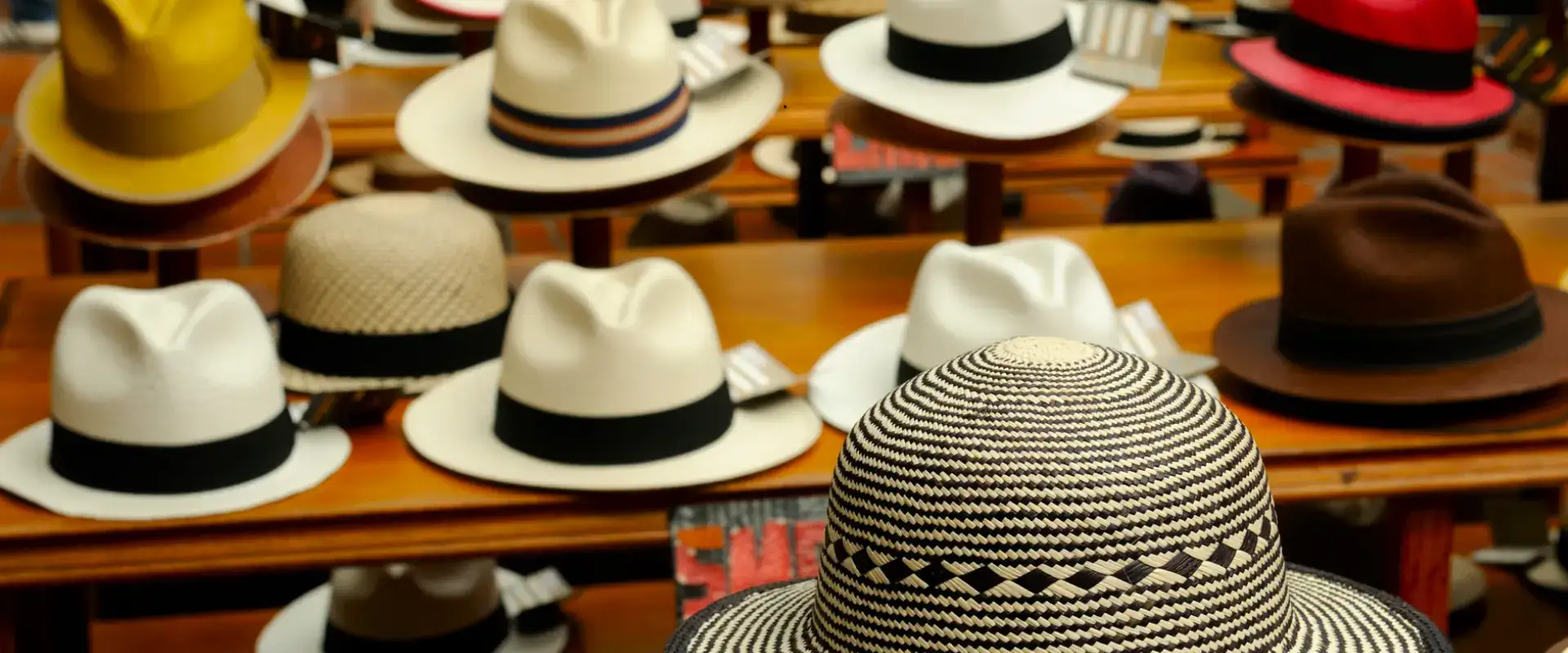
The most expensive hat ever woven took eight months of work, holds around 4,000 weaves per square inch, and has been valued in the millions. It was not made anywhere near Panama. It came from a coastal Ecuadorian town of dusty streets called Montecristi, and the man who wove it, Simon Espinal, still lives nearby.
So where are panama hats made? Every genuine panama hat is made in Ecuador, and always has been. The two centers are Montecristi on the coast, home of the legendary superfino, and Cuenca in the Andes, which produces most of the hats sold worldwide. The name comes from the Panama Canal, where the hats were sold, not woven. UNESCO added Ecuadorian toquilla weaving to its cultural heritage list in 2012.
Cuenca, the Volcanoes and the Galápagos: 14 Day Tour
Need to Know
- Real origin: Ecuador only (Montecristi, Cuenca, Chordeleg, Sigsig)
- Material: toquilla straw from the Carludovica palmata palm
- Price in Ecuador: 20 dollars for standard, thousands for a superfino
- Where to watch weaving: Homero Ortega in Cuenca, workshops in Montecristi, the Sigsig co-op
- UNESCO status: Intangible Cultural Heritage since 2012
Where Are Panama Hats Made, Then?
In Ecuador. Not partly, not originally, but entirely: the panama hat is an Ecuadorian product from the palm to the final press, and it has been since weavers in Manabi province started shaping toquilla straw into hats in the 1600s.
Two regions share the craft today. The coastal towns of Montecristi and Jipijapa produce small numbers of extraordinary hand-woven hats, including the superfino grade that collectors chase. Cuenca and the surrounding Azuay villages, weaving since the 1830s, produce the volume: most panama hats on the planet passed through a Cuenca finishing house. The two styles even feel different in your hands, and we will get to that in the grades section.
Everything labeled a panama that comes from anywhere else, and plenty does, is an imitation. Taiwan spent decades exporting paper look-alikes, and fast fashion still does. The FAQ below covers how to spot them.
What Is a Panama Hat, Exactly?
Fair question, because the answer is stricter than most people expect. Ask a weaver what is a panama hat and you get one line: a hat hand-woven in Ecuador from toquilla straw. Three conditions, all required. Not sure how to fit this into a trip? Tell us your dates and we will map it out.
- The fiber: toquilla straw, split from young leaves of Carludovica palmata, a palm-like plant that thrives in Ecuador’s coastal lowlands
- The technique: woven by hand, spiraling out from the center crown, never machine-made
- The origin: Ecuador, where the plant, the technique and five centuries of practice all live
The local name says it plainly: sombrero de paja toquilla, the toquilla straw hat. Panama never enters into it, except on the label foreigners insisted on.
Panama Hat History: 1855 Paris to Roosevelt to UNESCO
Panama hat history is really the story of a branding accident that Ecuador has been correcting ever since.
Weaving was already a coastal cottage industry in the 1600s. By the 1830s, an enterprising government pushed the craft into the Andes: Cuenca opened its first hat workshop, and by 1845 production in Azuay was organized enough to export seriously. Around the same time, merchant Manuel Alfaro set up in Panama, the crossroads of the Americas, and sold Ecuadorian hats to California Gold Rush travelers crossing the isthmus. Buyers asked where they got the hat. The answer was Panama, and the name stuck. So if you have ever asked yourself why are panama hats called panama hats, the answer is pure geography: buyers named the hat after the shop, not the workshop.
In 1855, a Frenchman named Philippe Raimond showed Ecuadorian hats at the Paris World Fair, where they caused a small sensation, listed in the catalogue with no mention of Ecuador at all. Half a century later, Panama Canal laborers wore the hats by the thousands against the sun, and in 1906 Theodore Roosevelt was photographed at the Canal in a black-banded panama. One photo, global fame, wrong country on the name.
Ecuador got its recognition eventually: in 2012, UNESCO inscribed the traditional weaving of the Ecuadorian toquilla straw hat on its Intangible Cultural Heritage list. The document never once says Panama.
How a Panama Hat Is Made (Step by Step)
Asking where are panama hats made only gets you half the story, because a real panama passes through more hands than most travelers imagine. The short version:
TWO WEEKS, FULLY PLANNED
14 Day Ecuador and Galapagos Tour: Volcanoes, Cuenca and the Islands
Quito, Cotopaxi, Quilotoa, Chimborazo, Ingapirca and Cuenca, then a week on Santa Cruz and Isabela with a yacht day.
From $3,390 per person
View itinerary- 1. Harvest: young toquilla shoots are cut on the coast before the leaves open
- 2. Splitting: the leaves are stripped by hand into straw, the finer the split, the finer the future hat
- 3. Boiling and drying: the straw is boiled, sun-dried and sometimes bleached over sulfur
- 4. Weaving: the weaver starts at the crown center and spirals outward, days for a standard hat, months for a superfino; Montecristi weavers famously work at dawn or by moonlight, when humidity keeps the straw supple
- 5. Finishing: specialist trades take over, the apaleador who pounds the hat soft, the cortador who trims loose straw, the planchador who irons it, and the blocker who steams the final shape
Those finishing trades are their own small professions in Cuenca and Montecristi, passed down in families. When you pay for a good hat, you are paying six or seven artisans, not one.
Hat Grades: What Weaves Per Inch Actually Mean
Grades confuse everyone because sellers invent their own names. Ignore the labels and count the weave. Hold the hat up to the light: the tighter and more even the rings of weave, the finer the hat.
- Standard (roughly 100 weaves per square inch): the 20 to 60 dollar hats, honest quality, great gifts
- Fino (several hundred weaves): noticeably silkier, 80 to 300 dollars in Ecuador
- Superfino (500 to over 1,000 weaves): feels like linen, priced from several hundred dollars into the thousands
The Montecristi Panama Hat: The Finest Weave on Earth
The Montecristi panama hat is its own category. Only a handful of master weavers in and around the town can produce the top superfinos, and their yearly output fits on one shelf. Simon Espinal, widely considered the best living weaver, has produced hats around 4,000 weaves per square inch that take eight months each; luxury dealers have sold Montecristis for 25,000 dollars, and the finest example ever woven has been valued in the millions. A genuine Montecristi holds water when woven at that density. That is not a sales trick, it is physics.
Buying one in Montecristi itself costs a fraction of the boutique price abroad, which is exactly why hat pilgrims fly into Manta.
Where to Watch Weavers and Buy the Real Thing
Knowing where are panama hats made is one thing; standing next to the weaver is another. You can buy a genuine panama in any Ecuadorian airport. But watching one being born is a better story, and these are the places to do it.
Cuenca: Homero Ortega and the Museum Factories
Cuenca is the easiest place in Ecuador to see the whole process under one roof. Homero Ortega, weaving since 1899 and now run by the fifth generation, gives free factory-museum visits where you watch blocking, pressing and grading, then lose an hour in the showroom. La Paja Toquilla and the Barranco museum shops are nearby. It slots neatly into a Cuenca stay, and our things to do in Cuenca Ecuador guide shows where it fits between the old town and the river.
Montecristi: The Pilgrimage
For the superfino at the source, fly to Manta and taxi 20 minutes inland. Montecristi is a small, hot, unpolished town where the finest hats on earth emerge from ordinary front rooms. Workshops around the plaza sell directly, and if you ask respectfully, someone will show you a weave in progress at dawn. Bring cash and patience, and know that a real superfino here still costs serious money, because it should.
Chordeleg and Sigsig: The Co-op Route
An hour from Cuenca, the craft villages of the Azuay hills weave for the Cuenca finishing houses. Chordeleg mixes hat weavers with its better-known jewelry workshops. In Sigsig, the Maria Guadalupe women’s cooperative weaves and sells directly, and buying there puts the money straight into the weavers’ hands. Almost no guidebook sends you to Sigsig, which is precisely the reason to go.
How Much Should You Pay?
Here is the uncomfortable arithmetic nobody prints on the price tag. Reports from the trade put a weaver’s pay for a months-long superfino at a few hundred dollars, while the same hat can retail abroad for dozens of times that. The middle of the chain, exporters, blockers, boutiques, absorbs the rest.
- In Ecuador: 20 to 60 dollars standard, 80 to 300 fino, several hundred and up for superfino
- Abroad: multiply by two to five for the same grade
- Best value for money: buy the middle grades in Cuenca; buy superfinos in Montecristi or Sigsig, where more of your money reaches the weaver
If fair pay matters to you, buy from factory-museums, cooperatives or the weavers themselves. Your hat will come with a face attached to it.
How to Spot a Fake
- Check the spiral: a real panama grows in fine concentric rings from the crown center; machine hats show straight, uniform rows
- Read the label: made in Ecuador or nothing; China, Taiwan and paper blends are costume hats
- Feel the straw: toquilla is cool, flexible and faintly ivory, not shiny plastic-smooth
- Look at the price: a genuine hand-woven hat cannot cost 10 dollars, someone always pays the difference
Quick Answers
Why are panama hats called panama hats?
Because of geography, not origin. Ecuadorian merchants shipped the hats through Panama, where Gold Rush travelers and later Canal workers bought them. People named the hat after the place they found it, and the 1906 photo of Theodore Roosevelt wearing one at the Canal sealed the name forever.
Are panama hats made in Panama?
No, and they never have been. Every genuine panama hat is woven in Ecuador, mainly around Montecristi on the coast and Cuenca in the Andes. Anything labeled made in Panama, China or Colombia is an imitation of the Ecuadorian original.
How much does a panama hat cost in Ecuador?
Roughly 20 to 60 dollars for a decent standard-grade hat in Cuenca or Quito, 80 to 300 dollars for a fino, and from several hundred into the thousands for a Montecristi superfino. The same hats cost two to five times more abroad.
How long does it take to weave a panama hat?
A standard hat takes a weaver a few days. A fino takes weeks. A Montecristi superfino can take up to 8 months of daily work, which is why collectors treat the best examples like art.
What is a panama hat made of?
Toquilla straw, the split young leaves of the Carludovica palmata palm, which grows in coastal Ecuador. The straw is boiled, dried and sometimes sun-bleached before weaving. No other fiber counts as the real thing.
Can you fold or roll a panama hat for travel?
Only if the seller confirms it is a rollable weave. Softer-grade hats roll into a tube for a suitcase and recover with steam. Never fold a fino or superfino, since sharp creases can crack the straw.
Who made the panama hat famous?
Theodore Roosevelt, photographed in one at the Panama Canal in 1906, plus a century of Hollywood. But the hat had already won a medal-level reputation at the 1855 Paris World Fair, half a century earlier.
Are panama hats waterproof?
No. Light drizzle is fine, but a soaked hat loses its shape. If it gets wet, let it dry naturally on a flat surface, never on a heater.
Where did the panama hat originate?
In coastal Ecuador, where weavers in Manabi province were making toquilla hats by the 1600s, long before Panama existed as a republic. UNESCO recognized the Ecuadorian weaving tradition in 2012.
The panama hat is Ecuador’s most famous export wearing another country’s name, and seeing one woven, on the coast or in the Andes, turns a souvenir into a story. If crafts are your thing, the markets of Quito are the other half of that shopping day.
Before You Go
- Panama hats are made in Ecuador, full stop; say sombrero de paja toquilla and locals will smile
- Watch the process free at Homero Ortega in Cuenca; go to Montecristi for the superfino source
- Sigsig’s women’s co-op is the buy that helps most, and almost nobody goes
- Count weaves against the light, ignore invented grade names
- Expect 20 to 60 dollars for a good standard hat in Ecuador
- Only roll a hat for travel if the seller confirms the weave allows it
- The UNESCO listing since 2012 covers the Ecuadorian weaving tradition, not Panama