4 Best Markets in Quito Ecuador: An Insider Guide to Shop Like a Local
The best markets in Quito Ecuador run from chaotic local produce halls to artisan stalls stacked with alpaca sweaters and Panama hats. This guide covers four you will actually use — Feria Libre del Tejar, Mercado Central, the La Mariscal artisanal market and Mercado San Francisco — with real prices, opening hours, and how to haggle without overpaying.
Spend one Sunday morning at Feria Libre and you will get why a Quito market beats any mall — the noise, the mountains of tropical fruit, the friendly haggling. Here is how to work all four like a local, plus the rookie mistakes most first-timers make at Quito markets.
Quito’s markets are where locals actually shop — not tourist traps but real neighborhood hubs where you’ll find everything from fresh produce to handwoven textiles. The main markets in Quito include Mercado Central in the Historic Center, Feria Libre del Tejar in the northern neighborhoods, La Mariscal Artisan Market for crafts and souvenirs, and the famous Otavalo Market just 2 hours north. Markets typically open 7 AM to 6 PM, with mornings offering the freshest selection.
Ecuador & Galápagos Tours of 9 to 14 Days
Feria Libre del Tejar: The Real Deal
Of all the markets in Quito, this is the one locals actually shop at every week.
This’s Quito’s massive outdoor market and the most authentic market experience you can have. It happens primarily on Sundays, though smaller versions exist other days. We’re talking thousands of vendors, tens of thousands of people, and complete sensory overload in the best way.
What to Expect
Feria Libre sprawls over multiple blocks and neighborhoods. There’s literally everything: produce, clothing, electronics, kitchenware, toys, plants, flowers, meat, seafood, ready-made food, drinks, and things you don’t even know you need. Sections aren’t clearly marked; they evolve organically as you walk through.
Energy level: Chaotic, loud, crowded, and totally overwhelming if this’s your first market. Most locals spend 1-2 hours max just picking up what they need and getting out. But it’s completely safe if you stay aware and keep valuables secure.
Vibe: Genuinely local. There’s almost no English spoken, most people aren’t tourists, and it’s just… real. No pretense, no Instagram moments, just commerce and community.
When to Go
Best time: 7am-10am Sunday. You get the best selection, most everything’s fresh, and it’s less chaotic than midday. Parking’s also easier early.
Okay time: 10am-1pm. Still decent selection but getting crowded and picked-over.
Avoid: After 1pm or evenings. Things get trashed, selection’s depleted, and you lose the market energy.
Other days: A smaller market exists Thursday-Saturday, but Sunday’s the real deal. If you can only go one day, make it Sunday.
What to Buy at Feria Libre
Produce: Insanely cheap and fresh. $1-3 gets you several pounds of vegetables. Avocados, tomatoes, potatoes, corn, plantains, everything seasonal. Quality’s excellent because it’s mostly from local farms. Planning the wider trip? Send us your dates and we will put the route together.
Flowers: Beautiful arrangements, incredibly cheap. $2-5 for bouquets that’d cost $25 in the US. Vendors will make custom arrangements if you ask.
Textiles & clothing: New and secondhand clothing, textiles, fabrics. Quality varies widely; look carefully. Haggling works here—vendors expect it.
Food to eat: Vendors prepare food on the spot. Empanadas, fresh juice, breakfast items, ready-made dishes. It’s delicious but use judgment about hygiene if you have a sensitive stomach.
Skip: Electronics, unless you really know what you’re doing. Counterfeit goods exist, and return policies are non-existent.
Safety at Feria Libre
Pickpockets work these crowds. Keep valuables in front pockets or money belt. Don’t carry expensive phones dangling out. Leave jewelry at your hotel. Don’t flash large amounts of cash.
If possible, go with someone. The market is generally safe, but traveling alone in crowded markets increases the risk. Having a guide or companion is very helpful.
Stay in main areas. The market extends into neighborhoods; stick to the main market sections where there are crowds and activity.
Mercado Central: The Manageable Market
If the bigger markets in Quito feel overwhelming, start here — it is compact and easy to read.
If Feria Libre feels overwhelming, Mercado Central’s your alternative. It’s structured, smaller, and gives you actual market experience without the chaos.
Location: Near Old Town, easy to find and access. Usually has good parking nearby.
Layout: Four-story building with distinct sections: flowers (ground floor), produce (second floor), seafood and meat (third floor), and restaurants (fourth floor with a food court).
Hours: Open daily, roughly 6am-6pm. Some vendors close earlier, but core market operates all day.
Vibe: Working-class market for locals doing actual shopping. Touristy enough that some English’s spoken, structured enough that you can navigate it, real enough that it’s genuinely interesting.
What to Buy at Mercado Central
Everything Feria Libre has but organized better. Produce’s fresher earlier in the day. Flowers are beautiful and cheap. Seafood’s excellent quality. The food court upstairs is perfect for lunch—sit, eat authentic Ecuadorian dishes, watch the market from above.
Pro Tips for Mercado Central
Early morning shopping (6-8am): Best selection, prices aren’t negotiable yet but quality’s peak.
Price negotiation: Less negotiation here than Feria Libre because prices are more standardized. But for bulk purchases or if you’re buying multiple items, polite haggling sometimes works.
Lunch at the food court: Go upstairs where restaurants line the perimeter. Order comida criolla (traditional food), sit, eat well for $4-8.

START IN QUITO, END IN THE GALÁPAGOS
9 Day Ecuador and Galapagos Tour: Andes, Amazon and Santa Cruz
Quito, Cotopaxi, Quilotoa, Baños and the Amazon with your own guide, then three nights on Santa Cruz with tortoises, beaches and snorkeling.
From $1,990 per person
View itineraryArtisan Markets in Quito & Crafts
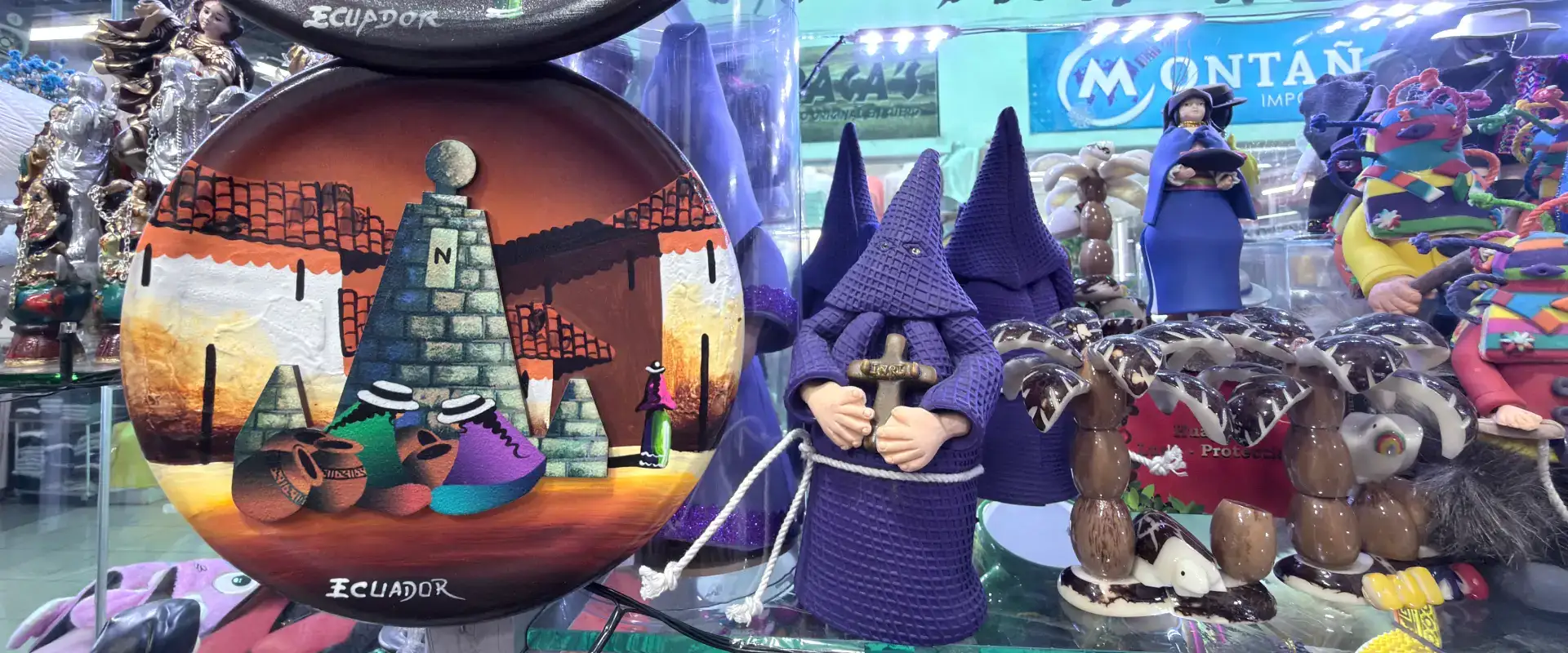
The big three for crafts are the La Mariscal artisanal market near Plaza Foch, Mercado San Francisco in the Old Town, and Santa Clara for a more local feel. Expect alpaca sweaters, Panama hats, woven textiles and silver.
La Ronda: We covered this separately, but it’s essentially an upscale artisan market with galleries, crafts, textiles, and jewelry. More touristy, higher prices, but genuinely good quality.
Plaza Grande area markets: Outdoor stalls sell handicrafts, textiles, and indigenous items. Prices higher than Feria Libre but lower than La Ronda. Quality’s good, selection decent.
Mercado Iñaquito: where the north of the city shops
If you are staying in the north — around La Carolina or the business district — Iñaquito is the market you can actually walk to. It is bigger and more spread out than Mercado Central, and it leans towards produce: fruit and vegetables, meat, seafood, plus regional cheeses, chocolate and coffee from around the country. It is a working neighbourhood market rather than a sight, which is exactly the point.
Parque El Ejido: the weekend art fair
This one only exists on weekends. Parque El Ejido, on the edge of the old town, fills up with painters, sculptors and craftspeople selling their own work, and you are usually buying from the person who made it. It is the most photogenic market in Quito and the easiest to combine with a morning in the historic centre.
Haggling & Negotiation Tips
Bargaining is part of the fun at most markets in Quito, though the rules shift from stall to stall. At produce stalls, ask for “yapa” — the local custom where the seller throws in an extra fruit or vegetable as goodwill (you don’t pay for it). For handicrafts at La Mariscal artisan stalls, expect to knock 25-50% off the initial price, but never haggle at mercados de abasto (food markets) — prices are already low and bargaining is considered rude.
Where haggling works: Feria Libre (especially clothing, textiles, non-food items), open-air markets, craft vendors. Mercado Central’s prices are more fixed.
How to negotiate: Ask “Is this your best price?” or “Can you do better on price?” politely. Vendors expect negotiation. A 10-15% reduction’s typical for multiple items or in large markets.
What not to negotiate: Fresh produce, cooked food, anything in actual shops (as opposed to market stalls). Also, if a price is already ridiculously cheap, don’t haggle further.
Haggling etiquette: It’s a social interaction, not warfare. Smile, be friendly, speak Spanish if you can. Aggressive haggling’s considered rude. The vendor’s trying to make a living; you’re both doing business.
Market Food Safety
Street food is half the reason to visit the markets in Quito, and it is safe if you know what to look for.
Generally safe: Market food’s prepared fresh and eaten immediately. It’s a core part of Ecuadorian food culture and generally fine for most people.
Use judgment: If you’ve got a sensitive stomach or are prone to traveler’s diarrhea, be cautious. Choose vendors with high turnover and clean-looking setups.
What’s safest: Hot food freshly cooked, fresh fruit and vegetables, bread, boiled or peeled items. Avoid anything that’s been sitting out for hours.
Try everything: Seriously. Empanadas, fresh juice, ceviche from market stalls, grilled items. This’s authentic Ecuadorian food culture. Your stomach’s probably tougher than you think.
What to Bring to the Market
A little prep makes the markets in Quito far easier to enjoy.
- Cash in small bills: Brings plenty of $1-5 notes. Change’s sometimes an issue if you pay with large bills.
- Reusable bags: Most vendors don’t bag items, or charge for bags. Bringing your own helps with both environment and convenience.
- Comfortable shoes: You’ll be standing/walking a lot. Sneakers beat heels.
- Small backpack: Not a large bag; small’s better for security. Keep it in front of you in crowded areas.
- Secure wallet/pouch: Front pocket or money belt. Not a purse hanging from your shoulder.
- Closed-toe shoes: Safety thing—wet floors, dropped items, general hazards of markets.
- Translation app on your phone: For vendor communication. Spanish words for vegetables/items helpful too.
Markets in Quito FAQs
What are the best markets in Quito Ecuador today?
The best markets in Quito open daily from 7 AM to 6 PM. Mercado Central in the Historic Center is the most popular for local food and produce. La Mariscal Artisan Market near Plaza Foch is ideal for souvenirs and crafts. Feria Libre del Tejar is where Quiteños do their weekly shopping — largest selection, lowest prices, but less tourist-friendly.
Is it safe to go to Quito markets alone?
Generally yes during daytime at main markets like Mercado Central. Feria Libre is busy and monitored but carries more risk due to crowds. Going with someone is safer. Avoid markets alone after dark or in unfamiliar neighborhoods. Keep valuables secure, stay aware, and stick to main areas.
When do Quito markets open and close?
Mercado Central runs 6am-6pm daily. Feria Libre is mostly Sunday, plus a reduced Thursday-Saturday. Best times are early morning (6-10am) when selection is best and it is less crowded. Most markets wind down by midday.
What is the difference between Feria Libre and Mercado Central?
Feria Libre is massive, chaotic, outdoor, and mostly Sunday — the most authentic experience. Mercado Central is a structured building, open daily, smaller and more navigable. Feria Libre has the cheapest prices and real market energy; Mercado Central is easier to manage and safer for first-time market visitors.
Can I haggle at Quito markets?
Yes, at Feria Libre especially. Vendors expect negotiation on textiles, clothing and crafts. Food vendors are less flexible. Try asking “Can you do better on price?” for multiple items. A 10-15% reduction is typical. Be friendly and respectful — it is social, not warfare.
What souvenirs should I buy at Quito markets?
Textiles (weavings, scarves), wooden carvings, ceramics, silver jewelry, fresh coffee and chocolate. Alpaca sweaters and Panama hats are the classic buys at La Mariscal artisanal market. Avoid electronics. Quality is best at La Ronda or Plaza Grande stalls for crafts; prices are cheapest at Feria Libre for volume.
What day is the Otavalo Market near Quito?
The Otavalo Market runs every day, but Saturday is the main market day when the Plaza de Ponchos fills with hundreds of vendors. It is 2 hours north of Quito by bus ($2.50) or car. The animal market runs Saturday mornings from 5-9 AM only. For the full experience, go early on Saturday.
Explore More About Quito
- Things To Do in Quito: Ultimate City Guide 2026
- La Ronda Quito: Complete Local’s Guide to This Historic Street
- Best Restaurants in Quito: Where Locals Really Eat
- Quito Old Town Walking Tour: Hidden Gems & History
Pair this with our Quito Old Town guide (Mercado Central is in the historic center) — and check the honest where-to-stay-in-Quito guide for which areas put you closest to the markets. Arriving from the airport? Here’s how to get from Quito airport to the city center without overpaying.
Shopping the markets is just the warm-up. Most travelers pair a few days in Quito with the islands — and that is where the real trip begins.
Final Word on the Markets in Quito
That is the honest rundown of the best markets in Quito. Show up early, bring small bills and a tote, haggle with a smile, and you will eat and shop better than most visitors ever do.