10 Andean Condor Facts: Wingspan, Size, and Why They Matter in Ecuador
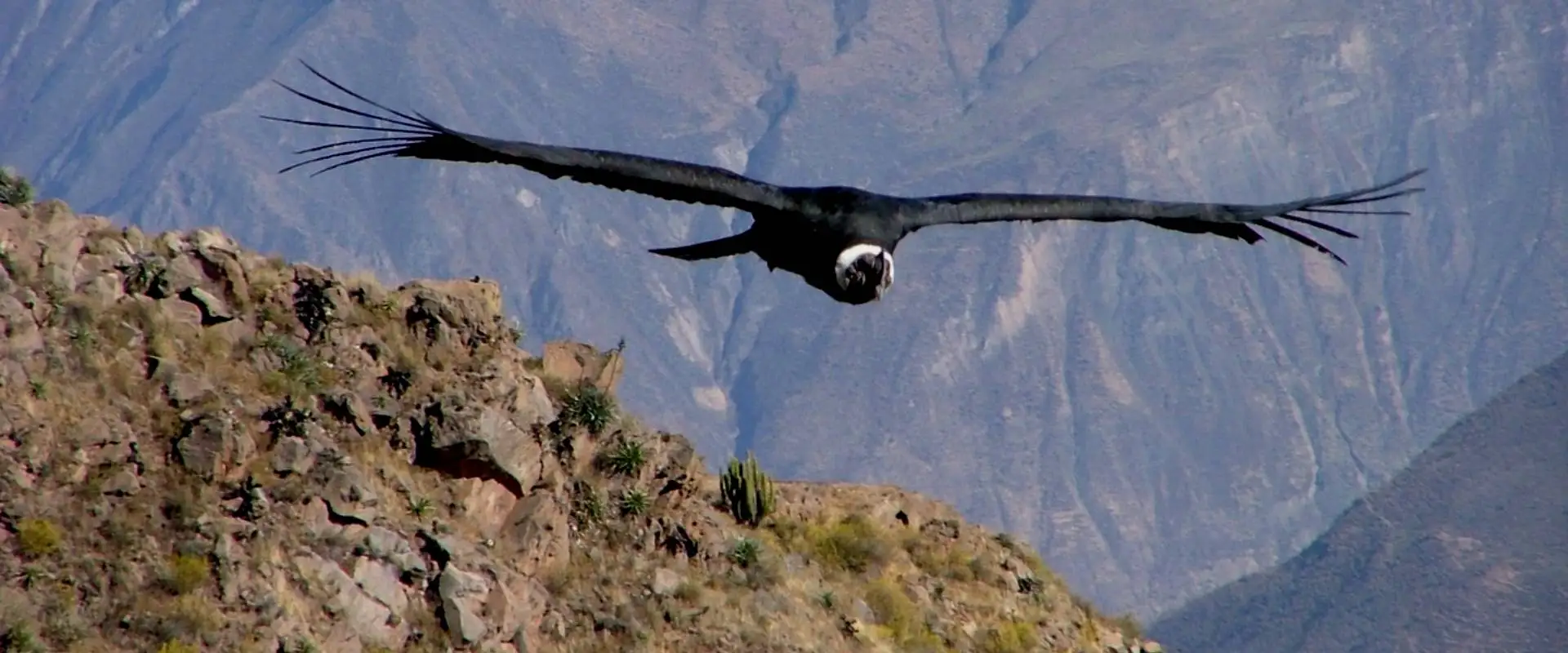
Andean condor facts in one paragraph: 10-foot wingspan (the largest of any land bird in the Western Hemisphere), 4-feet tall standing on the ground, lives up to 75 years, scavenges carrion only (no live prey), and only ~150 birds remain in Ecuador. The white neck ruff and bald red head make adults instantly identifiable.
Pair It With the Galápagos: 9 Day Ecuador & Galápagos Tour
Quick Summary: The Andean condor (Vultur gryphus) boasts the largest wingspan of any raptor on Earth at 10.5 feet (3.2 m), can soar 160 km without a single wingbeat, and lives over 50 years in the wild. Sacred to the Inca as a messenger of the gods, Ecuador’s national bird now faces a crisis — fewer than 150 individuals survive in the country. Here are 10 facts that reveal why this bird deserves your attention.
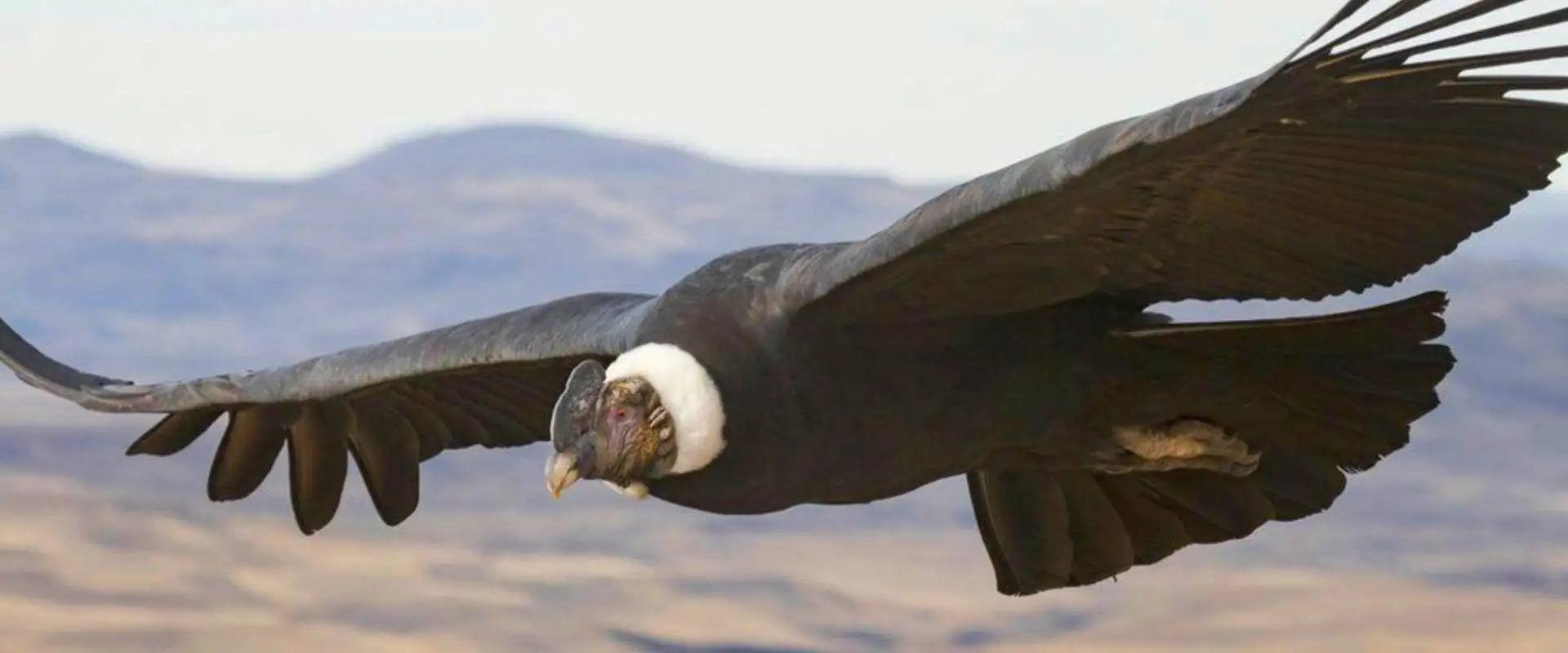
The first andean condor facts that hit you in person are the size and silence. They do not flap. They ride thermals in lazy 200-m circles, sometimes for hours, barely moving a feather.
Why These Andean Condor Facts Matter
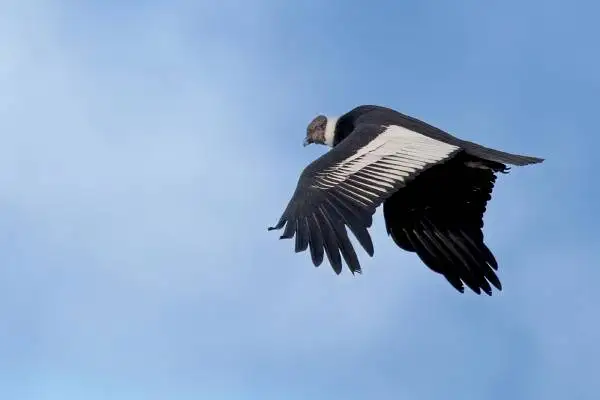
Andean Condor Facts
I’ve spent years guiding birdwatchers through Ecuador’s highlands, and the Andean condor never fails to leave people speechless. The first time a condor passes overhead — close enough to hear the wind through its feathers — something shifts in you. It’s primal.
But here’s what bothers me. Most people know condors are big. They might know they’re endangered. Beyond that? Almost nothing. And these birds deserve better than a footnote in a travel brochure.
So here are 10 Andean condor facts that go beyond the basics. Some will surprise you. A couple might genuinely change how you think about conservation in South America. And if you’re planning a trip to Ecuador, understanding these facts will make your first condor sighting that much more meaningful.
1. The Largest Wingspan of Any Raptor on Earth
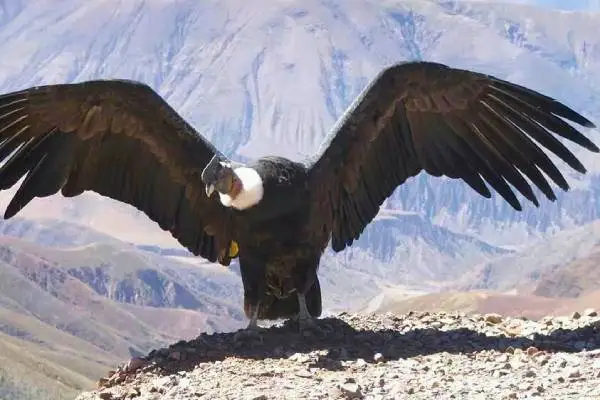
The Giant of the Andes
The Andean condor holds the record for the largest wingspan of any raptor species on the planet — up to 10.5 feet (3.2 meters) from tip to tip. That’s wider than most compact cars are long.
To put it another way: if a condor spread its wings in your living room, it wouldn’t fit. Standing roughly 4 feet (1.2 m) tall and weighing up to 33 pounds (15 kg), Vultur gryphus is genuinely massive. The first time I saw one on a cliff ledge at Antisana, I thought it was a person in a dark jacket. Then it opened its wings.
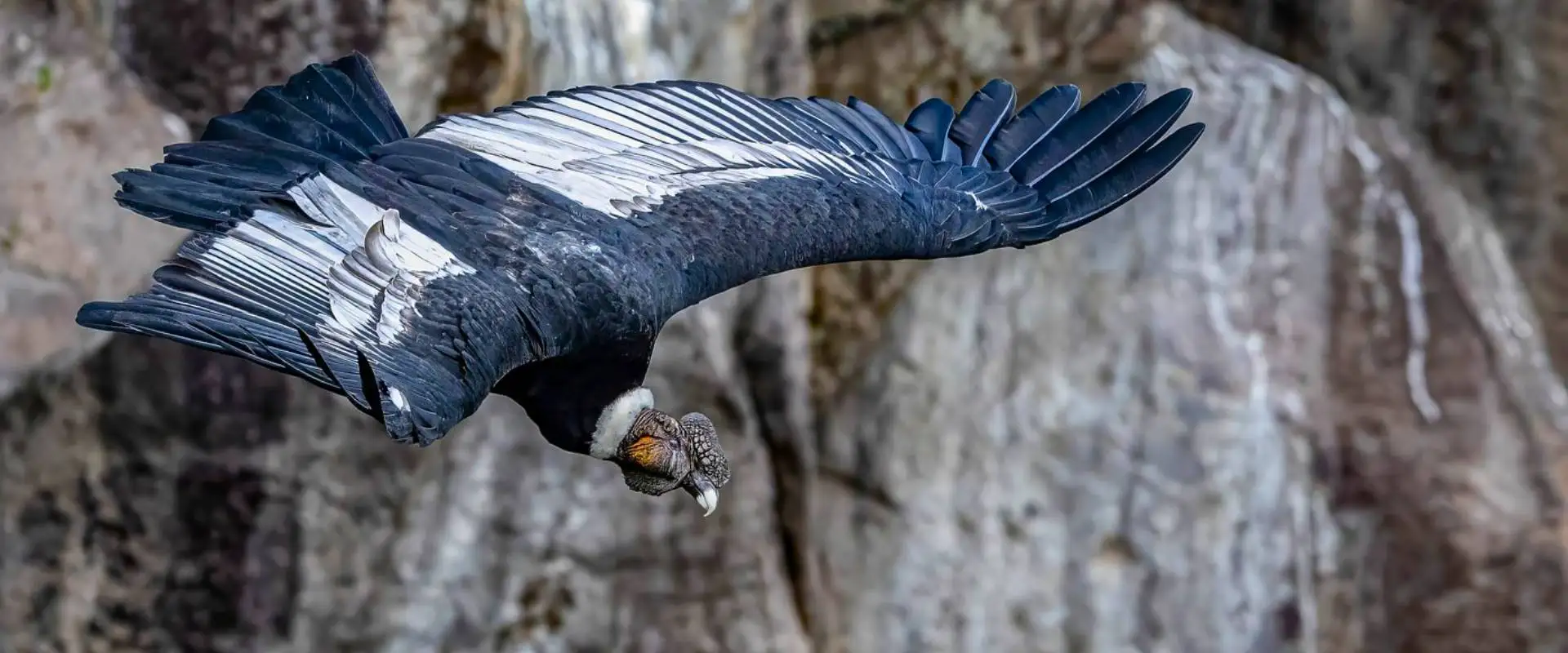
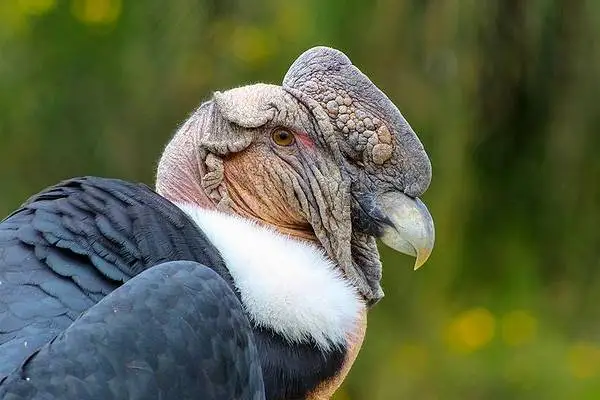
Some andean condor facts only land in person: their bald head is the same red-orange of dried blood, their feet are surprisingly chicken-like (not raptor-grade), and the white neck ruff is what makes adults instantly identifiable from below.
What makes this even more impressive is that condors aren’t built for flapping. Their entire body is engineered for soaring — broad wings, slotted primary feathers, and a weight-to-wing ratio that lets them ride thermal currents for hours. They’re less like eagles and more like living gliders.
2. They Can Soar 160 Km Without a Single Wingbeat
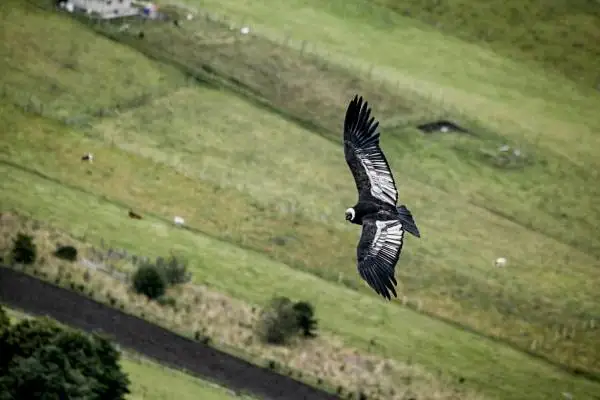
Andean Condor in Flight
Researchers tracking Andean condors with GPS have recorded something extraordinary: a single condor traveling 160 kilometers (about 100 miles) without flapping its wings once. Not even once.
Condors are thermal soaring specialists. They wait for morning sun to warm rock faces and valley floors, which creates rising columns of hot air called thermals. Then they ride these invisible elevators upward, sometimes to altitudes above 5,000 meters, and glide from thermal to thermal across the Andes. On a typical day, a condor covers over 200 km searching for food.
This isn’t just a bird fact — it’s an engineering lesson. Aerospace engineers have actually studied condor flight dynamics to improve glider design. Nature figured out energy-efficient long-distance flight millions of years before we started trying. Not sure where this fits in your itinerary? Send us your dates and we will sort the order out.
3. One of the World’s Longest-Living Birds
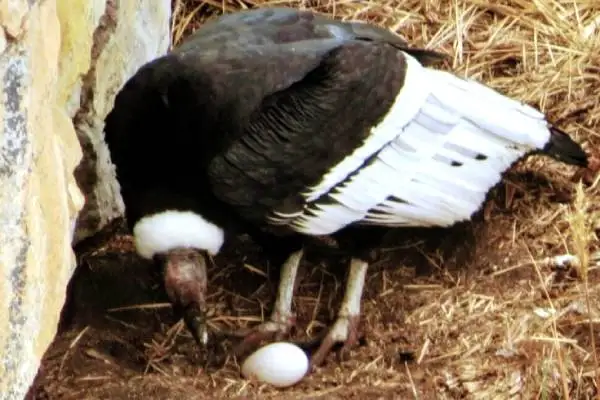
One of the Longest-Living Birds in the World
Andean condors can live over 50 years in the wild and up to 80 years in captivity. That’s comparable to a human lifespan, which is remarkable for any bird species.
But longevity comes with a trade-off that has serious conservation implications. Condors don’t reach sexual maturity until age 5 or 6. A mated pair produces only one egg every 2 to 3 years. The chick takes about 2 months to hatch and won’t fly for another 6 to 10 months after that.
Do the math and you’ll see the problem. A female condor might produce only 10 to 15 offspring in her entire lifetime. When you lose a breeding adult — to poisoning, for example — the population takes decades to recover. This painfully slow reproductive rate is one of the biggest reasons the species is struggling in Ecuador.
4. Condors Mate for Life
One of the lesser-known andean condor facts for visitors: pairs are monogamous and roost together in the same cliff face for life — sometimes 50+ years. If you spot one condor, look for its mate within 200 m.
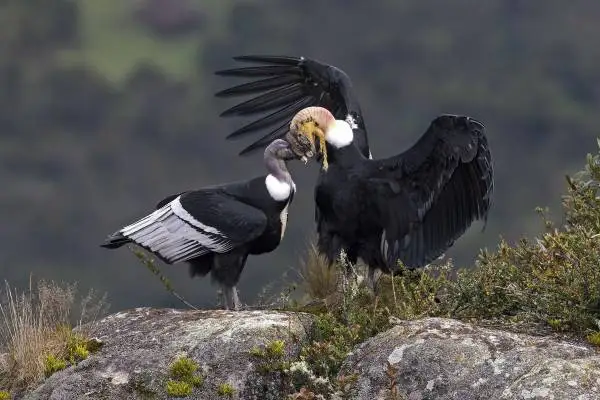
Pair of condors
Andean condors are monogamous. When they find a partner, that’s it — they stay together until one of them dies. In a world where even some human relationships don’t last that long, there’s something genuinely moving about a pair bond that can span 40 or 50 years.
The courtship itself is fascinating. The male’s bare neck skin, normally reddish, flushes to bright yellow during courtship displays. He’ll spread his wings, puff up his white neck collar, and perform a kind of strutting dance on cliff ledges. If the female is interested — and she’s choosy — they’ll begin preening each other.
I watched a bonded pair at Antisana once, sitting on adjacent cliff ledges about a meter apart. They spent 20 minutes just… existing together. No drama, no display. Just quiet companionship. My clients thought it was boring. I thought it was one of the most beautiful things I’d seen in nature.
5. A Sacred Symbol Since the Inca Empire
The Andean condor has been a sacred figure in South American cultures for thousands of years. In Inca cosmology, the condor represented the Hanan Pacha — the upper world or heavens — forming a divine trinity with the puma (the earthly world) and the serpent (the underworld).
The Quechua word for condor is “kuntur,” and the Inca believed these birds were messengers between humans and the gods — specifically the sun god Inti. When a condor soared upward on a thermal, it was literally carrying prayers to the heavens.
This symbolism runs deep in Ecuador. In Quito’s Plaza Grande, look at the coat of arms atop the presidential palace: a condor clutching a broken chain above a defeated lion — Spain’s symbol. Independence, strength, freedom. The condor isn’t just a pretty bird on a flag. It’s a statement about national identity.
Ecuadorian artist Oswaldo Guayasamín famously painted condors attacking bulls — another potent symbol of the New World rising against colonial Spain. The imagery still resonates.

The Bull and the Condor 1998 (Oswaldo Guayasamín)
6. Ecuador Celebrates National Condor Day on July 7th
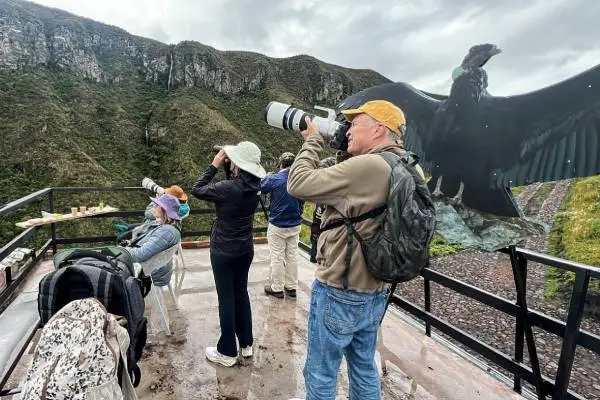
Condor Watching and Conservation
Every July 7th, Ecuador marks Día Nacional del Cóndor — National Condor Day. The Andean condor is the national bird of not just Ecuador, but also Colombia, Bolivia, and Chile. In Ecuador, it carries the title “Rey de los Andes” — King of the Andes.
The celebration includes educational events, awareness campaigns, and condor-watching excursions organized by conservation groups. If you happen to be in Ecuador around early July, it’s actually a great time to visit places like Antisana or Hacienda Zuleta — there’s usually extra programming and guided activities.
What most tourists don’t realize is that this celebration has a bittersweet edge. It was established partly to raise awareness about how critically endangered the species is in Ecuador. It’s less a party and more a reminder that the king might lose his throne.
7. Males and Females Look Completely Different
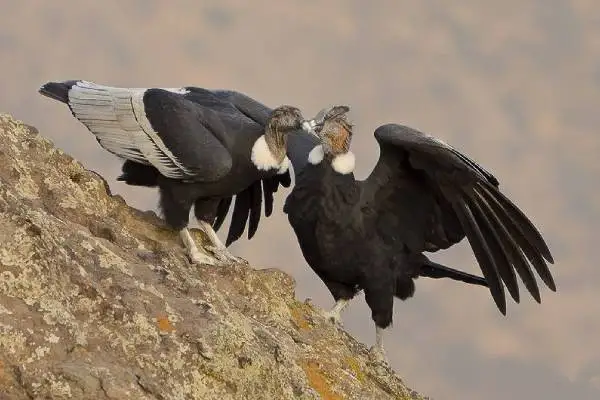
Male and Female Andean Condor in the Andes
Andean condors display striking sexual dimorphism — meaning males and females look noticeably different. Once you know what to look for, you can tell them apart from hundreds of meters away.
Males are larger, have a prominent fleshy crest (called a caruncle) on top of their heads, a thick white ruff collar around the neck, and yellow-brown eyes. Females lack the crest entirely, have red eyes, and their collar is less pronounced. Both sexes share the same dramatic black plumage with white patches on the upper wings.
Here’s a quick guide I give my clients at the viewing platforms:
| Feature | Male | Female |
|---|---|---|
| Head crest | Large, fleshy caruncle | None |
| Eye color | Yellow-brown | Red |
| Neck collar | Thick white ruff | Smaller, less defined |
| Size | Larger (up to 15 kg) | Slightly smaller |
| Neck skin (courtship) | Changes red → yellow | Stays reddish |
8. They Travel Over 200 Km Every Day to Find Food
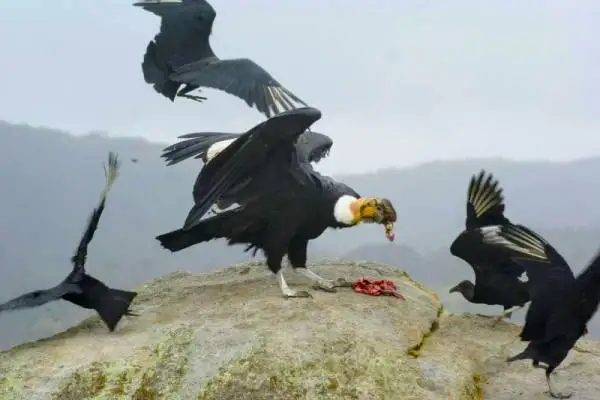
Travel miles in search of food
Andean condors are obligate scavengers — they feed exclusively on carrion (dead animals). They don’t hunt. They don’t kill. They clean up what’s already dead, feeding on carcasses of cattle, deer, llamas, alpacas, and other livestock or wild animals.
To find these carcasses scattered across the vast Andean landscape, condors routinely travel over 200 km in a single day. Unlike turkey vultures, which locate food by smell, Andean condors rely primarily on their exceptional eyesight. They spot carcasses from enormous heights — sometimes circling above 4,000 meters — and watch for gatherings of other scavengers below.
GPS tracking data from The Peregrine Fund’s research in Ecuador shows that less than 40% of tagged condors’ movements fall within protected areas. That means the majority of their daily range crosses unprotected land — farms, ranches, roads — where threats like poisoning are constant.

START IN QUITO, END IN THE GALÁPAGOS
9 Day Ecuador and Galapagos Tour: Andes, Amazon and Santa Cruz
Quito, Cotopaxi, Quilotoa, Baños and the Amazon with your own guide, then three nights on Santa Cruz with tortoises, beaches and snorkeling.
From $1,990 per person
View itinerary9. Nature’s Essential Cleanup Crew
Andean Condor-Nature’s Cleaner
Condors aren’t just impressive to look at — they perform a critical ecological function. By consuming animal carcasses, they prevent the spread of diseases like botulism, anthrax, and tuberculosis that could otherwise affect wildlife and livestock.
Think of them as the páramo’s sanitation department. Without vultures and condors, dead animals decompose more slowly, bacteria multiply, and disease vectors like rats and feral dogs move in to feed on the remains. In regions where vulture populations have collapsed — parts of India, for example — public health crises followed.
Ecuador’s highland ecosystems depend on condors more than most people realize. Remove the condor, and you don’t just lose a symbol. You disrupt an entire chain of ecological services that keeps the páramo healthy.
10. Fewer Than 150 Remain in Ecuador
Less than 150 condors in Ecuador
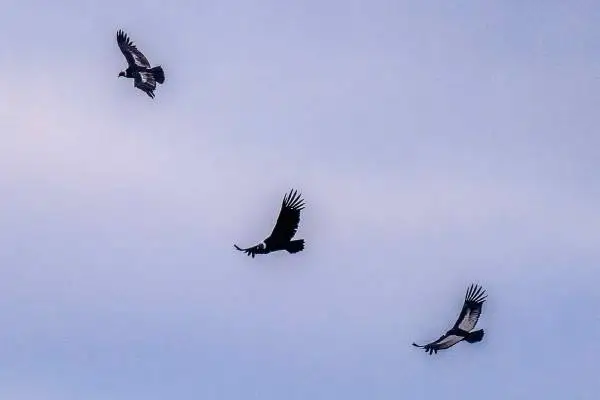
Here’s the fact that keeps me up at night. According to Ecuador’s most recent national census in 2018, fewer than 150 Andean condors survive in the country. That number makes the species Critically Endangered at the national level — far worse than its global IUCN Red List status of Vulnerable (with approximately 6,700 adults worldwide).
Ecuador’s condors face a perfect storm of threats. At least 90 condors have died from pesticide poisoning — farmers lace carcasses with chemicals to kill predators, and condors eat the bait. In one horrific incident in 2018 near Cotopaxi, 15 condors were poisoned in a single event. Add feral dog attacks on nesting sites, illegal hunting, habitat loss, and that agonizingly slow reproduction rate, and you begin to understand the urgency.
The Ecuadorian population is also genetically and geographically isolated from condor populations in neighboring Colombia and Peru. There’s no cavalry coming from next door. What Ecuador has right now is essentially all there is.
If you want to understand the full picture of what’s being done to save Ecuador’s condors, that’s a story worth reading. Organizations like the Galo Plaza Lasso Foundation at Hacienda Zuleta and The Peregrine Fund are doing extraordinary work — but they need more support.
What You Can Do About It
If these Andean condor facts moved you — even a little — there are real ways to help. Visiting condor habitat through responsible ecotourism puts money directly into conservation. Places like Antisana Eco Reserve and Hacienda Zuleta use tourism revenue to fund research and protection programs.
Want the complete picture? Read our complete guide to the Andean condor in Ecuador — it covers everything from where to see them to how to plan your trip around condor watching season.
See Ecuador’s Condors Before It’s Too Late
Planning a trip to Ecuador? Our local guides know exactly where and when to find condors in the wild. We’ve been doing this for years — and every tour supports conservation directly.
Frequently Asked Questions About Andean Condor Facts
How big is the Andean condor’s wingspan?
The Andean condor has the largest wingspan of any raptor on Earth, measuring up to 10.5 feet (3.2 meters). Adults stand approximately 4 feet (1.2 m) tall and can weigh up to 33 pounds (15 kg), making them among the heaviest flying birds in the world.
How long do Andean condors live?
Andean condors live over 50 years in the wild and up to 80 years in captivity. They don’t reach sexual maturity until age 5-6 and produce only one chick every 2-3 years, making their slow reproduction a major conservation concern.
Are Andean condors dangerous to humans?
No. Andean condors are scavengers that feed exclusively on dead animals (carrion). They have no interest in hunting live prey, including humans. They are generally wary of people and will fly away if approached too closely.
Why is the Andean condor important to Ecuador?
The Andean condor is Ecuador’s national bird and appears on the country’s flag and coat of arms. It holds deep cultural significance dating back to the Inca Empire, where it represented the heavens in a sacred trinity. Ecuador celebrates National Condor Day on July 7th.
How big is the Andean condor wingspan?
The Andean condor wingspan reaches 8 to 10.5 feet (2.5-3.2 m) — the largest of any land bird in the Western Hemisphere. Males are larger than females. The wings are shaped for soaring on thermals, not flapping, so they look almost flat-board straight in flight.
How long do Andean condors live?
Andean condors live up to 70-75 years in the wild, making them one of the longest-lived bird species on Earth. They reach breeding maturity slowly (6-8 years) and pairs raise only 1 chick every 2-3 years — which is why population recovery is slow.
Why is the Andean condor head bald?
The bald head is an evolutionary adaptation for scavenging. When condors feed inside carcasses, feathers would mat with blood and rot. Bare skin is easier to clean by sun-bathing and rubbing on rocks. Adult males also have a fleshy comb (caruncle) on top that females do not have.
What is the Andean condor compared to a human?
Standing on the ground, an adult Andean condor is about 4 feet (1.2 m) tall — chest height on most adults. In flight, the wingspan of 10 feet (3 m) is wider than nearly any human is tall. Side-by-side photos show why visitors are stunned by how big they are.
What do Andean condors eat?
Andean condors are pure scavengers — carrion only. In Ecuador they feed on dead llamas, vicuñas, deer, and livestock. They do not hunt live prey (their feet are like a chicken, not a raptor) and can detect a carcass from 10 km away using thermal scanning.
How many Andean condors are left in Ecuador?
Fewer than 150 Andean condors remain in Ecuador according to the 2018 national census. The species is classified as Critically Endangered at the national level, though globally the IUCN lists the species as Vulnerable with approximately 6,700 adults worldwide.