Andean Condor in Ecuador: Local’s Guide to Spotting South America’s Largest Bird
Quick Summary: The Andean condor (Vultur gryphus) is Ecuador’s national bird — a massive raptor with a 10.5-foot wingspan that holds deep sacred significance dating back to the Inca Empire. Fewer than 150 survive in Ecuador (Critically Endangered nationally), making every sighting precious. The best place to see them is Antisana Eco Reserve, a 2-hour day trip from Quito, during the dry season (June–September). This guide covers everything: biology, cultural symbolism, where to go, conservation status, and practical trip tips from a local guide who’s been doing this for years.
The andean condor is one of those animals you remember exactly where you were the first time you saw it. For me it was Antisana, 4,200 m, scanning the basalt cliffs at 9 AM when one rose on a thermal — bigger than I imagined, slower than I expected, completely silent.
Why the Andean Condor in Ecuador Matters
Pair It With the Galápagos: 9 Day Ecuador & Galápagos Tour
The first time I saw an Andean condor in Ecuador, I was 19 and driving a beat-up truck past Pintag toward Antisana. A shadow passed over the windshield — impossibly large, moving impossibly slow. I pulled over and watched a male condor drift across the valley floor maybe 30 meters above me, close enough to see the white ruff around his neck catching the morning light. The entire encounter lasted maybe 15 seconds. I’ve been obsessed with these birds ever since.
The Andean condor in Ecuador is more than a bird. It’s the national symbol. It’s on the flag, the coat of arms, the money. It represents freedom, power, and the wild Andes that define this country’s identity. And right now, with fewer than 150 individuals left in Ecuadorian skies, it’s also a species fighting for survival.
This complete guide to the Andean condor in Ecuador covers everything I’ve learned about Ecuador’s condors over years of guiding visitors through highland habitats — where to find them, what they mean culturally, why they’re endangered, and how to plan a trip that actually gets you face to face with the King of the Andes. No fluff, no recycled Wikipedia facts. Just what works.
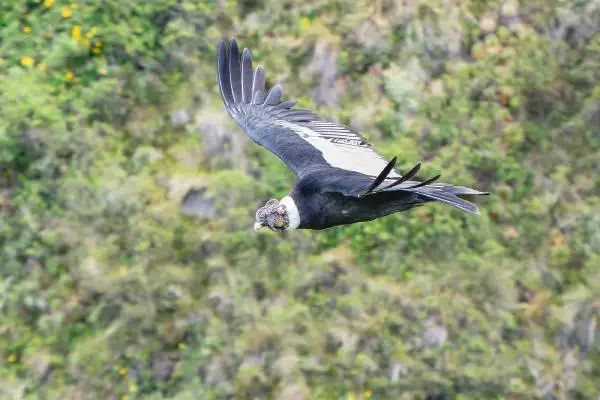
Andean Condor in Antisana
What Is the Andean Condor?
The Andean condor (Vultur gryphus) is the largest flying bird in the Western Hemisphere and the largest raptor on Earth by wingspan. Adults measure up to 10.5 feet (3.2 meters) from wingtip to wingtip, stand about 4 feet (1.2 m) tall, and weigh up to 33 pounds (15 kg). They belong to the family Cathartidae — New World vultures — and are obligate scavengers, feeding exclusively on carrion.
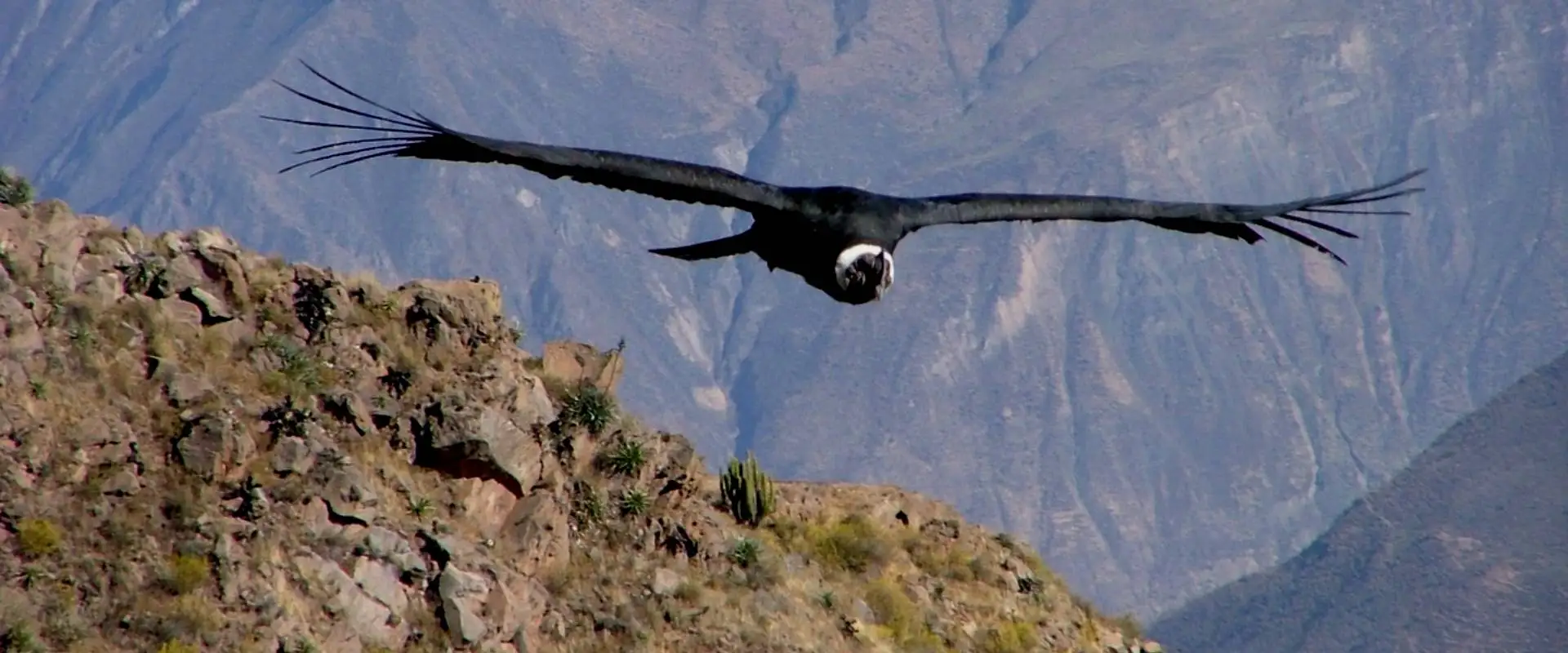
The species is built for one thing: soaring. Those enormous wings with slotted primary feathers catch thermal updrafts along Andean cliff faces, allowing condors to cover over 200 km daily without a single wingbeat. Researchers have documented individual birds gliding 160 km in a single stretch — no flapping whatsoever. It’s aerodynamic perfection, refined over millions of years.
If you only have a day from Quito to see the andean condor, the play is Antisana Ecological Reserve. The drive is 90 minutes east, the paramo is open with long sightlines, and local rangers know which cliff faces the resident pair uses. Sightings are not guaranteed but the odds are better here than anywhere else in Ecuador.
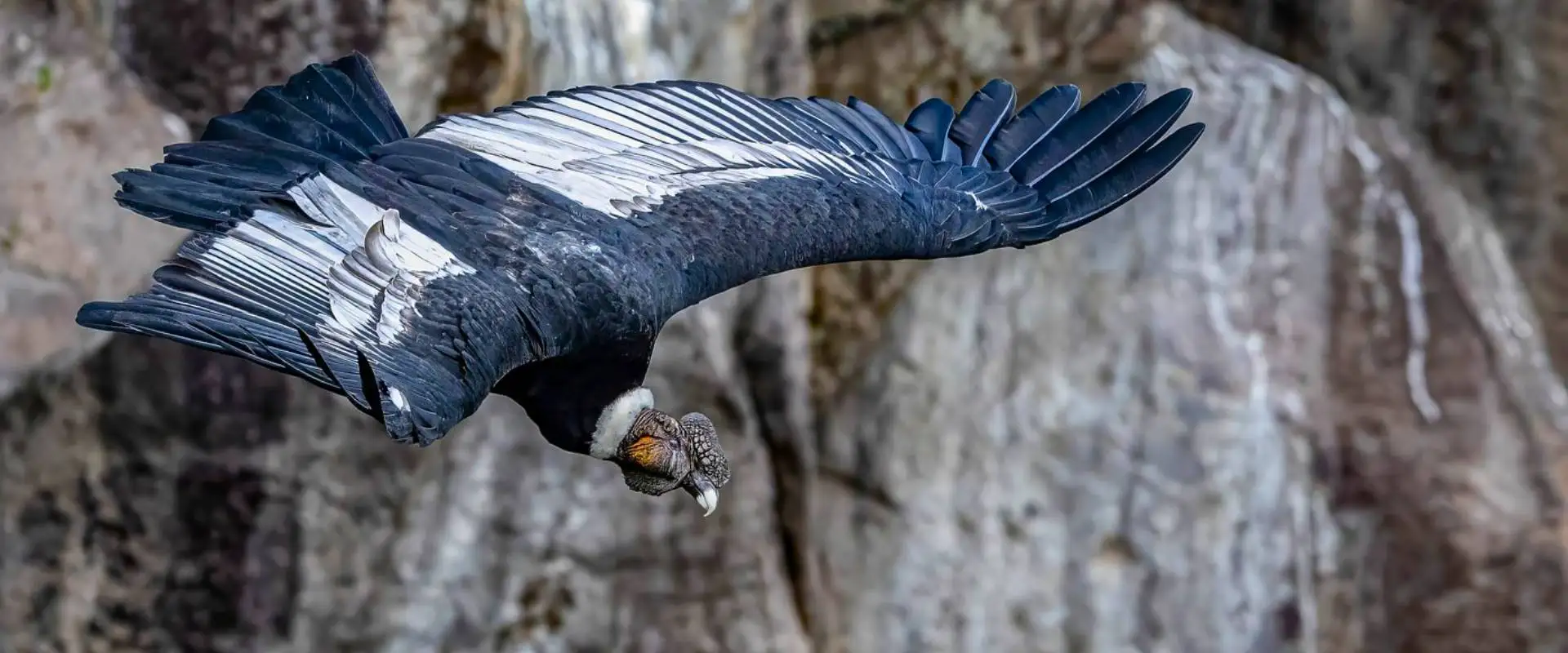
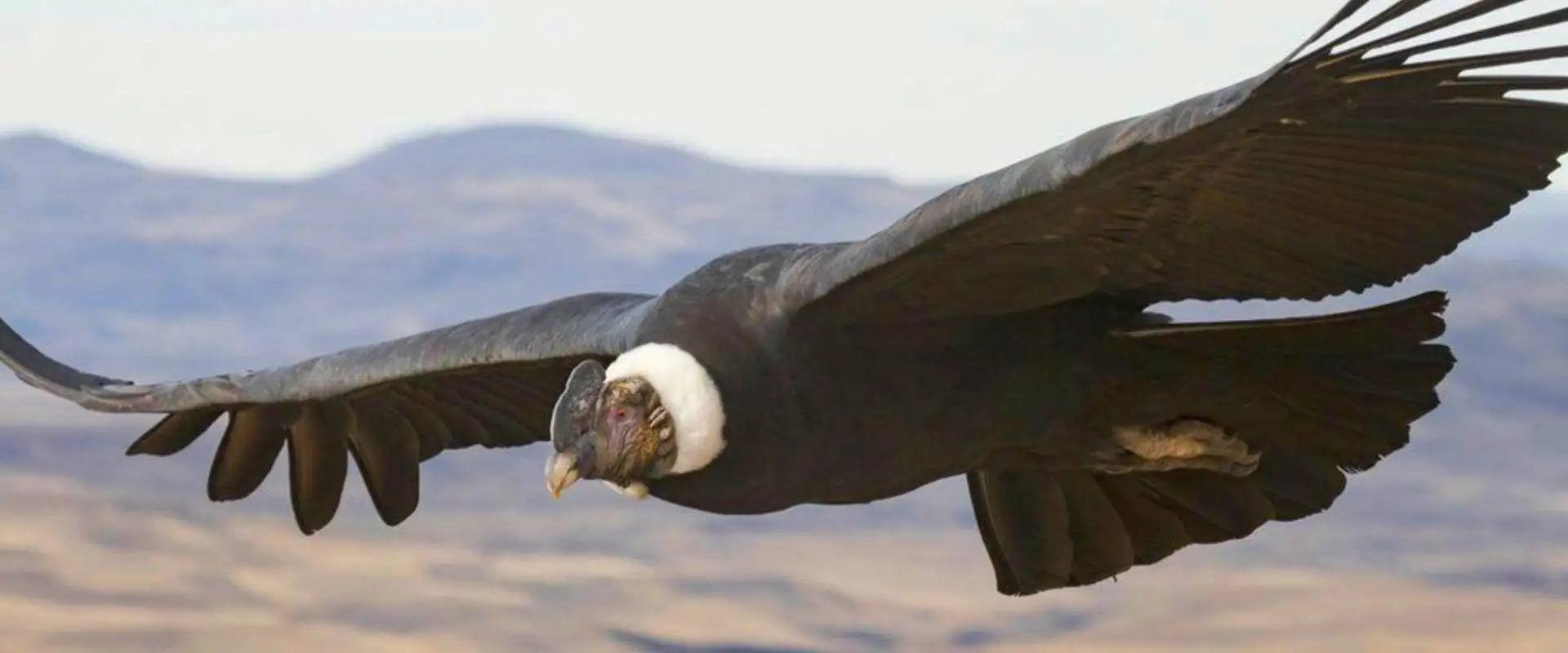
Males and females look noticeably different. Males are larger, sport a prominent fleshy crest (caruncle) on their heads, have thick white neck ruffs, and yellow-brown eyes. Females lack the crest, have red eyes, and are slightly smaller. Both sexes share that striking black plumage with white wing patches visible from below when soaring — the silhouette that makes every birder’s heart skip.
They’re monogamous — a bonded pair stays together for life, which can mean 50+ years in the wild. But they reproduce agonizingly slowly: one egg every 2 to 3 years, with the chick not flying until 6 to 10 months after hatching. For a deeper dive into their biology, check out our complete Andean condor facts guide.
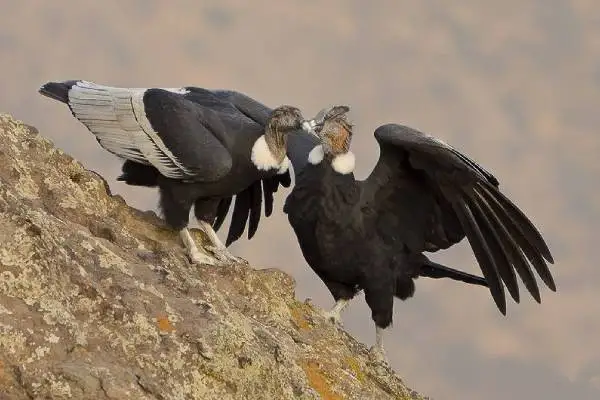
Male and Female Andean Condor in the Andes
Why Is the Andean Condor Ecuador’s National Symbol?
The Andean condor is Ecuador’s national bird and one of the most powerful cultural symbols in the Andes. Its significance stretches back thousands of years to pre-Columbian civilizations, particularly the Inca Empire. If you would rather someone else handled the logistics, tell us what you have in mind.
In Inca cosmology, the condor represented the Hanan Pacha — the upper world or heavens. It formed a sacred trinity with the puma (the earthly world, Kay Pacha) and the serpent (the underworld, Ukhu Pacha). The Quechua word for condor is “kuntur,” and the Inca believed these birds were divine messengers, carrying prayers between humans and the sun god Inti.
Walk into Plaza Grande in Quito’s historic center and look up at the coat of arms on the presidential palace. You’ll see a condor clutching a broken chain above a lion — Spain’s heraldic symbol. It’s a declaration: the condor broke free from colonial oppression. Independence, sovereignty, the wild spirit of the Andes. That imagery still resonates.
The artist Oswaldo Guayasamín — Ecuador’s most celebrated painter — famously depicted condors attacking bulls in his work, reinforcing the condor as a symbol of resistance against colonial power. Every July 7th, Ecuador celebrates Día Nacional del Cóndor, honoring the bird they call “Rey de los Andes” — King of the Andes.
I’ve had visitors from Europe and North America who knew Ecuador had a cool bird on its flag but had no idea the symbolism ran this deep. When they finally see a live condor soaring over Antisana, the cultural context transforms the experience from “nice bird” to something almost spiritual.
Most visitors confuse the andean condor with vultures or large hawks. Three quick tells: (1) wingspan — 10 ft / 3 m of un-mistakable flat-board profile, (2) the white neck ruff in adults, (3) flight style — barely flaps, just rides thermals in long lazy circles.
Andean Condor Facts at a Glance
Here’s a quick-reference table with the essential numbers. I use this as a briefing sheet for clients before we head into the field:
| Attribute | Detail |
|---|---|
| Scientific name | Vultur gryphus |
| Family | Cathartidae (New World vultures) |
| Wingspan | Up to 10.5 ft (3.2 m) — largest raptor wingspan on Earth |
| Weight | Up to 33 lbs (15 kg) |
| Height | ~4 ft (1.2 m) |
| Lifespan | 50+ years wild, up to 80 in captivity |
| Diet | Obligate scavenger (carrion only) |
| Daily range | 200+ km |
| Reproduction | 1 egg every 2-3 years, sexual maturity at 5-6 years |
| Ecuador population | Fewer than 150 (Critically Endangered nationally) |
| Global population | ~6,700 adults (IUCN: Vulnerable) |
| National day | July 7th (Día Nacional del Cóndor) |
Want more details? Our 10 incredible Andean condor facts article digs into the biology, cultural significance, and ecological role of these extraordinary birds.
Where to See the Andean Condor in Ecuador
The Andean condor in Ecuador can be seen at several highland locations, but sighting reliability varies dramatically between sites. Here’s the honest ranking based on years of guiding:
Antisana Eco Reserve is the undisputed #1. With 35+ recorded individual condors using nesting cliffs near the Tambo Cóndor viewing platform, it offers the highest success rate in the country. It’s a 2-hour drive from Quito — doable as a day trip. No entrance fee. Arrive before 8:00 AM for the best activity.
Hacienda Zuleta and the Condor Huasi Project provide close encounters with rehabilitated condors plus wild sightings in the surrounding highlands. The conservation story here is powerful — the Galo Plaza Lasso Foundation has been running the program since 1995.
Parque Cóndor near Otavalo houses rescued raptors with flight demonstrations — excellent for families. Combine it with Otavalo’s Saturday market for a perfect day trip.
Tambo Condor and Chakana Reserve, both near Antisana, offer alternative viewing angles and quieter experiences. Great for photography.
Other possible but less reliable spots include Papallacta, Cotopaxi National Park, and the remote Cayambe-Coca páramos.
For detailed descriptions of each location with practical tips, read our dedicated guide: Best Places to See the Andean Condor in Ecuador.
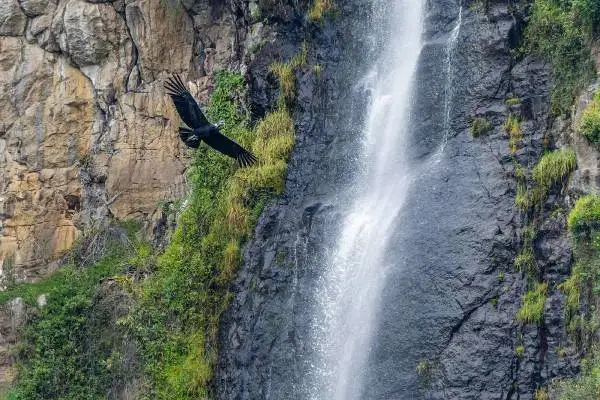
Where to See the Andean Condor in Ecuador?
Is the Andean Condor Endangered in Ecuador?
Yes — critically so. The Andean condor is classified as Critically Endangered in Ecuador, with fewer than 150 individuals remaining according to the 2018 national census. This is dramatically worse than the species’ global IUCN Red List status of Vulnerable (approximately 6,700 adults worldwide).
Ecuador’s condor population faces a combination of lethal threats. Pesticide poisoning has killed at least 90 birds — farmers lace carcasses with chemicals to kill predators, and condors eat the tainted meat. In a horrific 2018 incident near Cotopaxi, 15 condors were poisoned from a single carcass. That’s 10% of the national population in one event.
Additional threats include feral dog attacks on nesting sites, illegal hunting, habitat loss from agricultural expansion, and the species’ naturally slow reproduction. Ecuador’s condor population is also genetically isolated from neighboring countries, with no natural immigration to offset losses.
The good news: dedicated organizations are fighting back. The Condor Huasi Project at Hacienda Zuleta (since 1995), The Peregrine Fund‘s GPS tracking research (since 2008), and the Andean Condor Working Group advising the Ministry of Environment (since 2010) are making real progress.
For the full conservation story — threats, projects, and how tourists can help — read: Andean Condor Conservation in Ecuador: The Fight to Save 150 Birds.
Surprising Andean Condor Facts Most People Don’t Know
After years of talking to visitors about condors, I know which facts make people stop and go “wait, really?” Here are a few that consistently surprise even experienced birders:
They can soar 160 km without flapping once. GPS data from The Peregrine Fund’s research shows condors riding thermal currents across the Andes in continuous glides that would make any pilot jealous. Aerospace engineers have studied their flight mechanics for glider design.
Their bones were used as musical instruments. Pre-Columbian cultures carved condor bones into flutes, and shamans used condor feathers in healing ceremonies. The bird’s spiritual significance extended into every aspect of Andean life.
Males change color during courtship. The bare skin on a male condor’s neck shifts from reddish to bright yellow during courtship displays. Combined with wing spreading and a strutting dance on cliff ledges, it’s quite a show.
They locate food by sight, not smell. Unlike turkey vultures (which have an excellent sense of smell), Andean condors find carcasses almost entirely through their extraordinary eyesight. They circle at extreme altitudes — sometimes above 5,000 meters — scanning vast territory below and watching for other scavengers gathering.{
Less than 40% of their range is protected. Despite being a national symbol, most of a condor’s daily movements take them across unprotected farmland, ranches, and roads. This is why community education matters as much as national parks.
We’ve compiled the full list in our dedicated article: 15 Andean Condor Facts That Will Blow Your Mind.
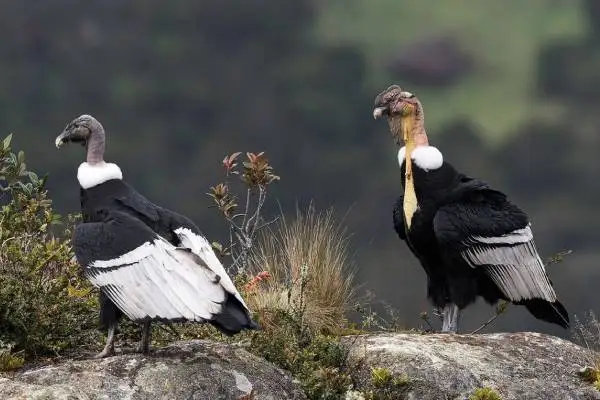
Male condors change color during courtship
Tips for Spotting an Andean Condor on Your Ecuador Trip
I give this briefing to every client before a condor-watching excursion. Follow these tips and you’ll maximize your chances:
Visit during dry season (June–September). Clearer skies mean better visibility and more consistent thermal activity. December–January also has a mini dry season. The wettest months (March–May) are least reliable.
Arrive early. Be at your viewing site by 7:00 AM. Condors are often visible on cliff ledges at dawn before they catch the first thermals. Peak soaring activity is typically 9:00–11:00 AM. By afternoon, clouds usually roll in.
Bring the right gear. Binoculars (8-10x) are essential. For photography, a 300mm telephoto lens is the minimum I’d recommend. Warm layers are non-negotiable at 4,000+ meters — thermal base, fleece, windproof shell. Sunscreen and sunglasses too; UV at altitude is brutal.
Be quiet and patient. Condors are sensitive to noise. Keep your voice low, avoid slamming car doors, and don’t rush around the viewing area. Give it time. I’ve had clients ready to leave after 45 minutes who then witnessed 6 condors soaring simultaneously during a patience-testing two-hour wait.
Hire a local guide. Seriously. A good guide knows current nesting locations, flight patterns, the best angles, and — just as importantly — can identify what you’re looking at. That speck on the cliff might be a condor or a caracara. An experienced guide knows the difference at 500 meters.
Scan the cliffs, not just the sky. Most people look up. But condors spend a lot of time perched on cliff ledges, especially early morning and late afternoon. Systematically scan every rock face with your binoculars — you might find one sitting at eye level.
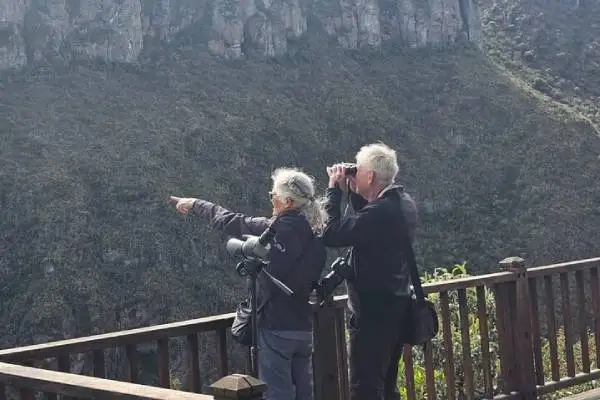
Sighting of condors
START IN QUITO, END IN THE GALÁPAGOS
9 Day Ecuador and Galapagos Tour: Andes, Amazon and Santa Cruz
Quito, Cotopaxi, Quilotoa, Baños and the Amazon with your own guide, then three nights on Santa Cruz with tortoises, beaches and snorkeling.
From $1,990 per person
View itineraryPlan Your Andean Condor Adventure
Whether you’re a serious birder checking the Andean condor off your life list or a traveler who just wants to see something extraordinary, Ecuador is the place. Seeing the Andean condor in Ecuador is a once-in-a-lifetime experience. No other country offers this level of accessibility to wild condor populations combined with world-class supporting attractions — from Quito’s colonial architecture to Papallacta’s hot springs to Otavalo’s indigenous markets.
Here’s what I’d recommend for a first-time condor trip from Quito:
- Day 1: Antisana Eco Reserve — leave Quito at 5:30 AM, spend the morning at the viewing platforms, optional afternoon at Papallacta hot springs on the way back.
- Day 2: Drive north to Hacienda Zuleta — visit the Condor Huasi Project, overnight at the hacienda.
- Day 3: Parque Cóndor + Otavalo market — combine rescued condor encounters with cultural immersion, return to Quito.
That three-day itinerary gives you the wild experience, the conservation story, and the cultural context. It’s what I run for most of my birdwatching clients and it never disappoints.
Free Ecuador Condor Watching Guide
Planning a condor trip? Download our free guide with packing lists, best viewing times, and our recommended 3-day itinerary from Quito.
Ready to book? Our guided condor watching tours run year-round from Quito. Small groups, experienced naturalist guides, and every trip supports condor conservation directly. Contact us on WhatsApp to start planning.
Frequently Asked Questions About the Andean Condor in Ecuador
Is the Andean condor Ecuador’s national bird?
Yes. The Andean condor (Vultur gryphus) is Ecuador’s national bird and appears prominently on the country’s flag and coat of arms. It is also the national bird of Colombia, Bolivia, and Chile. Ecuador celebrates National Condor Day on July 7th.
How many Andean condors are left in Ecuador?
Fewer than 150 Andean condors remain in Ecuador according to the 2018 national census. The species is Critically Endangered at the national level, though globally the IUCN classifies it as Vulnerable with approximately 6,700 adults worldwide.
Where is the best place to see condors in Ecuador?
Antisana Eco Reserve, located about 2 hours southeast of Quito, is the most reliable location with 35+ recorded individual condors. Hacienda Zuleta’s Condor Huasi Project and Parque Cóndor near Otavalo are also excellent options offering different experiences.
When is the best time to see Andean condors in Ecuador?
The dry season from June through September offers the best conditions — clearer skies and more reliable thermal activity for soaring. Arrive at viewing sites by 7:00 AM, with peak condor activity between 9:00 and 11:00 AM. December and January also provide good conditions.
How big is an Andean condor?
The Andean condor has a wingspan of 8-10 feet (2.5-3.2 m), making it the largest flying bird in South America by wing area. Males weigh up to 33 lbs (15 kg). Standing on the ground, an adult is about 4 feet tall — eye level with a 5-year-old.
Where can you see Andean condors in Ecuador?
The best places to see Andean condors in Ecuador are Antisana Ecological Reserve (highest probability), Cotopaxi National Park (open paramo), and Cayambe-Coca area. Early morning (8-10 AM) when thermals form is the best time. Antisana is the most reliable — local guides report condor sightings on roughly 70% of clear days.
Is the Andean condor endangered?
Yes. The IUCN lists the Andean condor as Vulnerable globally. In Ecuador the population is estimated at 150 birds — critically low. Conservation work by Fundación Cóndor Andino monitors nesting sites in Antisana and the Cotopaxi region.
How does the Andean condor compare next to a human?
Standing on the ground, an adult Andean condor reaches about 4 feet (1.2 m) tall — roughly chest-height on an average adult. In flight, its 10-foot wingspan is wider than any human is tall. The largest flying bird in the Western Hemisphere by far.
What do Andean condors eat?
Andean condors are scavengers — they eat carrion (dead animals), not live prey. In Ecuador they feed primarily on dead llamas, vicuñas, deer, and livestock. Without sharp talons (they have feet like a chicken), they cannot kill prey. Their bald head is an evolutionary adaptation for feeding inside carcasses without matting feathers.
Can I see Andean condors on a day trip from Quito?
Yes. Antisana Eco Reserve is a popular day trip from Quito, departing around 5:30-6:00 AM and returning by mid-afternoon. Many operators combine the condor watching with a stop at Papallacta hot springs on the return journey.
What does the condor symbolize in Ecuador?
The condor symbolizes freedom, power, and independence. In Inca mythology, it represented the heavens (Hanan Pacha) in a sacred trinity with the puma and serpent. On Ecuador’s coat of arms, a condor holding a broken chain above a lion symbolizes liberation from Spanish colonial rule.
Looking for more on Andean Condor In Ecuador? Browse our related coverage on andean condor in ecuador guide, andean condor in ecuador tour, andean condor in ecuador travel, and reach out to our local experts for personalized planning.