
Ecuador Beaches: Local Guide to the Best Coast Spots (2026)
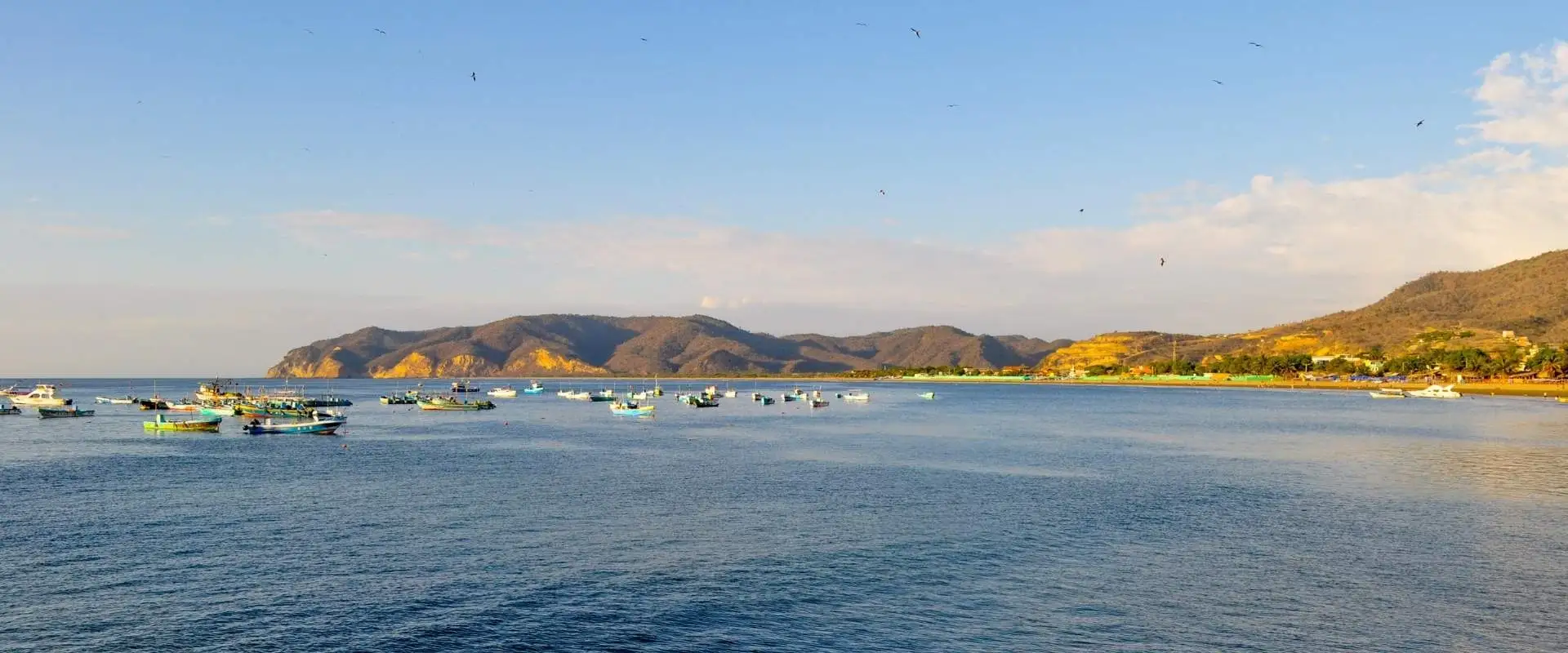
Yes — Ecuador beaches are real, and a few are excellent: a long Pacific coast with surf towns (Montañita, Ayampe, Mompiche), easy family sand (Salinas, Tonsupa, Same) and one postcard beach, Playa de los Frailes. The catch: not every town is worth your travel days, and the difference between a great trip and a mediocre one comes down to which one you pick. Below: the ten best beaches in Ecuador, when to go, what a beach trip costs, and how to get to the coast from Quito.
Cuenca, the Volcanoes and the Galápagos: 14 Day Tour
We run trips on the Ruta del Spondylus a few times a year. Below is the short version of what we tell friends who ask: where to go, where to skip, how the four “types” of Ecuador beach experiences differ, what they cost, and the realistic safety situation in 2026.
Quick Answer: The Best Ecuador Beaches by Type
- Family-friendly + relaxed: Salinas, Olón, Ayampe.
- Surf + nightlife: Montañita, Canoa, Mompiche.
- Nature + pristine: Playa de los Frailes (Machalilla NP), Los Túneles area.
- Galápagos beaches (separate trip): Tortuga Bay, Bartolomé, Gardner Bay.
- To skip in 2026: Esmeraldas city beaches, Atacames (security), Manta tourist strip (overdeveloped).
Most travelers asking about Ecuador beaches end up choosing between Salinas (the easy access option), Olon (mid-budget surf town), and Playa de los Frailes (the postcard inside Machalilla National Park). All three sit on the central coast within 6 hours of Quito.
Yes, Ecuador Has Beaches — Here’s the Geography
Ecuador’s Pacific coast runs about 2,200 km from the Colombian border down to Peru. Most travel guides barely mention it because the country’s other regions get the spotlight, but the coast has its own personality: warmer than the Andes (24-32°C year-round), poorer than Quito or Cuenca, slower-paced, with a food scene built around ceviche, encocado and encebollado.
The coast splits into three rough sections. The north (Esmeraldas province down to Mompiche) has a more Afro-Ecuadorian feel and the warmest water — but also the hardest security situation in 2026. The central coast (Bahía de Caráquez to Puerto López) is where most worthwhile beach travel happens — Machalilla National Park is here. The south (Salinas to Mancora at the Peruvian border) is drier, with the country’s most-developed tourism infrastructure around Salinas and Montañita.
The Best Beaches in Ecuador (Pacific Coast)
Ten beaches I’d actually send a friend to, ranked roughly by how broadly appealing each one is. None of them are private-island Caribbean — Ecuador’s coast is gritty, real and authentically South American. That’s the pitch.
1. Salinas — the easy one
Salinas is Ecuador’s “Miami Beach” — a long crescent of sand, high-rise condos, malecón promenade, jet skis, lots of restaurants. Comfortable, predictable, family-friendly. Easy bus connection from Guayaquil (~2 hours). Best for travelers who want a beach day without surprises. Stay near Chipipe (quieter end) rather than the main malecón unless you want nightlife.
2. Montañita — the surf town
Two streets, hundreds of bars, surfers from everywhere. Montañita is loud, fun and a little dirty — exactly what its fans love. The break works year-round, with the biggest swells December-April. Avoid if you want quiet; embrace if you want a backpacker week with $2 ceviche and live cumbia after midnight. Not sure how to fit this into a trip? Tell us your dates and we will map it out.
3. Olón — the upgrade from Montañita
The honest take on Ecuador beaches versus the Galapagos: completely different trips. Pacific coast beaches are cheaper, easier to reach, and good for surf and seafood. Galapagos beaches require flights + park fees but deliver wildlife you cannot see anywhere else on Earth. Charles Darwin Foundation documents the unique fauna of the archipelago.
A 10-minute taxi from Montañita but a different planet. Olón is the calmer alternative — wider, cleaner sand, fewer bars, more families. Most travelers I send here end up extending their stay. The Santuario Blanca Estrella above town has the best sunset view on the coast.
4. Playa de los Frailes — the postcard
Inside Machalilla National Park, near Puerto López. A 2 km dirt road then a 25-minute walk through dry forest brings you to a perfectly curved cove with no buildings, no vendors, no cars. The trade-off: you have to bring your own water and snacks. Park entry is free. This is the beach Ecuador uses on its tourism posters, and for once the poster doesn’t lie.
5. Ayampe — the slow one
A fishing village 20 minutes south of Puerto López. Long beach, steady waves for beginner surfers, half a dozen yoga retreats, no nightlife. If your idea of a beach trip is hammocks, books and watching pelicans dive, this is your stop. I send couples here.
6. Puerto López — base for whales and Frailes
Puerto López itself isn’t much of a beach — it’s a fishing port. But it’s the launchpad for Playa de los Frailes, Isla de la Plata (“the poor man’s Galápagos”) and humpback whale watching season (June through September). Two nights here gets you the best of central-coast Ecuador.
7. Mompiche — the surf-secret
Up north in Esmeraldas province. Long left-hand point break that surfers know about and most beach travelers don’t. Tiny town, basic infrastructure, warm water, locals who’ll cook you fresh-caught fish for $5. The catch: getting there is a long drive and the broader Esmeraldas province has 2026 security concerns. Don’t go independently — go with a tour or a driver who knows the area.
8. Canoa — the long beach
For the best beaches in Ecuador on a budget, the Salinas-Olon-Montanita stretch works year-round. Best months are June through October when humpback whales migrate close to Puerto Lopez — you can see them from Playa de los Frailes without a boat.
Twenty kilometers of empty sand on the central-north coast. Once a hippie hub, now a quieter mid-budget option. Decent surf for intermediates, paragliding off the cliffs above town, very budget-friendly accommodation. Took a hit in the 2016 earthquake and is still rebuilding — that’s why prices are low.
9. Same / Súa — the locals’ choice
In Esmeraldas province but just outside the highest-risk areas. Locals from Quito drive here on weekends. Súa has the country’s funkiest beach-town feel; Same is the upscale neighbor with all-inclusive resorts. Best for travelers with a rental car who want to combine beach with the cooler central highlands.
TWO WEEKS, FULLY PLANNED
14 Day Ecuador and Galapagos Tour: Volcanoes, Cuenca and the Islands
Quito, Cotopaxi, Quilotoa, Chimborazo, Ingapirca and Cuenca, then a week on Santa Cruz and Isabela with a yacht day.
From $3,390 per person
View itinerary10. Tonsupa — the family weekend
North of Atacames. Calm water, condo rentals, plenty of parents-with-kids energy. Not exotic, not surf-cool — just a reliable family beach. Three hours by car from Quito if traffic’s good.
Galápagos Beaches Are a Different Trip
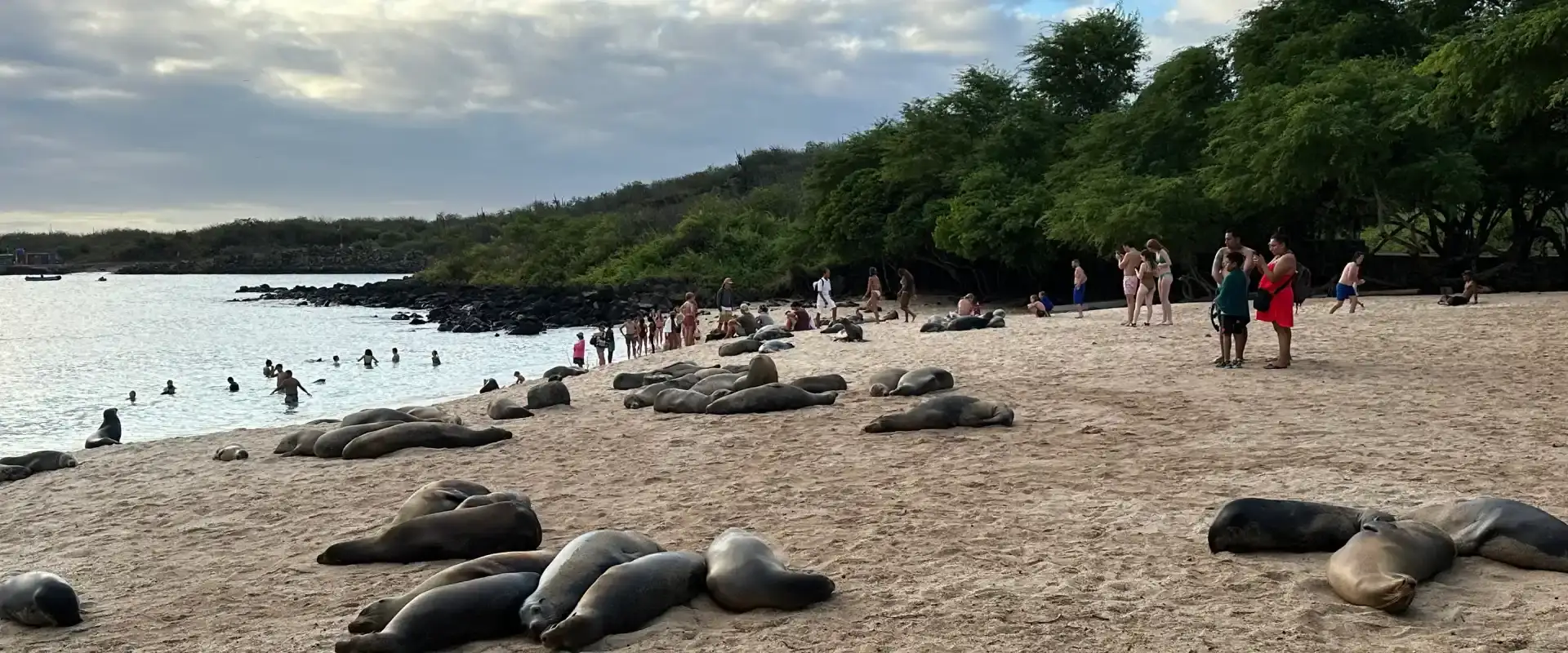
Galápagos beaches are spectacular but they’re not part of a “beach vacation” the way a Pacific coast trip is. They’re protected, often guide-only, with rules about distance from sea lions and marine iguanas. Most travelers visit Galápagos for wildlife and snorkeling, not beach days. If you want both, plan two separate trips.
- Tortuga Bay (Santa Cruz): 45-min walk from town, white sand, no facilities, often the best Galápagos beach for swimming.
- Bartolomé: Iconic black-rock beach with Pinnacle Rock — the Galápagos postcard shot. Day-tour only.
- Gardner Bay (Española): White sand, sea lions everywhere, only reachable by cruise.
- Puerto Chino (San Cristóbal): Easy taxi from town, surf break, swimming-friendly.
For deeper Galápagos coverage see our Galápagos travel guide — different planning logic, different costs, different season.
When to Visit Ecuador’s Coast
Two seasons. Don’t trust generic “year-round” advice; it makes a real difference.
- December – May (warm + wet): Water is warmer (24-26°C), surf is biggest, occasional heavy rain inland. Carnival weekend (Feb-March) is packed — book months ahead or skip.
- June – November (cool + dry): Cooler air (Humboldt current), water around 21-23°C, less rain, whale watching season at Puerto López. Cloudier mornings, sun usually breaks by noon.
- Sweet spot for most travelers: July-August or January (avoiding Carnival).
How to Get to Ecuador’s Coast
- Quito → Salinas / Montañita / Olón: Fly to Guayaquil (~$50, 50 min), then bus or hired car (2-3 hours). Or overnight bus from Quito direct (10-12 hours, $15).
- Quito → Puerto López / Frailes: Fly to Manta (~$70), then 2-hour drive south.
- Quito → North coast (Mompiche, Atacames area): Fly to Esmeraldas (~$60) or 6-hour drive.
- Coast → Galápagos: Domestic flight from Guayaquil ($200-350 RT) — they’re not visited together.
What an Ecuador Beach Trip Actually Costs
The coast is significantly cheaper than the Andes for accommodation, the same for food. Realistic 2026 numbers per traveler per day:
- Backpacker (Montañita, Canoa hostels): $25-40 / day all in.
- Mid-range (Olón, Ayampe boutique hotels): $60-100 / day.
- Comfortable (Salinas condos, Same resorts): $120-200 / day.
- Local meals: $5-8 for full lunch with ceviche or fresh fish.
- Surfboard rental: $10-15/day (Montañita, Olón).
- Whale watching tour from Puerto López: $40-60 per person (June-Sept only).
Is It Safe to Visit Ecuador’s Beaches in 2026?
Honest answer: most of the coast is safe; one region isn’t. The southern coast (Salinas, Montañita, Olón, Ayampe, Puerto López) has had no significant security issues and tourism keeps running normally. The northern coast — particularly Esmeraldas city, Atacames and the area around the Colombian border — has had real problems since 2022 and isn’t where I’d send a first-time traveler. The middle (Mompiche, Canoa, Same) requires more judgment: go with reputable transport, don’t drive at night, and you’ll likely be fine.
For a region-by-region breakdown see our Ecuador safety guide.
Ecuador Beach Towns: Build a Coastal Itinerary (Real Examples)
3-day mini coast (long weekend from Quito)
- Day 1: Quito → Guayaquil flight → Olón (drive, lunch).
- Day 2: Olón beach + sunset.
- Day 3: Day trip to Frailes / Puerto López → fly back from Manta.
5-day classic Spondylus route
- Day 1-2: Salinas (warm-up).
- Day 3-4: Olón / Ayampe (slow days).
- Day 5: Puerto López + Frailes day trip + fly home.
Add to a longer Ecuador trip
These Ecuador beach towns are grouped into routes you can actually drive or bus in the days you have. Tag 4-5 coast days onto an Andes circuit. The classic Quito → Cotopaxi → Baños → Cuenca → Coast → Guayaquil flight home itinerary works well in 14 days. See our Ecuador itinerary planner for variations.
Frequently Asked Questions
Does Ecuador have any nice beaches?
Yes — about 2,200 km of Pacific coast with everything from surf towns (Montañita) to family resorts (Salinas) to pristine national-park beaches (Playa de los Frailes). Most travel guides skip the coast because Ecuador’s other regions get the attention, but a few of the beaches are genuinely worth your travel days.
What are the best beaches in Ecuador?
For most travelers: Salinas (easy + comfortable), Olón (the upgrade from Montañita), Playa de los Frailes (pristine, inside Machalilla National Park), Ayampe (slow, hammock days) and Puerto López (base for whale watching and Frailes). Montañita is the surf-and-party option.
Can you swim in Ecuador beaches?
Yes. The Pacific here is warm most of the year, and the calmest water for swimming is at Salinas, Tonsupa, Same and Playa de los Frailes. Montañita, Canoa and Mompiche are surf beaches with real currents, so swim where the locals are, stay inside the flagged area and skip the days a red flag is up. Lifeguards are a weekend thing outside Salinas — treat the ocean with respect.
Is Salinas Ecuador a good beach?
Salinas is Ecuador’s most-developed beach town — long crescent of sand, malecón promenade, condo high-rises, plenty of restaurants. Good for travelers who want a comfortable beach week without surprises, especially families. If you want untouched nature or a backpacker scene, look at Frailes or Montañita instead.
When is the best time to visit Ecuador’s beaches?
July-August or January (avoiding Carnival weekend in Feb-March). The June-November window is cooler and drier with whale watching at Puerto López. December-May is warmer with bigger surf but more rain. Avoid Carnival weekend unless you book months ahead — coastal towns get packed.
Are Ecuador’s beaches safe in 2026?
The southern coast (Salinas, Montañita, Olón, Ayampe, Puerto López) is safe with normal precautions. The northern coast — Esmeraldas city, Atacames, the Colombian border area — has had real security issues since 2022 and isn’t where I’d send a first-time traveler. Stick to the central and southern coast and you’ll be fine.
How much does an Ecuador beach trip cost?
Backpacker style runs $25-40 a day in Montañita or Canoa hostels. Mid-range boutique hotels in Olón or Ayampe sit at $60-100 a day. Salinas condos or Same resorts are $120-200. Lunch with fresh fish is $5-8 just about everywhere. Surfboard rental $10-15 a day, whale watching tour $40-60 in season.
How do I get from Quito to the coast?
Fastest is flying — Quito to Guayaquil ($50, 50 minutes) then bus or hired car to your beach town. Quito to Manta is the better airport for Puerto López or Frailes. Overnight bus from Quito direct to the coast costs $15 and takes 10-12 hours — fine if you want to save the flight money.
Should I visit Ecuador’s beaches or the Galápagos?
Galápagos for wildlife, mainland coast for relaxation. They’re different trips — Galápagos beaches are protected and often guide-only, mainland beaches are open and casual. If you have time and budget, do both as separate trips. If you have to choose: Galápagos wins for first-time visitors, the coast for travelers returning to Ecuador.
Plan Your Ecuador Beach Trip
Ecuador’s coast won’t replace Punta Cana or the Maldives in your travel memory. What it does well is feel real: cheap fresh fish, locals who chat with you, surf you can actually learn on, a pace that slows down whether you want it to or not. Pick the right town for your trip style and you’ll come away wondering why nobody told you to come.
For the full-country context see our Ecuador itinerary planner, our hiking guide if you’re combining mountains and coast, or get in touch with our team for custom routes.