Ecuador Hot Springs: 10 Best Thermal Baths for 2026
TL;DR
Ecuador’s got some incredible thermal baths that’ll blow your mind. Papallact!s the closest option to Quito with heated pools and jungle vibes. Baños offers adventure plus hot springs. You’ll find prices ranging from free natural pools to $15-30 for fancy resorts. The best time’s always now—these hot springs work year-round, though December to February brings clearer skies.
Ecuador has over 60 natural hot springs scattered across the Andes, heated by volcanic activity along the Ring of Fire. The best thermal baths range from Papallacta’s luxury pools at 3,300 meters to Baños de Agua Santa’s budget-friendly volcanic springs. Most cost between $3 and $25 per person, and you can visit year-round thanks to Ecuador’s equatorial climate.
Two more worth reading before you pick: the practical tips for Papallacta’s thermal springs, and the full Papallacta day trip from Quito.
Pair It With the Galápagos: 9 Day Ecuador & Galápagos Tour
Soaking in Ecuador hot springs high in the Andes — cloud forest steaming around you, no phone signal, sometimes just $3 for entry — is one of those moments that doesn’t show up in the brochures. You can do it as a day trip from Quito, or build a whole week around chasing thermal pools from Papallacta to Cuenca. Either way, you’ll want to know which spots are worth the trip and which are just tourist traps with hotter showers. Papallacta and Baños are also stops on several of our Ecuador travel packages.
Ecuador sits right on the Ring of Fire, which means we’ve got volcanic activity that keeps these thermal waters hot year-round. Whether you’re recovering from a hike, dealing with sore muscles, or just need to decompress from city life, Ecuador hot springs are calling. I’m gonna walk you through the 10 absolute best ones I’ve discovered over the years.
Why Ecuador Hot Springs Are Special
Ecuador’s got something other countries can’t claim—hot springs that’ll vary wildly depending on where you are. Some are naturally heated by geothermal activity, others are powered by nearby volcanoes like Cotopaxi and Chimbora. What makes ’em really special is the combination: {you get the therapeutic benefits of mineral-rich water, plus access to some of South America’s most stunning landscapes. I’ve soaked in hot springs across Peru, Colombia, and Bolivia, and honestly? Ecuador’s variety takes the crown.
Papallacta Hot Springs: Ecuador’s Most Popular Thermal Resort
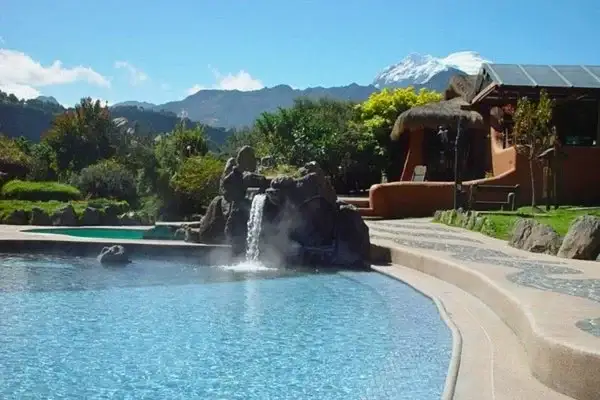
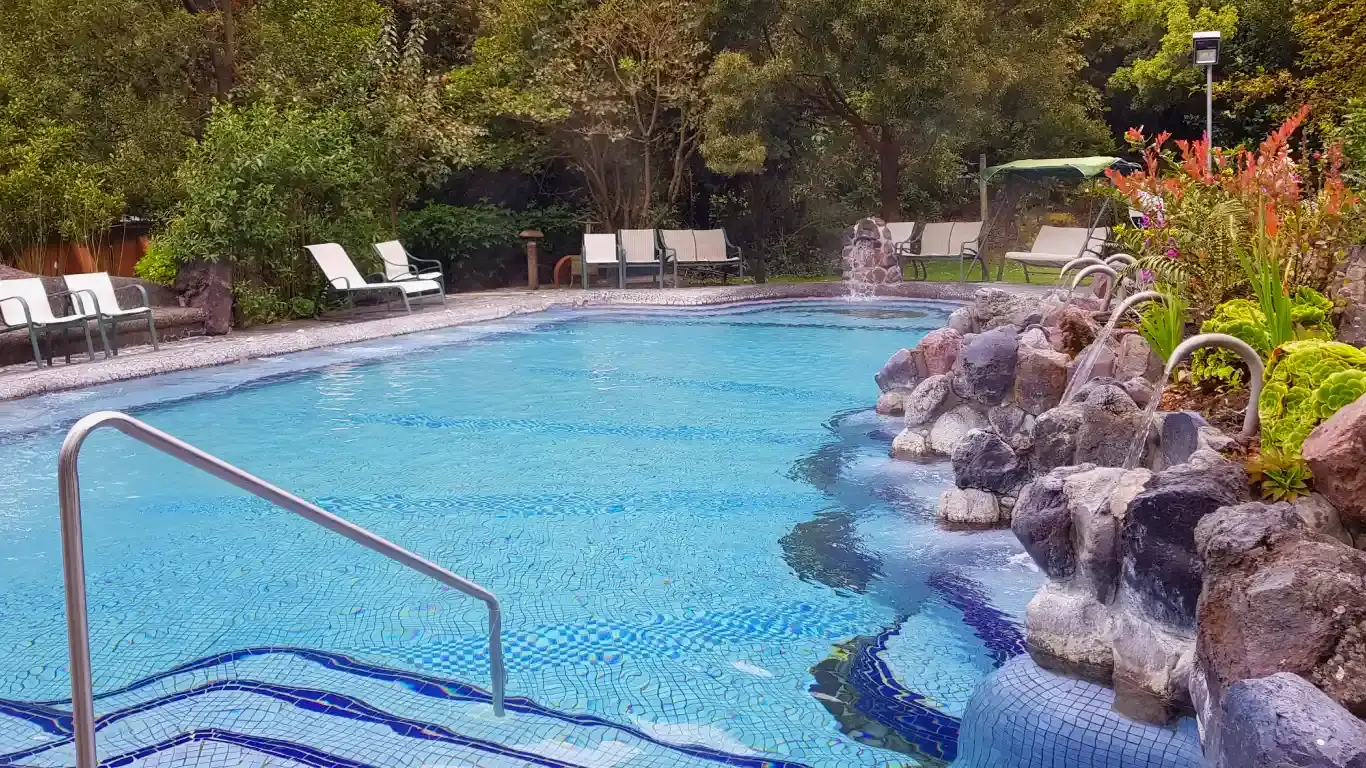
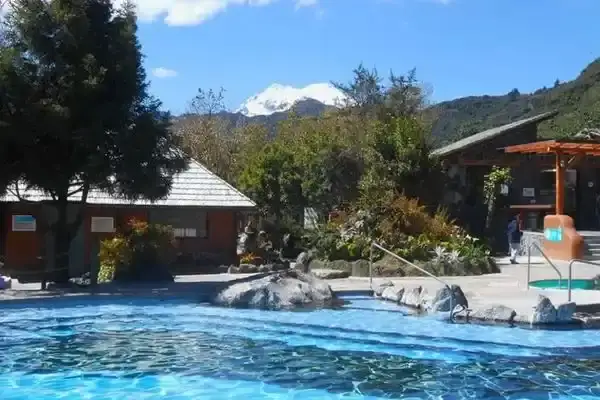
If you’re starting from Quito and want easy access, Papallacta’s your answer. It’s about 1.5 hours northeast of the capital, perched at around 3,300 meters elevation. The water temperature stays consistently between 37-40°C (98-104°F), and that mineral content does incredible things for your skin. I took my mother-in-law there last year, and she couldn’t stop raving about how soft her skin felt afterward. The main complex has multiple pools at different temperatures, plus some natural pools up in the forest if you want the rustic experience.
Getting There & Practical Details
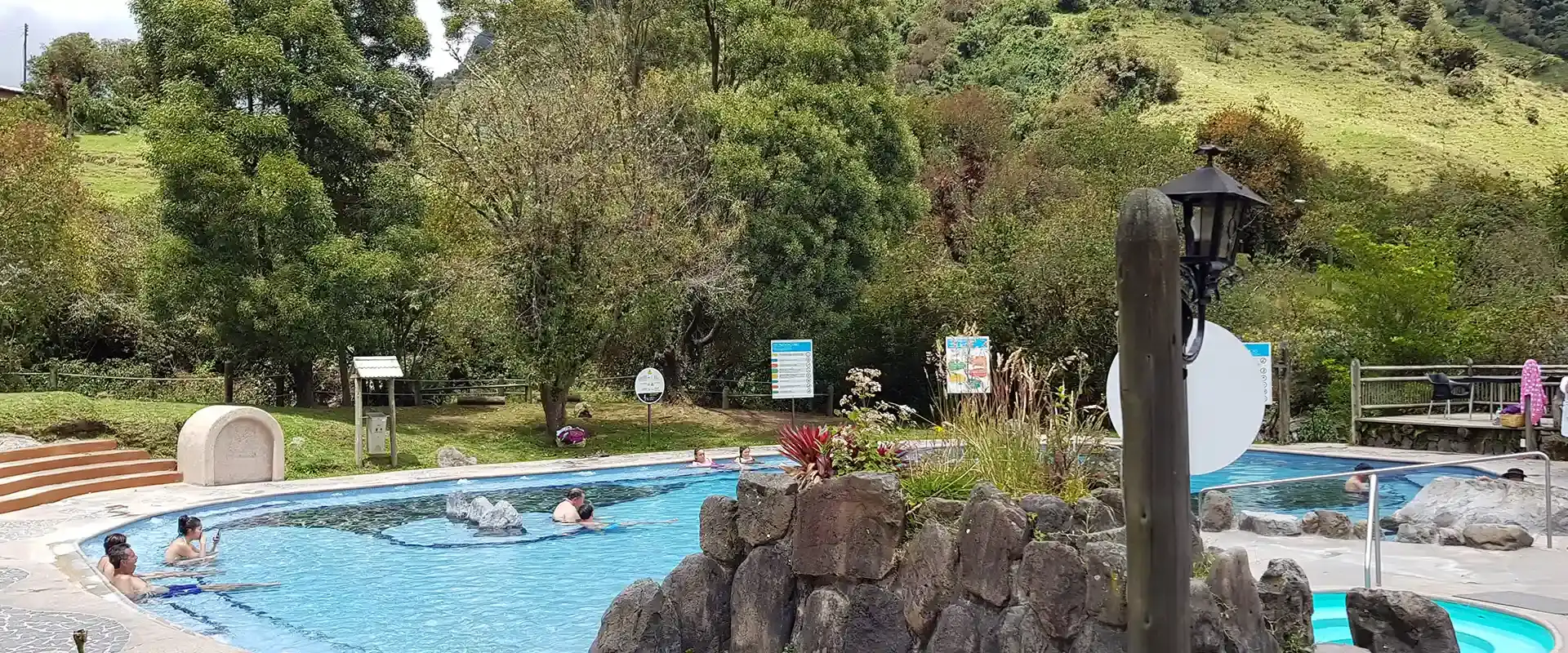
Papallacta is about 1 hour 40 minutes east of Quito on the road to the Amazon. Buses leave from Terminal Quitumbe every hour ($4-5) or you can hire a taxi for around $45-55 one way. The main Termas de Papallacta resort charges $9 for the public pools and $25 for the spa area. Budget travelers should check out the community pools down the hill—same volcanic water, $3 entry. Temperatures range from 36-40°C in the therapeutic pools. I always tell my clients: visit on a foggy morning when the steam mixes with the cloud forest mist. It’s something else entirely. If you would rather someone else handled the logistics, tell us what you have in mind.
Baños Ecuador Hot Springs: Thermal Pools at the Foot of Tungurahua Volcano
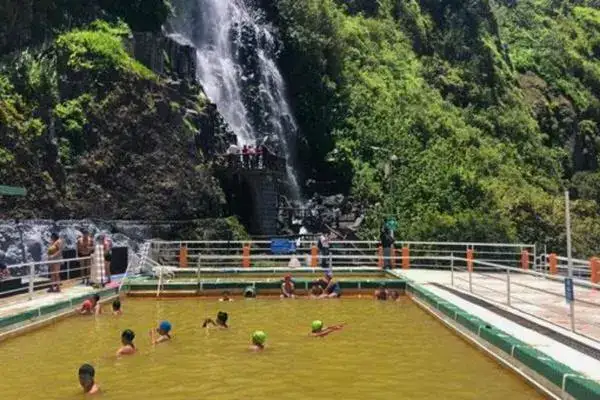
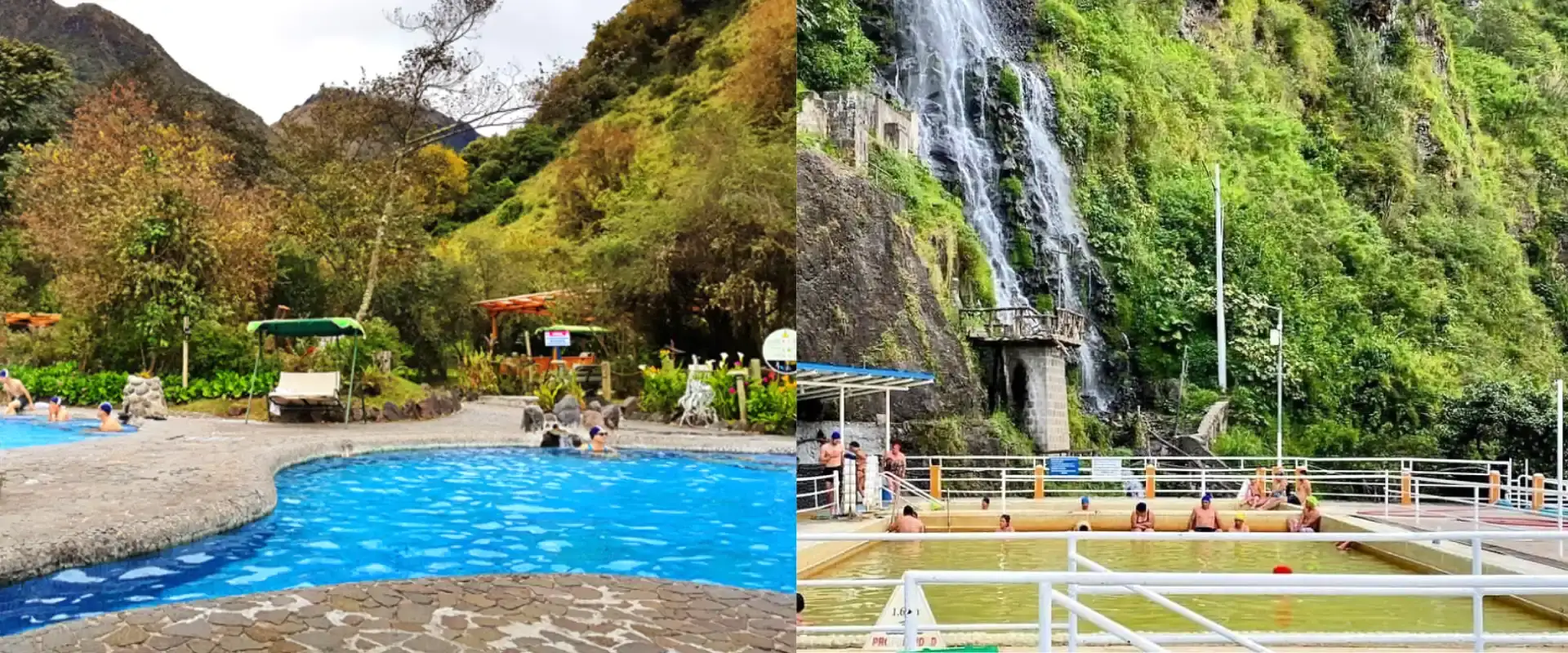
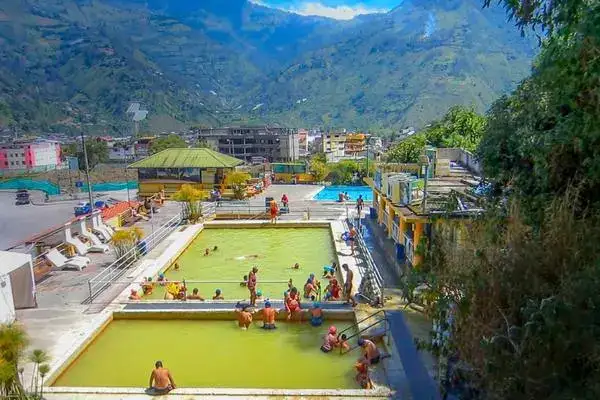
Baños is Ecuador’s adventure capital, and the hot springs here are legendary among backpackers. You’ve got the main resort pools, but more importantly, you’ve got free natural pools scattered around the town. I particularly love the waterfall pools—there’s something about soaking while a waterfall cascades nearby that’ll reset your entire nervous system. The town itself sits at 1,800 meters, so the climate’s perfect year-round, never too cold.
Getting There & Practical Details
Baños de Agua Santa is 3.5 hours south of Quito by bus ($5-6, departures every 30 minutes from Terminal Quitumbe). Once in town, Termas de la Virgen costs $3 for adults and sits right in the center—show up at 5 AM to beat the crowds. El Salado is 15 minutes outside town ($3-4) with hotter, more natural pools. Luna Volcán offers the luxury option at $15-20 with volcano views. My honest advice: start with La Virgen at dawn, then head to El Salado by mid-morning for the full Baños thermal circuit.
Chachimbiro Hot Springs
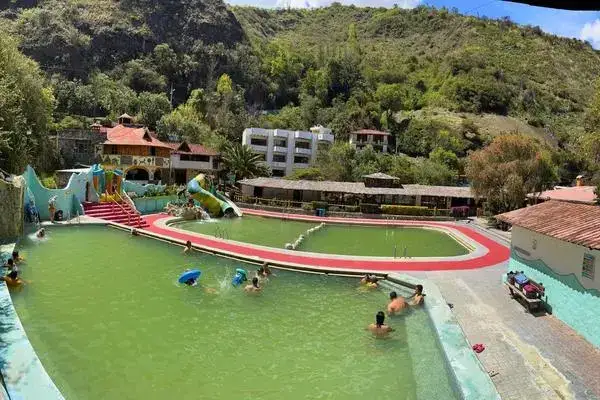
Up in the northern highlands, Chachimbiro’s one of the lesser-known gems. The water’s incredibly rich in minerals, and the local indigenous communities have been using these springs for centuries. There’s a real sense of authenticity here that you won’t get at the bigger resorts. The temperature ranges from lukewarm to steaming hot pools, so you can customize your experience. Plus, it’s surrounded by rural farmland, so the energy feels genuinely peaceful.
Getting There & Practical Details
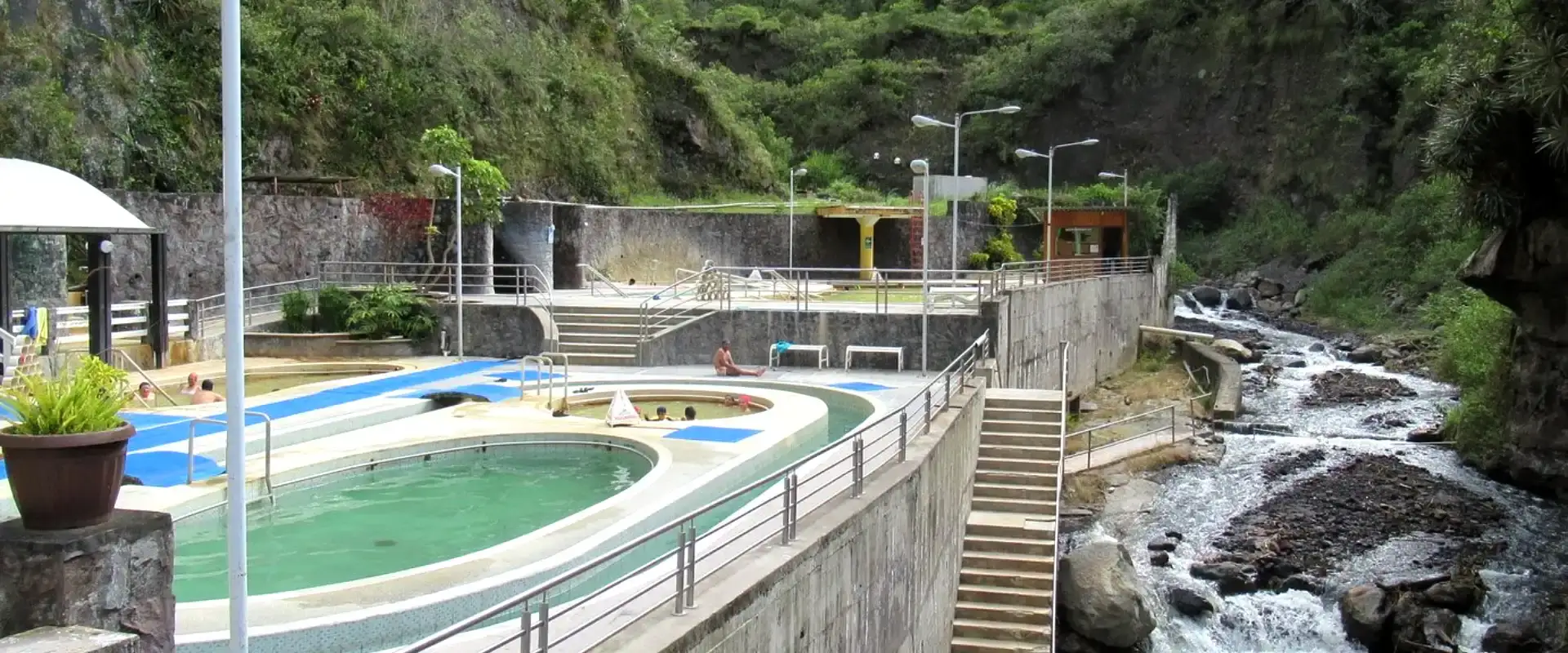
Chachimbiro is about 1.5 hours north of Quito, near Urcuquí in Imbabura province. Take the Panamericana highway toward Ibarra and turn off at Urcuquí—taxis from Ibarra cost around $15. Entry ranges from $5 for basic pools to $20 for the full resort experience at Hacienda Chachimbiro. Water temperatures hit 45-50°C in the hottest pools—some of the most intense thermal waters in Ecuador. The high sulfur content turns the stone pools a yellowish tint and smells exactly like you’d expect, but locals swear by its healing properties.
Oyacachi Hot Springs
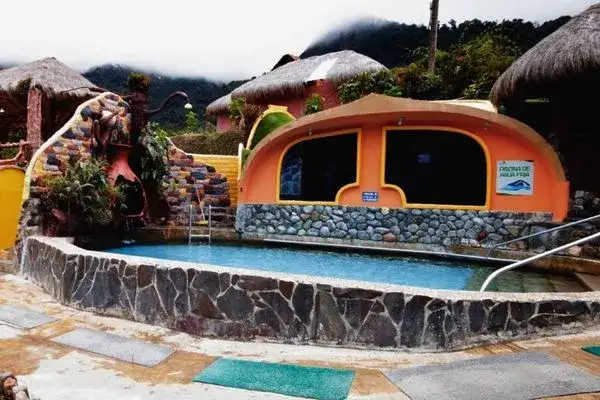
Here’s where it gets truly remote. Oyacachi sits at over 4,000 meters in the Ecuadorian Andes, and the journey there is half the adventure. The natural pools are completely unfenced—you’re literally soaking in pristine mountain water heated by geothermal activity. I’ve been there early morning when the sun’s just hitting the peaks, and it’s one of those moments that reminds you why traveling exists. Access requires a guide and usually a full day trip from Quito.
Getting There & Practical Details
Oyacachi is a real adventure to reach—about 2.5 hours from Quito through the Cayambe-Coca reserve. No public buses run here regularly, so you’ll need a car or organized tour ($40-60 per person). Entry to the community-run pools costs just $2-3. Temperatures reach 38-43°C. The road is unpaved and can be rough after rain, but that isolation means you might have the entire spring to yourself. The indigenous Kichwa community also serves fresh trout from their farms—don’t skip it.
Cuenca’s Baños de Cuenca
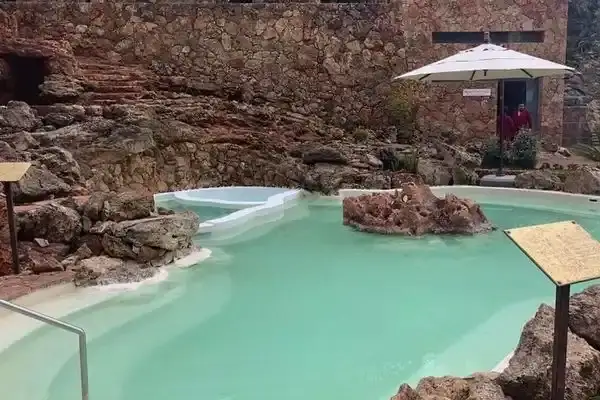
Down in the southern highlands, Cuenca’s got its own thermal oasis. The water’s cooler than Papallacta (around 32-35°C), but it’s famous for its mineral composition. The pools are integrated into a beautiful colonial setting, so you get culture and relaxation mixed together. Plus, Cuenca’s food scene is unreal, so you can do a hot spring day trip and then have an amazing dinner.
Getting There & Practical Details
Baños de Cuenca is just 8 km southwest of Cuenca’s historic center—a $4 taxi ride. The best facilities here are Piedra de Agua ($15-25 depending on the package) and Novaqua ($12-18). For a more local experience, try the municipal pools for about $4. Temperatures range from 36-42°C across different pools. I’d suggest Piedra de Agua on a weekday afternoon—reserve one of the volcanic rock pools for a couple’s soak that’s worth every dollar.
Tena Area Thermal Pools
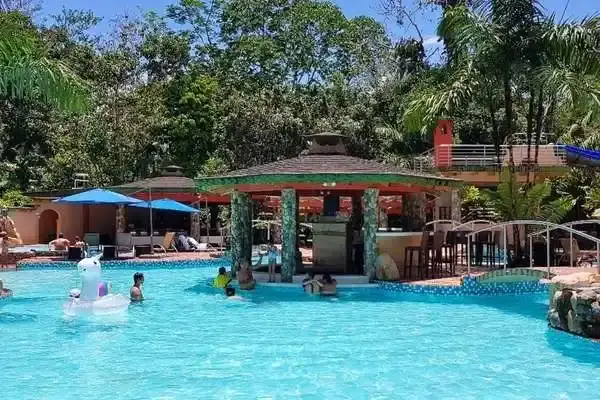
If you’re heading into the Amazon, Tena’s got several thermal options. The water temperatures are perfect for hot and humid jungle weather. The pools here tend to be smaller and more rustic than the northern options, but that’s exactly why they’re special. You’re often bathing with locals, which means you get the authentic experience, not the tourist version.
START IN QUITO, END IN THE GALÁPAGOS
9 Day Ecuador and Galapagos Tour: Andes, Amazon and Santa Cruz
Quito, Cotopaxi, Quilotoa, Baños and the Amazon with your own guide, then three nights on Santa Cruz with tortoises, beaches and snorkeling.
From $1,990 per person
View itineraryGetting There & Practical Details
Most Tena thermal pools are 20-40 minutes from town by taxi ($8-15). The best-known are the Jumandy Caves thermal pools, which combine cave exploration with warm mineral baths—around $5 entry. Water temperatures are warmer but milder than highland springs (35-38°C) since you’re at lower altitude. The Amazon setting means you’ll be soaking surrounded by tropical forest and the sounds of toucans overhead. Bring insect repellent—this is the jungle, after all.
Agoyán Waterfall & Thermal Pools
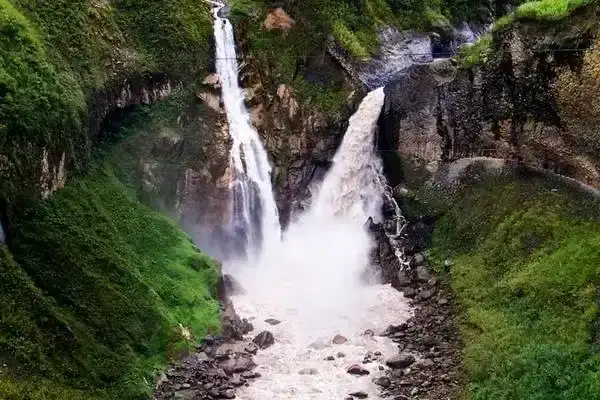
Baños area, but specifically the Agoyán zone—this place combines stunning waterfall views with thermal bathing. The pools aren’t as hot as Papallacta, but the setting is phenomenal. I’ve taken hundreds of photos here over the years, and it never gets boring. The water’s clean, the energy’s great, and there’s always an adventure nearby if you want to mix it up.
Getting There & Practical Details
The Agoyán thermal area is about 7 km east of Baños along the Ruta de las Cascadas—you can bike there or take a $3 taxi. Entry runs $5-8. What makes this spot unique is the combination of thermal pools and the massive Agoyán waterfall backdrop. Water temperature averages 38-42°C. The facilities are more rustic than Baños town springs, but that’s part of the charm. I’d recommend visiting in the afternoon when the light hits the waterfall just right.
Salinas Hot Springs (Ibarra Region)

Up near Ibarra in the north, Salinas offers high-altitude thermal bathing with views that’ll stop you cold. The water’s mineral-rich and the ambiance is genuinely magical. This one requires more planning since it’s further north, but if you’re doing a northern Ecuador circuit, it’s totally worth including.
Getting There & Practical Details
Salinas sits about 30 minutes north of Ibarra by bus—take any bus heading toward the Colombian border and ask to get off at Salinas. Entry costs around $3-5. The pools are basic but the mineral content is among the highest I’ve tested in Ecuador. Water temperatures hover around 40-45°C. Go on a weekday morning—the pools are small and get crowded on weekends. Combine this with a visit to the Afro-Ecuadorian community of Salinas de Imbabura, which has a fascinating cultural museum.
Quick Comparison: The Best Hot Springs in Ecuador
| Hot Spring | Distance from Quito | Temperature (°C) | Elevation (m) | Best For | Price Range |
|---|---|---|---|---|---|
| Papallacta | 1.5 hours | 37-40 | 3,300 | Beginners, relaxation | $10-25 |
| Baños | 4 hours | 25-40 | 1,800 | Adventure seekers | Free-$20 |
| Chachimbiro | 6 hours | 30-50 | 3,100 | Cultural experience | $5-15 |
| Oyacachi | Full day | 35-42 | 4,000 | Adventure, solitude | $40-60 |
| Cuenca Baños | 12 hours | 32-35 | 2,530 | Culture + wellness | $8-18 |
| Tena Area | 8 hours | 28-38 | 600 | Amazon lovers | $10-20 |
| Agoyán | 4.5 hours | 30-35 | 1,200 | Scenic baths | Free-$15 |
| Pucacocha | 3 hours | 35-38 | 2,800 | Day trippers | $8-12 |
| Salinas (Ibarra) | 6 hours | 38-42 | 3,000 | Peaceful soaking | $10-20 |
| Báos de Cuenca | 12 hours | 32-35 | 2,530 | Colonial charm | $10-25 |
What You Should Know Before Going

- Elevation matters: If you’re coming from sea level, start with lower elevations (Baños at 1,800m) before hitting the high-altitude springs.
- Weather’s predictable: December to February brings the clearest skies; June to August is drier but cooler.
- Bring sun protection: At high elevations, UV rays hit different. Your skin burns faster even if the air feels cool.
- Hydrate constantly: The thermal water pulls moisture from your skin, and altitude compounds this. Drink way more water than you think you need.
- Start slow with heat: If you’re new to hot springs, begin with 15-20 minute soaks. Your body needs to adjust to the mineral content and temperature.
- Check water quality: The best springs are maintained regularly. Ask locals about current conditions before you go.
- Natural doesn’t mean free: Even “free” pools might charge for parking or facilities. Budget accordingly.
Ecuador Hot Springs FAQ
Still planning? These are the questions travelers ask us most often about visiting ecuador hot springs — what to budget, when to go, and which spots fit which kind of trip.
How many ecuador hot springs are worth visiting?
Ecuador has over 60 documented thermal springs, but realistically about 10 are worth planning a trip around. The top tier — Papallacta, Baños, Cuenca, Chachimbiro, and Oyacachi — covers different regions, budgets, and vibes. The rest are good if you happen to be passing through.
How much do papallacta hot springs tickets cost in 2026?
The public pools at Termas de Papallacta cost $9 in 2026, and the spa section runs $22-25 depending on the day. The smaller, locally-run thermal pools along the road into town charge $3-5 and skip the resort crowds entirely. Cash is easier than card.
Are baños ecuador hot springs worth the trip from Quito?
Yes — Baños sits 3.5 hours south of Quito, and the thermal pools there are heated by Tungurahua volcano. Termas de la Virgen ($3) is the budget option right under the waterfall, and the Agoyán pools nearby combine soaking with the Ruta de las Cascadas waterfall route. Pair it with a Cotopaxi stop and you have a 2-3 day route.
What are the best hot springs in ecuador for first-time visitors?
For a first trip, Papallacta is the easy answer — closest to Quito, well-marked facilities, and you can do it as a day trip. Add Baños if you have one more day. Skip the remote ones (Oyacachi, Tena) on a first trip unless you have transport sorted.
How do you reach chachimbiro hot springs from Quito?
Chachimbiro is about 2.5 hours north of Quito near Urcuquí in Imbabura. Take the Panamericana toward Ibarra, then catch a taxi from Ibarra ($15-20). Entry is around $8 and the mineral content is the strongest of any Ecuador hot springs we know of.
When is the best time to visit ecuador hot springs?
Honestly, year-round works — you are on the equator. December through February has the clearest mountain weather. June to August is drier overall. April and May get more rain but fewer tourists at the resorts. Hot springs are most pleasant on cool, drizzly days anyway.
Do I need to book ecuador hot springs in advance?
For Papallacta and Cuenca resorts on weekends, yes — book a day or two ahead. Weekdays you can walk in. The smaller natural pools (Oyacachi, Salinas, the free Baños circuits) never turn people away.
Are there free hot springs in ecuador?
Yes — the natural pools at Baños de Agua Santa are free if you walk down to the riverbed, and Oyacachi has a $3-5 entry that is the closest thing to free for a maintained pool. Grutas de La Paz near Tulcán charges around $2. Most other spots fall in the $3-25 range.
Ready to Soak?
Ecuador’s hot springs aren’t just about the water—they’re about reconnecting with yourself and nature. Whether you want luxury resort vibes or raw, untouched natural pools, you’ll find it here. Start with Papallacta if you’re short on time, or go deep and hit multiple springs for the full experience. Your muscles will thank you, your skin will glow, and your soul will feel lighter.
Book your hot spring adventure today. Need help planning your route? Contact our guides for personalized itineraries that fit your style and timeline.
The Bottom Line on Ecuador Hot Springs
Here’s the honest take after 200+ trips through the Andes: ecuador hot springs aren’t a single destination — they’re a route. Papallacta is the easy day trip from Quito, Baños is the volcano-foot circuit, and Cuenca’s pools wrap up a longer southern loop. You don’t need to hit all 10. Pick two that match your route and your budget, build a couple of days around each, and skip the resort spa upcharge unless you really want the chocolate wrap.
If you want a route stitched together for you — Cotopaxi, Baños hot springs, Cuenca thermals — our 4-day Cotopaxi-to-Cuenca trip covers it without the planning headache. For the deep volcanic geology behind why these pools stay hot year-round, the Instituto Geofísico tracks every active volcano feeding the highlands.
Explore Related Articles
- Complete Guide to Papallacta Hot Springs
- Termas de Papallacta: Prices & Packages
- Baños Hot Springs: Adventure Meets Wellness
- Papallacta vs Baños: Which Hot Springs Are Right for You?
- Hot Springs Near Quito: Best Day Trips
Issues—I’ve seen people with psoriasis and eczema get real relief. That said, if you’ve got serious skin conditions, check with a dermatologist first.