Otavalo Market Day Trip from Quito – Indigenous Shopping Guide 2026
Otavalo Market Day Trip: Your Honest Indigenous Shopping Guide
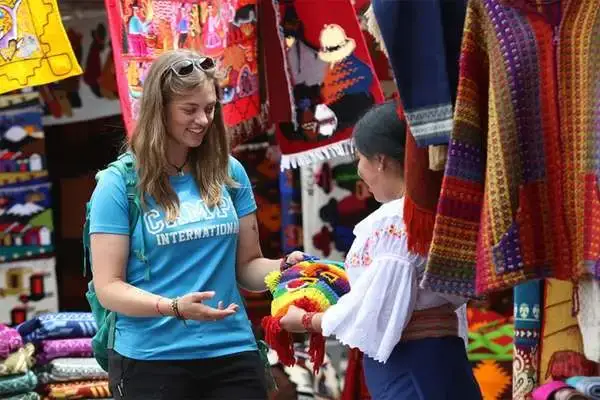
There’s something magical about Saturday mornings in Otavalo. The entire town comes alive with an otavalo market day trip from quito energy that you won’t find anywhere else in Ecuador. When I first made the journey north, I was struck by the sheer scale—hundreds of indigenous vendors selling everything from hand-woven textiles to leather goods, and the colors alone could fill a cathedral. If you’re planning an otavalo market day trip from quito, you’re in for an authentic slice of Ecuador’s rich cultural heritage. This two-hour drive from Quito puts you right in the heart of one of South America’s most important indigenous markets, where Kichwa artisans showcase generations of craftsmanship. Whether you’re a serious collector or just curious about local culture, this guide will help you make the most of your day.
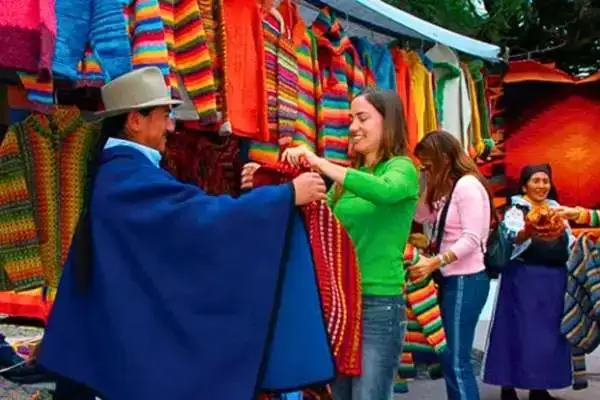
Why the Otavalo Market Ecuador is South America’s Premier Indigenous Shopping Plaza
Otavalo Market is South America’s largest indigenous textile and craft market — held in Plaza de Ponchos in Otavalo, about 2 hours north of Quito in Imbabura province. The Kichwa weavers and their families have been trading here for centuries; Saturday is the biggest day (5 AM to 5 PM), with smaller daily markets running every other day.
Ecuador & Galápagos Tours of 9 to 14 Days
This Otavalo market guide covers the honest otavalo market day trip logistics from Quito — how to get there, what to actually buy (alpaca wool, ponchos, indigenous textiles, woven hammocks), how to haggle without overpaying, and which surrounding stops (Cuicocha Lake, Peguche Waterfall) make the trip worth your time. After sending guests on this Otavalo Ecuador market route for years, here’s what works.
What makes it special? It’s controlled by the indigenous community themselves, not outside corporations. The profits stay in Otavalo. That’s why the energy feels different—you’re contributing directly to families who’ve lived here for generations. The textiles you buy might have taken weeks to create on traditional looms. That alpaca sweater wasn’t mass-produced in a factory; someone’s grandmother likely helped prepare the wool.
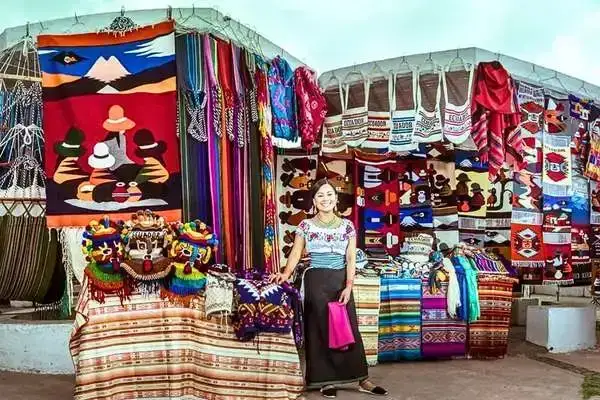
Getting There: The Journey North
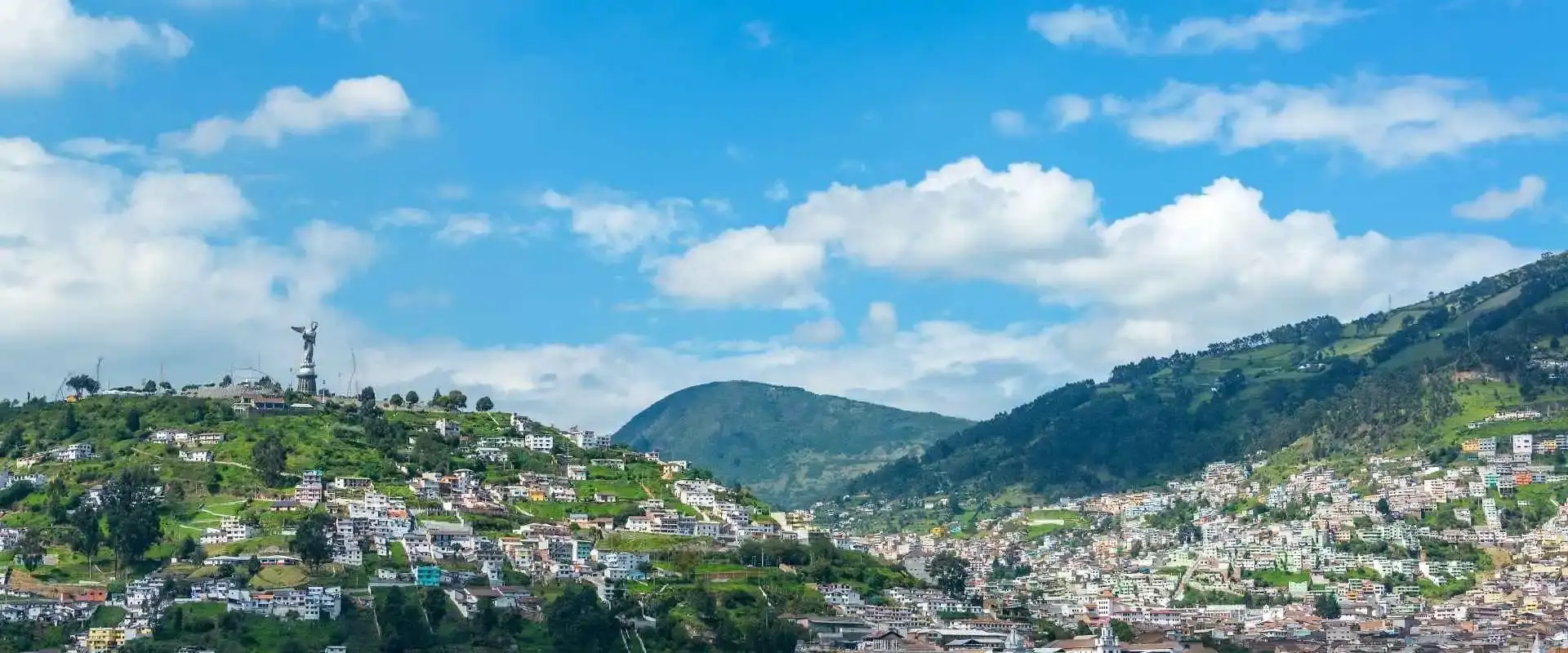
Driving from Quito to Otavalo takes about 1.5 to 2 hours depending on traffic and your exact starting point. You’ll head north through the Pichincha Province, watching the landscape shift from city to countryside. The Pan-American Highway (Ruta Panamericana) is well-maintained, though mountain roads can be winding—not a problem if you’re used to driving in the Andes, but worth noting if you’re visiting from lower altitudes. Want city-of-Quito markets instead? See our honest Quito city markets guide — Feria Libre del Tejar, Mercado Central, La Mariscal. Not sure where this fits in your itinerary? Send us your dates and we will sort the order out.
Here’s my honest recommendation: hire a driver or book a guided tour rather than renting a car if you’re uncomfortable with mountain driving. Many tour operators in Quito offer Otavalo day trips (check our comprehensive day trips from Quito guide for options). Plus, you can relax instead of focusing on the road, and a local guide usually knows the best shortcuts and insider spots.
If you’re driving yourself, leave Quito by 6 AM to arrive as the market opens around 8-8:30 AM. That gives you several hours of prime shopping before the midday crowds peak.
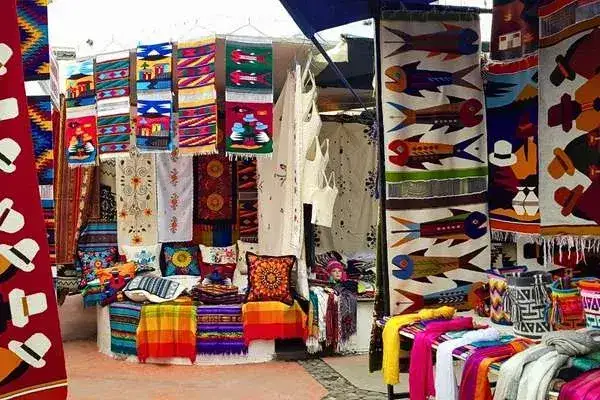
When to Visit the Otavalo Ecuador Market: Saturday is Prime Time
Saturday is the main market day—non-negotiable if you want the full experience. The Plaza de Ponchos (the main market square) explodes into life around 8 AM and stays vibrant until about 3 PM. By afternoon, many vendors pack up, especially if they’ve had good sales.
That said, Otavalo has markets other days too. During the week, you’ll find vendors, but the scene is quieter and less authentic. Friday evenings sometimes feature smaller markets. But if you can only go once, make it Saturday morning. Here’s a typical timeline:
| Time | What’s Happening | Best For |
|---|---|---|
| 8:00-10:00 AM | Market opening, full vendor selection, manageable crowds | Shopping serious items, photography, premium pick |
| 10:00 AM-12:00 PM | Peak crowds arrive, lots of energy and noise | Haggling experience, immersive atmosphere |
| 12:00-1:00 PM | Market at its busiest, hot, crowded | Skip if you don’t like crowds; vendors want to close for lunch |
| 1:00-3:00 PM | Afternoon lull, some vendors closing, deals emerge | Negotiating better prices, quieter browsing |
My strategy? Go early, shop the best pieces by 11 AM, then grab lunch. You’ll have the best selection and avoid the worst of the afternoon crush.
What to Buy: Authentic Otavalo Market Treasures
This is where the otavalo shopping guide part comes in. You’ll find legitimate handcrafted goods here, but you’ll also encounter mass-produced imports if you’re not careful. Here’s what’s actually worth buying and what’s worth skipping:
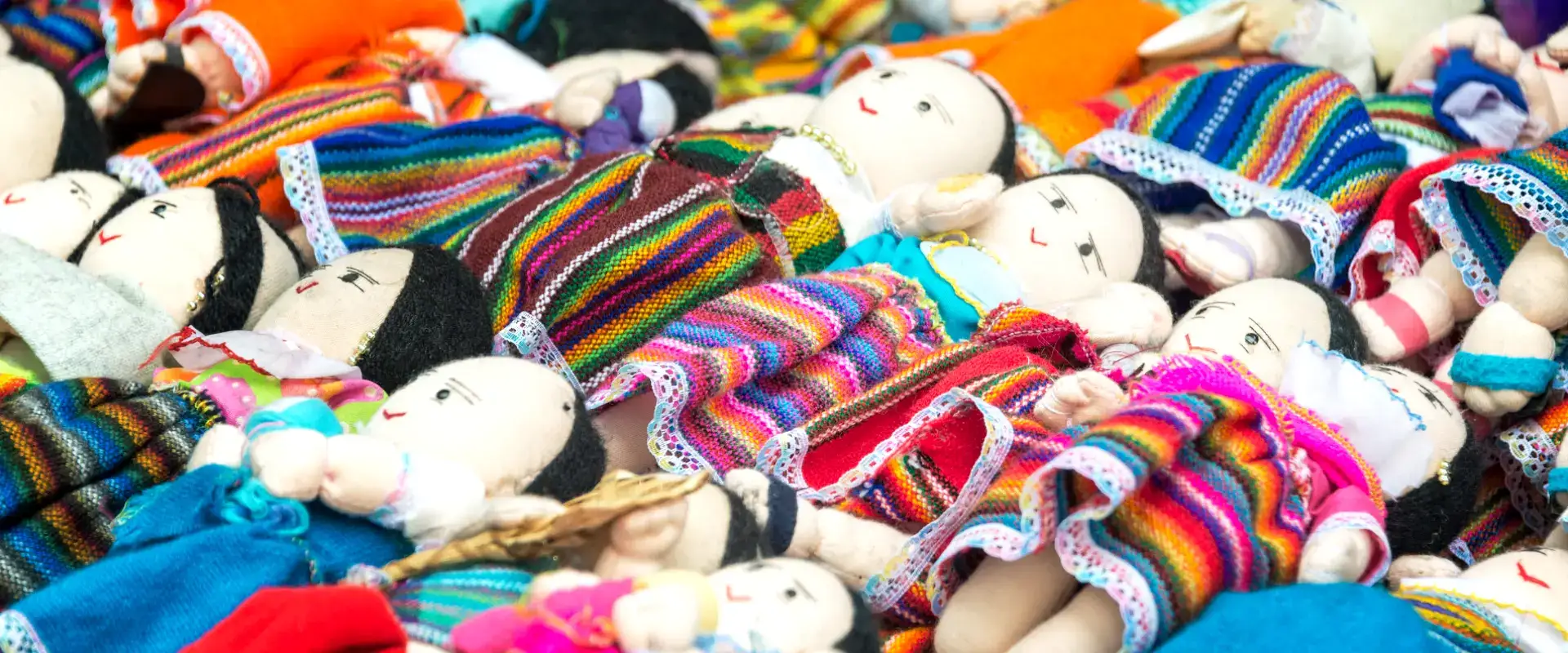
- Hand-woven textiles: This is Otavalo’s specialty. Look for ponchos, scarves, wall hangings, and blankets woven on traditional backstrap looms. Check the label or ask vendors about the weaving method. These take weeks to produce and are genuinely valuable.
- Alpaca and wool sweaters: Legitimately made from local alpaca and sheep wool. Feel the weight—genuine alpaca is heavy and soft. Cheap imitations feel plastic-y.
- Leather goods: Belts, bags, and wallets are handcrafted. The leather quality varies, so inspect seams and material carefully.
- Ceramics and pottery: Look for hand-painted designs, not printing. Handmade pottery has slight irregularities that prove authenticity.
- Indigenous jewelry: Silver and traditional designs. Avoid anything that looks mass-produced or overly uniform.
- Skip: Mass-produced knock-off brand items, low-quality “souvenirs,” anything that looks factory-made and identical to neighbors’ stalls.
Pro tip: Walk the entire market first without buying anything. You’ll get a sense of pricing and quality variation. Then go back for the pieces you genuinely want.
Haggling 101: Negotiate Like a Local
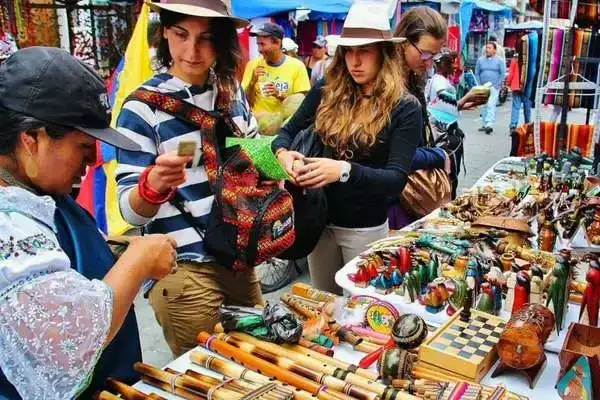
Haggling is expected at Otavalo—vendors price items expecting negotiation. But here’s what locals know: don’t be aggressive about it. Respect these artisans; they’ve worked hard on their craft.
Start by asking the price, then counter with about 60-70% of what they quoted. Most will come down to 80-85%. If they won’t budge, respect that—maybe it’s a fair price or they value their work (rightfully so). Never walk away expecting them to chase you; that’s disrespectful.
Haggling works better for textiles, leather goods, and bulk purchases. Single items or fixed-price goods (like some ready-made clothes) often don’t negotiate. Use cash—some vendors give better deals for cash versus card.
START IN QUITO, END IN THE GALÁPAGOS
9 Day Ecuador and Galapagos Tour: Andes, Amazon and Santa Cruz
Quito, Cotopaxi, Quilotoa, Baños and the Amazon with your own guide, then three nights on Santa Cruz with tortoises, beaches and snorkeling.
From $1,990 per person
View itineraryPractical Tips for a Smooth Day
A few things I’ve learned from multiple visits that’ll make your day better:
- Bring cash. Lots of it. ATMs exist in Otavalo, but they’re busy and vendors often prefer cash anyway. Bring small bills for easier transactions.
- Wear comfortable shoes. You’ll walk for hours on cobblestones and uneven plaza surfaces. Blisters are not fun.
- Bring a backpack or day bag. You’ll accumulate stuff. Carrying bags gets annoying fast.
- Stay hydrated and eat lunch. The midday sun at 2,500 meters elevation hits harder than you’d think. Eat a good local lunch—Otavalo has excellent restaurants near the market.
- Don’t flaunt expensive items. It’s generally safe, but don’t leave valuables unattended or wear jewelry that screams “tourist with money.”
- Respect photography. Always ask vendors before photographing their stalls or them personally. Some are fine with it; others prefer you ask or buy something first.
- Learn basic Spanish. Even “Buenos días” and “¿Cuánto cuesta?” go a long way toward respectful interactions.
Beyond the Plaza: Exploring Otavalo’s Surroundings
If you’ve got time after the market (and I recommend you do), explore beyond the main plaza. Otavalo has other dimensions worth experiencing. The smaller textile markets throughout town continue throughout the week and often have excellent pieces. Walk through residential areas and you’ll see artisans working in their homes and workshops.
One angle most travel guides skip: the Saturday-morning animal market just west of Plaza de Ponchos (5-9 AM). Local Kichwa families gather in traditional ponchos to trade livestock, alpacas, guinea pigs (cuy) and chickens — a genuine cultural scene rather than a tourist circuit. Show up by 7 AM with a respectful camera, no flash, and you witness Otavalo as it has run for centuries. Combined with Cuicocha Lake (a turquoise crater lake at 3,068m, 30-min drive west) and Peguche Waterfall (sacred to the Kichwa, 15-min drive north), the area offers volcano/lake/cloud-forest ecosystems within a 1-hour radius — making this the most diverse single-day-trip destination from Quito.
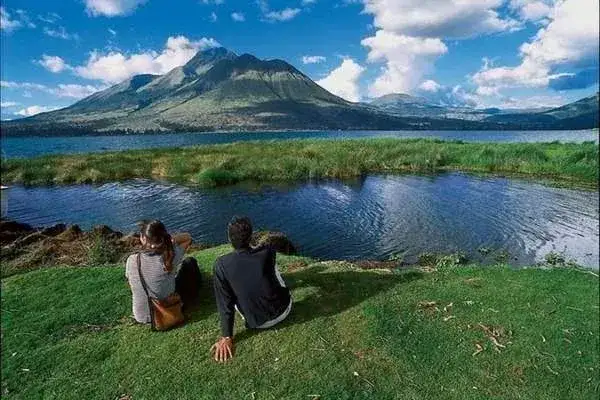
The Laguna de San Pablo sits about 5 km outside town—a beautiful crater lake perfect for a post-shopping hike or just breathing mountain air. If you’re interested in connecting your Otavalo visit to other experiences, check out our guide to related northern Ecuador day trips.
Consider combining Otavalo with a visit to nearby Ibarra (another 1.5 hours north) or stopping at the Peguche waterfall on your way back to Quito. The waterfall’s sacred to local indigenous communities and is genuinely beautiful. For the complete city overview beyond the market — Cuicocha Lake, Peguche Waterfall, accommodations and the wider region — see our honest guide to Otavalo Ecuador.
Food and Dining in Otavalo
You’ll get hungry after hours of shopping. Otavalo has solid food options—not fancy, but authentic Ecuadorian cuisine that’ll fuel you for the drive back.
- Soup: Start with a locro or quinoa soup. They’re hearty and perfect for mountain altitude.
- Main dishes: Ceviche, carne asada, or fresh trout (trucha). Portions are generous.
- Casual spots: Small comedores (neighborhood restaurants) offer lunch specials (almuerzo) for $3-5 USD.
- Better restaurants: Several mid-range restaurants near the market serve excellent food with more ambiance.
My recommendation: grab lunch between 12:30-1:30 PM when the restaurant crowds thin out. You’ll eat well and avoid the market’s peak chaos simultaneously.
FAQ: Your Otavalo Market Questions Answered
How far is Otavalo market from Quito?
Otavalo market sits ~95 km / 60 miles north of Quito in Imbabura province. The drive takes 1.5-2 hours each way on the well-maintained Pan-American Highway (E35). From central Quito at 2,850m, you descend to Otavalo at 2,532m — slightly lower altitude, so an easier first stop if you’ve just arrived and are still acclimatizing.
How to get to Otavalo market from Quito?
Three options: Public bus from Carcelén Terminal in north Quito ($2.50, hourly, 2-3 hours) — cheapest and reliable. Pre-booked transfer or guided day tour ($45-90/person) — best for first-timers; includes round-trip + Cuicocha Lake or Peguche stops. Rental car ($40-60/day) — flexible but parking in Otavalo is tight on Saturdays. For most travelers, a guided day trip pays for itself in time saved and local context.
What makes the Otavalo market unique?
Otavalo is South America’s largest and oldest indigenous market, run continuously since pre-Inca times by the Kichwa Otavaleños — one of the wealthiest and most culturally autonomous indigenous groups in the Americas. The Plaza de Ponchos hosts the textile stalls (alpaca wool, ponchos, hammocks, scarves), while the surrounding streets sell food, leather, jewelry, and instruments. Saturday is the biggest market day with 100,000+ weekly visitors.
Where is the Otavalo market located?
The main Otavalo market is at Plaza de Ponchos (Plaza Centenario) in central Otavalo, Imbabura province, Ecuador — about 95 km north of Quito. Coordinates: 0.2333° N, 78.2683° W. The smaller daily animal market sits a short walk west of Plaza de Ponchos and runs early Saturday mornings (5-9 AM). Most tour vans drop visitors right at Plaza de Ponchos.
What time does the Otavalo market open?
The main textile market runs daily from 7 AM to 6 PM, but Saturday is prime time when full stall coverage opens around 5 AM and runs until 5 PM. Saturday morning (6-10 AM) is when locals shop the animal market; tourists usually arrive 10 AM-2 PM for the textile plaza. Weekday markets are smaller (about 30-40% of Saturday’s stall count) but quieter and easier to browse.
How to haggle at the Otavalo market?
Haggling is expected and respectful at the Otavalo market. Start at 50-60% of the asking price, settle around 70-80%. Don’t haggle aggressively on the first purchase — vendors give better prices once you’ve bought from them once. Ask for “yapa” (a small bonus item — a friendship bracelet, a small scarf) after closing a deal. Pay cash USD (Ecuador uses USD); large bills are hard to break before noon.
Is the Otavalo market safe to visit?
Yes — Otavalo market is one of the safest tourist destinations in Ecuador. The plaza is patrolled, vendors are licensed and reputation-driven, and the indigenous community polices the area informally. Standard travel rules apply: don’t flash large bills, keep your bag in front of you in crowded Saturday hours, and don’t wander the unlit side streets after 9 PM. Late-arriving day-trippers should book a transfer back to Quito for the return.
Plan Your Otavalo Market Day Trip
An otavalo market day trip from quito is more than just shopping—it’s cultural immersion. You’ll support artisans who’ve preserved indigenous traditions for centuries, get genuinely useful handcrafted goods, and understand Ecuador beyond Quito’s tourist circuits. Pack light (you’ll shop), bring cash, wake up early, and prepare for a day that’ll stay with you.
Start planning your trip today. Browse our complete guide to day trips from Quito for other options, or consider combining Otavalo with complementary experiences like our Baños adventure day trip guide. Your Ecuadorian adventure starts here.
Final Word on the Otavalo Market
Looking for more on Otavalo Market Day Trip? Browse our related coverage on otavalo market day trip ecuador, otavalo market day trip guide, otavalo market day trip tour, and reach out to our local experts for personalized planning.