
Ecuador Visa Requirements 2026: Entry Rules by Country
Ecuador visa requirements for 2026: who gets 90 days free, who needs a visa first, extensions, and the documents border agents actually check.

the Quito Trips team, local guides in QuitoUpdated · 6 min read

Ecuador visa requirements are relatively straightforward for most nationalities: many countries receive 90-day tourist visas on arrival without pre-authorization. However, visa rules vary by nationality, and Ecuador’s immigration regulations occasionally change. Before booking your trip, verify the Ecuador entry requirements for your specific country. This guide covers the 2026 requirements for most major nationalities, but individual circumstances may differ. When in doubt, contact the Ecuadorian embassy or consulate in your home country.
Visa-free entry (90 days) for most nationalities
Do I need a visa for Ecuador? For most travelers the short answer is no. Citizens of most developed countries receive 90-day tourist visas on arrival in Ecuador without pre-authorization. This includes:
- United States
- Canada
- European Union countries
- United Kingdom
- Australia
- New Zealand
- Japan
- South Korea
- And many others
Upon arrival, immigration officials stamp your passport with a 90-day tourist visa. No visa application, fees, or pre-authorization required. The 90 days begin from the arrival date.
Extending your stay beyond 90 days
If you wish to stay longer than 90 days, you have options:
The first is a visa extension inside the country. You can apply for a 90-day extension at the Ecuador immigration office (Dirección Nacional de Migración) in Quito or other major cities. The process requires documentation, application forms, and payment (one third of Ecuador’s basic monthly wage, roughly $160 USD in 2026). Processing takes 1-2 weeks. This extends your total stay to 180 days.
Some travelers leave Ecuador and re-enter to reset the 90-day counter. This creates a new tourist visa, but Ecuador immigration watches for this pattern; entering too frequently may result in denial of entry or restricted visas.
For longer stays (beyond 180 days), you’d need to apply for other visa categories (student, investor, temporary resident, etc.). These require specific documentation and are more complex than tourist visas. Working out how many days you need? Send us your dates and we will come back with a plan.
Nationalities requiring pre-authorization
Some nationalities require pre-authorization or have restricted entry:
- Some African nations
- Some Asian nations (varies)
- North Korea (essentially prohibited)
- Iran (complex restrictions)
If your nationality isn’t listed in the “visa-free” categories, contact the Ecuadorian embassy or consulate before booking travel. Showing up at the airport with uncertain visa status is risky.
Passport requirements
Your passport must be valid for at least 6 months beyond your intended departure date from Ecuador. If expiring within 6 months, renew before traveling.
It also needs at least 2 blank pages for immigration stamps, so flip through it before you pack.
Finally, the passport should be in good condition without significant damage or missing pages. Heavily damaged passports may be denied entry.
Documentation you may need
Immigration officials may request:
- Return ticket (proof you’re leaving Ecuador)
- Proof of accommodation (hotel reservation, hostel booking)
- Proof of funds (bank statement, credit cards showing solvency)
- Travel insurance documentation
These documents aren’t always requested, but having them available is smart. Travelers who appear to have insufficient funds or unclear travel plans are sometimes questioned. Generally, if you have a return ticket and accommodation booked, you won’t face issues.
Yellow fever vaccination
Yellow fever vaccination is recommended (not required for entry, but recommended for health) if traveling to Amazon, coast, or any region below 2,300 meters elevation. Quito (at 2,850 meters) is above this threshold, but if you plan Amazon or coastal visits, vaccination is smart.
Ecuador issues a yellow fever vaccination card upon vaccination. Some countries require proof of vaccination if you traveled through Ecuador. Have this documentation if needed.
Arrival process
Most international travelers arrive at Mariscal Sucre International Airport in Quito or José Joaquín de Olmedo International Airport in Guayaquil. Some arrive overland at border crossings (Peru, Colombia).
After you land, head straight to immigration. Lines can be long during peak arrival times. Have your passport, return ticket, and accommodation information ready.
The officer stamps your passport with a 90-day tourist visa, which works as your tourist card. Keep it safe (you’ll need it to exit). If you lose it, you’ll face complications when leaving.
One more rule at customs: if you’re carrying more than $10,000 USD in cash, you must declare it. Bringing cash is allowed; customs only watches unusually large amounts.
Start in Quito, end in the Galápagos
9 Day Ecuador and Galapagos Tour
Andes, Amazon and Santa Cruz
- 9 days
- Medium effort
From $1,990 per person

Pair it with the Galápagos: 9 Day Ecuador & Galápagos Tour
Costs associated with Ecuador entry
- Tourist visa: free (included in passport stamp)
- Visa extension: roughly $160 USD (one third of the basic wage) if extending beyond 90 days
- Departure taxes: normally included in your airline ticket price
- Airport entrance tax: minimal, usually included in any fees paid
Traveling to Ecuador from neighboring countries
Coming overland from Peru, most people cross at Huaquillas. You can apply for Ecuadorian tourist visa there, or if eligible, receive it upon arrival. The border area is less developed; immigration facilities are basic but functional.
The Colombian border is used less because of security concerns. If you do cross there, you’ll go through immigration procedures similar to Peru border.
Still, most international visitors fly to Ecuador from other countries (US, Peru, Colombia, etc.), entering at Quito or Guayaquil airports.
Departing on your Ecuador visa
Ecuador’s departure taxes are normally built into the airline ticket price. Check your fare breakdown to confirm.
At the exit counter you’ll show the same immigration-stamped tourist card. If you’ve lost it, you’ll face complications and possible fines. Contact immigration immediately if lost.
If you overstay beyond your authorized period, you’ll face fines upon departure. The fine amount increases with length of overstay. It’s not worth staying past your visa expiration.
Special circumstances
Digital nomads and remote workers are a gray area. If you’re staying long-term while working remotely, you technically need a visa category beyond tourism. The enforcement of this is inconsistent, but know that official rules require appropriate visa type for non-tourist activities. Some people get around this by extending tourist visas repeatedly; others apply for temporary resident visas.
If you’re coming to study in Ecuador, you need a student visa, which requires enrollment documentation and specific application process. This is more complex than tourist visas.
Retirees have their own option: Ecuador offers pensioner visa categories. This requires proof of income/pension and specific documentation. Popular with expats seeking lower cost of living.
Documentation checklist before travel
- Passport (valid for 6+ months)
- Return ticket (outbound proof)
- Accommodation booking (hostel/hotel reservation)
- Travel insurance (optional but recommended)
- Yellow fever vaccination card (if planning jungle/coastal travel)
- Proof of funds (bank statement, credit cards)
- Emergency contact information for your country’s embassy
- Copies of important documents (passport, visas) stored separately
Where to get more information
Your nearest Ecuadorian embassy or consulate has the current, official rules.
Ecuador’s foreign ministry (Ministerio de Relaciones Exteriores) website has official information.
Your own government’s travel site (Travel.state.gov in the US, or the equivalent at home) usually has an Ecuador page too.
TL;DR visa summary
From the US, Canada, Western Europe, Australia, New Zealand or Japan, you get a 90-day tourist visa granted on arrival. No pre-authorization needed. Keep your tourist card (immigration stamp) until departure.
From anywhere else, check with the Ecuadorian embassy before booking travel. Some nationalities require pre-authorization or face restrictions.
To stay beyond 90 days, apply for a 90-day extension in-country (roughly $160 USD in 2026) for total of 180 days. Beyond that requires different visa categories.
For health, get the yellow fever vaccine if traveling to Amazon or coastal regions.
Useful external resources
Once your Ecuador visa question is settled, our local team can help you plan the route itself.
Keep reading
 Is Ecuador Safe to Visit in 2026? Honest Local Safety GuideIs Ecuador safe in 2026? An honest guide by local guides: regions to avoid, Quito vs Galápagos, scams, transport and tips for solo women travelers.
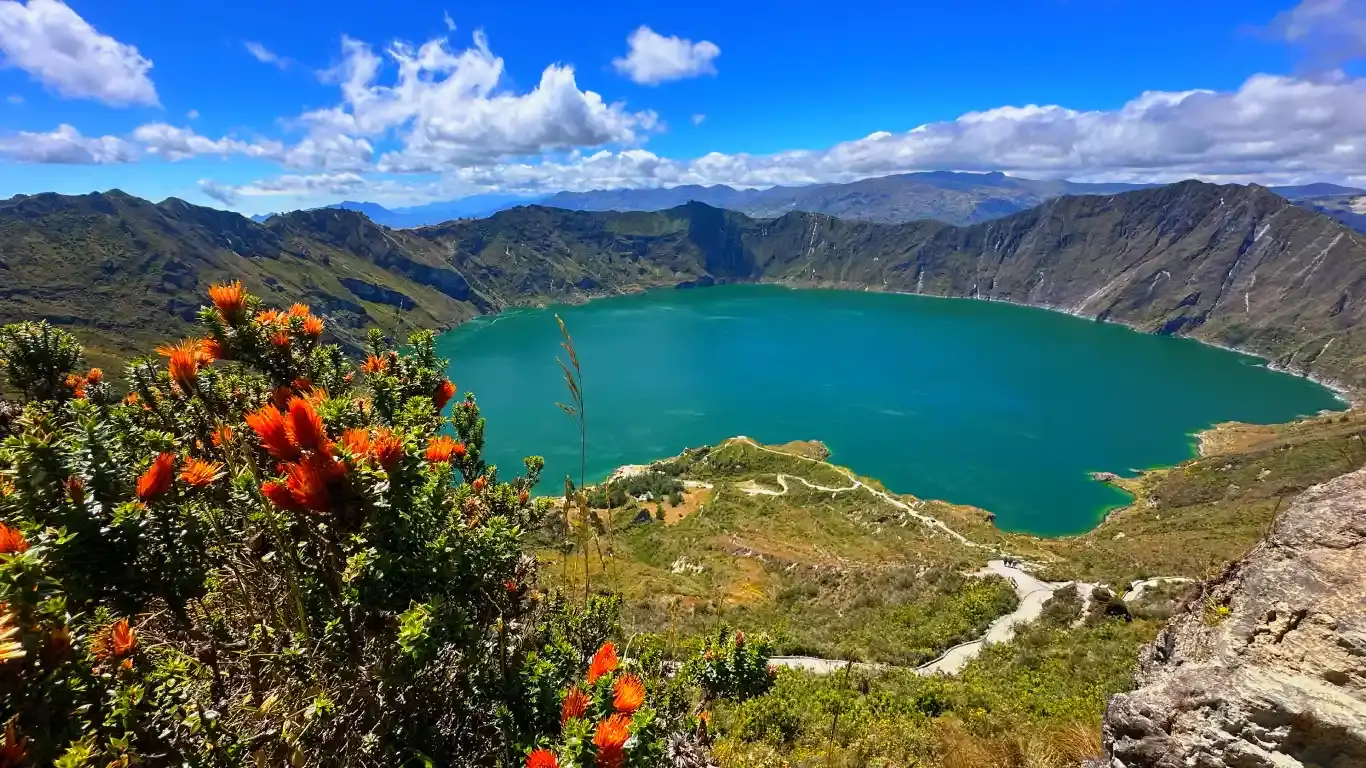 Quilotoa Lake Ecuador: Complete Travel Guide & Hiking Tips 2026Quilotoa Lake Ecuador: a turquoise crater lake at 3,914 m, 3 to 4 hours from Quito. How to get there, entrance fee, rim hike, where to stay and safety tips.
 Best Time to Visit Ecuador: Seasons, Weather & When to Go 2026Find the best time to visit Ecuador by region. Weather patterns, dry and rainy seasons for Andes, Amazon, Coast, and Galapagos with month-by-month guide.