Is Quito Safe? Honest Safety Guide for Travelers (2026)
Everyone asks this question before landing in Quito — usually after reading one scary Reddit thread. Here is the real picture from street level, updated for 2026.
Is Quito safe? Yes — with common sense and the right zones. And is Quito safe for tourists specifically? The numbers say the same thing: most of the 600,000+ visitors each year have zero problems. The real risks are pickpocketing and phone snatching, concentrated in a few predictable spots. Stick to the safe neighborhoods, use taxi apps after dark, and Quito is very manageable. Here is the street-level breakdown for 2026.
Travel Ecuador Safely: Tours with a Local Guide
Need to Know
- Advisory level: U.S. State Dept Level 2 (“increased caution”) — same tier as France and Italy
- Safest areas: La Floresta, González Suárez, Cumbayá — plus La Carolina by day
- Skip: walking the Old Town after 9 p.m., El Panecillo on foot, any park after dusk
- Taxis: InDriver or Cabify, $2–3 in town — never street-hail at night
- Emergency: 911 nationwide (police, ambulance, fire)
Is Quito Ecuador Safe? The Real Picture in 2026
So, is Quito Ecuador safe in 2026? Yes — in the right zones, with the same street sense you would use in any big Latin American capital. Quito receives over 600,000 international tourists per year, and the vast majority leave without any safety incident. The main risk is petty crime — pickpocketing, phone snatching, and the occasional bag theft. Violent crime targeting tourists is rare. So how safe is Quito, Ecuador, day to day? About as safe as any large Latin American capital. And is Quito dangerous? Only in a handful of zones and hours that this guide maps out below.
Third-party indexes back this up: GeoSure Global puts Quito’s tourist districts in the moderate band typical of Latin American capitals, and Ecuador ranks 129 of 163 on the Global Peace Index. Scary on paper — yet the honest Quito safety picture is this: predictable risks, concentrated in known spots, and well-patrolled tourist zones (La Mariscal, Old Town, La Floresta). One rhythm worth knowing: at 2,850 meters above sea level and sitting on the equator, Quito’s time zone is GMT-5 year-round with no daylight saving — the sun sets near 6:15pm every single day. Plan your walking for daylight and switch to taxis after dark.
Is Quito Safe for Tourists Right Now?
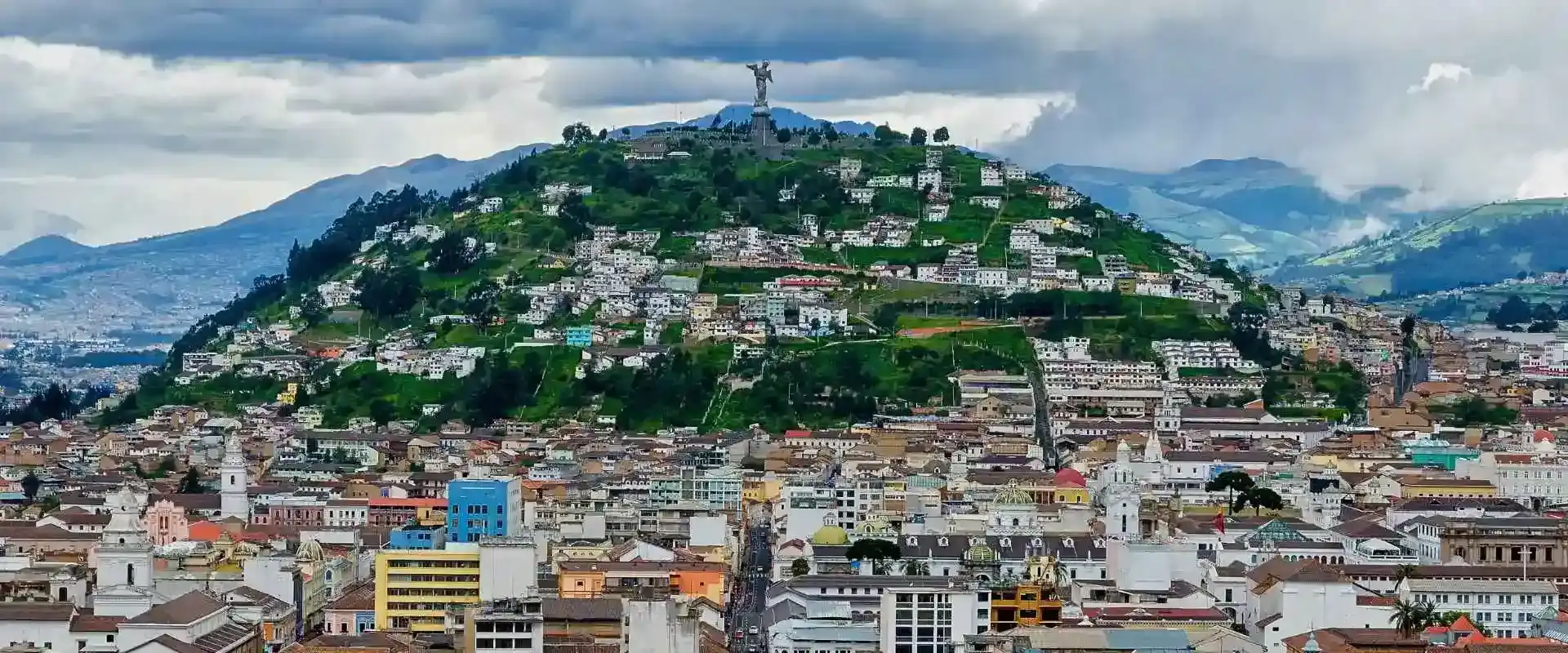
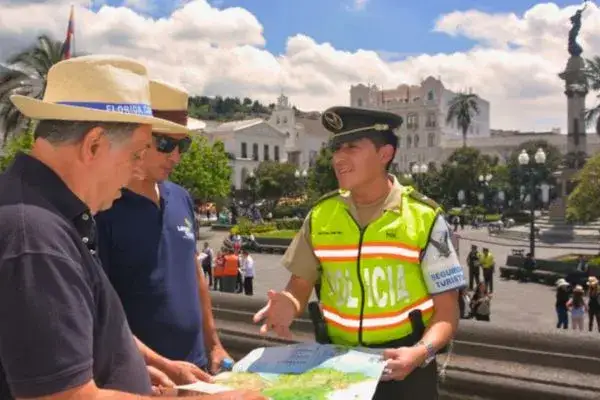
Right now, yes: Quito is safe to visit. Tourist zones are patrolled daily, the 2026 security situation is stable, and the incidents that do happen are overwhelmingly petty theft — not violence. The one thing that changes the equation is wandering into the wrong zone at night, and this guide shows you exactly where those lines are. Daytime classics — the Teleférico up Pichincha, the Middle of the World monument, the old town churches — are all low-risk; just do the Pichincha trails on busy weekend mornings rather than alone midweek.
Safety by Neighborhood
La Mariscal: Generally Safe, Street-Smart at Night
The main tourist zone is well-lit and has regular police patrols, especially around Plaza Foch. At night, stick to the main streets and don’t walk alone on quiet side streets after midnight. Phone snatching is the most common crime here — keep yours in your pocket when walking.
Historic Center: Safe by Day, Cautious at Night
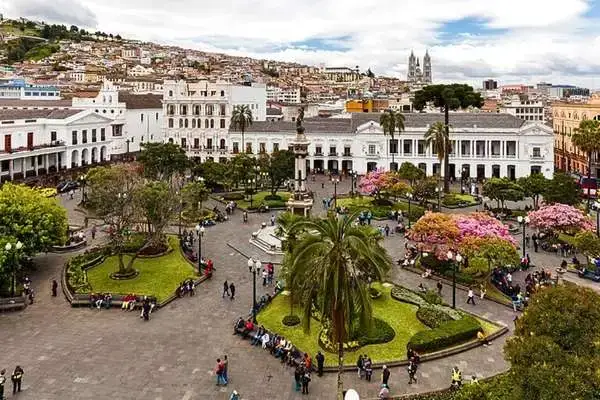
This is the heart of San Francisco de Quito — UNESCO’s first-ever World Heritage Site, listed in 1978 — and it’s bustling and safe during the day with heavy police presence around the main plazas. After dark (roughly 7 PM onwards), the streets empty quickly. Don’t walk south of La Ronda at night, and take taxis rather than walking between the old town and La Mariscal after sunset.
La Floresta & González Suárez: Safest Areas
These residential neighborhoods are the safest in Quito for visitors. Well-lit, well-maintained, with private security in many buildings. You can walk comfortably here at night, though basic precautions still apply. This is where many expats and diplomats live. Not sure how to fit this into a trip? Tell us your dates and we will map it out.
La Carolina & the Business District: Modern and Low-Key
Is La Carolina safe? By day, it’s one of the easiest parts of Quito — banks, malls (Quicentro, CCI), and the big park draw office workers and families. Jog the park in daylight hours like the locals do, and stick to the well-lit blocks around Avenida Amazonas after dark. The park itself empties at dusk; skip it at night, the same rule as every park in the city.
Where Not to Go in Quito (and When)
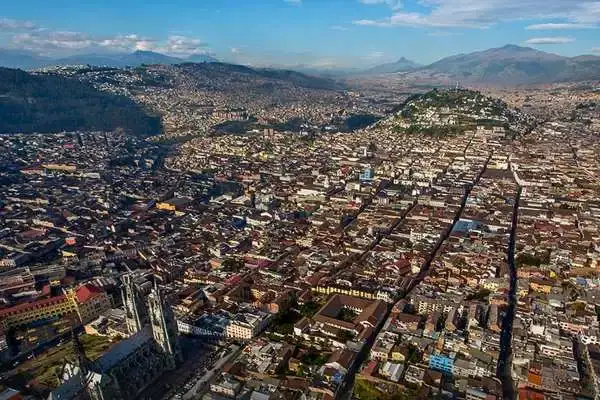
Most of the messages we get boil down to one question: where not to go in Quito. The honest answer is that it is less about whole neighborhoods and more about a few spots and a few hours. These are the ones locals avoid:
- La Marín bus hub and the streets around it after dark — the one spot in the center where even taxi drivers tell you to keep moving.
- The Old Town’s edges at night: San Roque, El Tejar and the blocks below the San Francisco market. By day they are fine; after about 7 pm nobody is around, and empty equals risky.
- La Mariscal’s side streets after midnight (not Plaza Foch itself). Phone snatching clusters here when the bars close — take a taxi app even for four blocks.
- Beyond the Quitumbe bus terminal and Comité del Pueblo at night — not tourist areas anyway, but worth knowing if a cheap rental puts you there.
- Any empty street, in any neighborhood, after dark. That is the rule locals actually follow: it is the empty street, not the zip code.
What is not on the list: La Carolina, La Floresta, González Suárez, Cumbayá and the Old Town by day — where ninety percent of your trip happens, which is why the answer to “is Quito safe” is usually yes. Two boring habits matter more than any map: leave your passport in the hotel safe, and carry travel insurance that covers a stolen phone.
LOCAL GUIDE AND DRIVER, EVERY DAY
12 Day Ecuador and Galapagos Tour: Andes, Amazon and Island Hopping
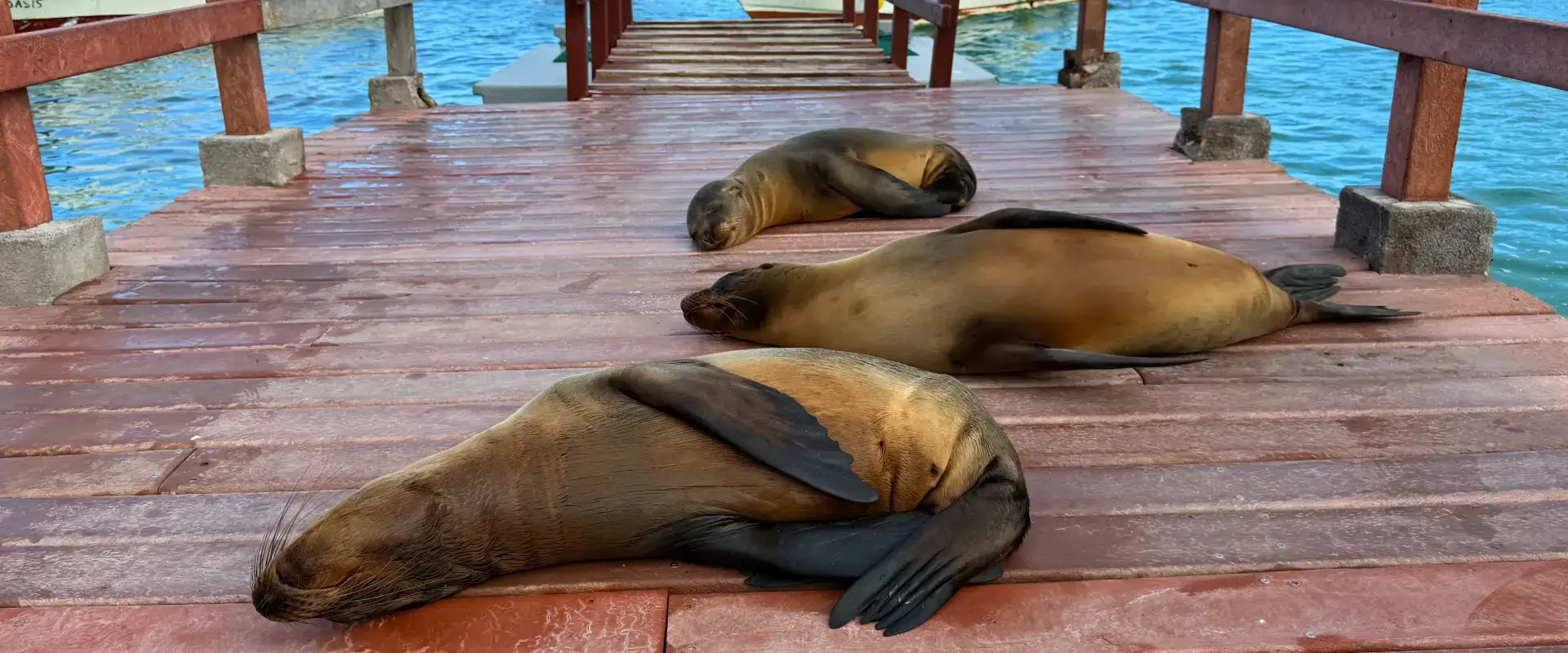
The Andes and the Amazon with your own guide and driver from Quito, then a week of island hopping on Santa Cruz and Isabela with a yacht day.
From $2,690 per person
View itinerary12 Essential Safety Tips for Quito
Every tip below boils down to four things: transportation, valuables, no-go zones, and scams. Get those four right and you’ve handled 95% of the risk.
- Use taxi apps (InDriver, Cabify) — never hail random cabs on the street, especially at night. Registered taxis are yellow with orange license plates. Arriving by plane? See our Quito airport to city center guide.
- Keep your phone in your pocket — phone snatching on the street is the most common crime. Don’t walk and text.
- Don’t flash expensive items — leave fancy jewelry and watches at home. Use a simple day pack instead of a camera bag.
- Carry a copy of your passport — leave the original in your hotel safe. A photo on your phone works too.
- Avoid ATMs on the street — use ATMs inside banks or shopping centers during business hours.
- Stay aware in crowded markets — pickpockets work in pairs. Keep bags zipped and in front of you.
- Don’t walk alone in the Old Town after dark — take a $2–3 taxi instead.
- Drink responsibly — don’t leave drinks unattended at bars, and use the buddy system at night.
- Know the emergency number: 911 — works for police, ambulance, and fire nationwide.
- Get travel insurance — healthcare in Quito is good and affordable, but insurance covers emergencies and theft.
- Learn basic Spanish phrases — even “ayuda” (help), “policía”, and “no gracias” go a long way.
- Trust your instincts — if a street or situation feels wrong, walk away. That applies everywhere in the world.
Common Scams to Watch For
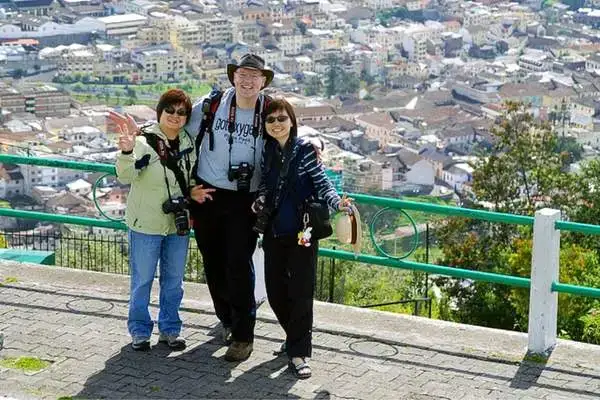
The mustard/spill scam: Someone “accidentally” spills something on you, then while they help clean it, an accomplice steals your belongings. If someone spills on you, walk away immediately and clean up yourself.
Fake taxis: Unlicensed vehicles posing as taxis. Always use apps or ask your hotel to call one.
Express kidnapping: Extremely rare for tourists but worth knowing — never accept rides from strangers. Use only registered transport.
Overcharging at Mitad del Mundo: Some unofficial “guides” charge inflated prices. The official monuments have posted prices — $5 for Ciudad Mitad del Mundo, $4 for Intiñan Museum.
Is Quito Safe at Night? What Locals Actually Do
So, is Quito safe at night? In specific zones, yes — and risky if you wander outside them. After sunset, the rules change. Locals don’t walk through the Old Town after 9 p.m. unless they’re heading straight to a restaurant, and most Quiteños won’t hail a random taxi off the street after dark — InDriver or Cabify handle everything.
Safe at night: La Floresta (the hipster district is alive until midnight), González Suárez, Cumbayá (suburb), and La Carolina north of Parque La Carolina. These areas have patrols, restaurants open late, and foot traffic. Avoid walking at night: the Historic Center (dead after 8 p.m.), La Marín bus terminal area, El Panecillo hill, and any park after dusk — including El Ejido and Carolina Park.
If you’re heading out for dinner in the Old Town, take a taxi both ways. It’s $2–3 and removes the only real risk. Most Old Town restaurants will call you a registered taxi at the end of the night — just ask.
Prefer to skip the logistics entirely? A guided multi-day handles hotels, transport, and the safety question in one go.
How Safe Is Quito Compared to Peru, Colombia, or Mexico?
Based on 2026 homicide rates and tourist incident reports, Quito ranks roughly similar to Lima (Peru) and safer than Bogotá (Colombia) or Mexico City for casual tourism. Ecuador’s overall homicide rate rose sharply 2022–2024 due to coastal drug-trafficking violence, but that spike is concentrated in Guayaquil, Esmeraldas, and Durán — not Quito. Between Ecuador’s two big cities, Quito is clearly the safer one for visitors.
How safe is Quito in practice? For the kind of tourist who sticks to La Mariscal, La Floresta, the Old Town by day, and uses taxi apps at night, it feels more like Cusco or Mexico City’s Roma Norte than a high-risk destination. The U.S. State Department has Ecuador at a Level 2 advisory (same as Italy, France, and Spain) with Quito specifically called out as lower-risk than the coast.
The practical difference: in Lima you worry more about express kidnapping from unofficial taxis; in Bogotá about La Candelaria at night; in Mexico City about specific neighborhoods. In Quito the main thing to avoid is walking at night outside the safe zones, period.
Quito Ecuador Safety in 2026: What Changed This Year
The Quito Ecuador safety picture in August 2026 is stable, and it has the same shape it has had since 2024: the serious violence sits on the coast, not in Quito’s tourist zones. S.
State Department reissued Ecuador at Level 2 (“exercise increased caution”) on August 18, 2026, with its Level 3 and 4 areas limited to coastal provinces and the south of Guayaquil. Canada updated its advice on August 21, 2026 to “exercise a high degree of caution” and notes that the state of exception now covers Pichincha, Quito’s province. In practice that means more police and soldiers on the streets: carry your ID, and show it if asked.
About curfews (toque de queda): since 2024, Ecuador has used short, targeted states of emergency, and a few have included nighttime curfews. They’re announced province by province — and Quito’s tourist zones have rarely been included. If one is declared during your trip: restaurants close earlier, taxi apps keep running until the cutoff, and hotels post the hours at reception. Ask your front desk on arrival; they’ll know the current rules, if any.
What hasn’t changed: pickpocketing on the Trolebús and Ecovía public transport remains the most common tourist crime — not violent, but persistent. Keep your phone off the table in restaurants, wear your backpack on your chest in crowded markets (La Mariscal Market, Mercado Central), and don’t flash jewelry in the Old Town.
Two newer items from the official advisories: express kidnappings involving unlicensed taxis (use a taxi app or an official orange-plate taxi, and never hail one on the street at night), and occasional power outages that leave whole streets dark for an hour or two — one more reason to be home, or in a taxi, after 9 pm.
For the latest official advisory, check the U.S. State Department Ecuador page or the UK FCDO travel advice. Both are updated regularly and treat Quito separately from coastal Ecuador. Canada’s travel.gc.ca Ecuador page is the most detailed of the three on express kidnapping and taxi rules.
Is Quito Safe for Solo Female Travelers?
Quito is generally safe for solo female travelers who apply the same precautions they’d use in any Latin American capital. Street harassment (catcalling) happens — ignore it and keep walking. Wear what you want in La Floresta and La Mariscal; in the Old Town during the day, smart-casual blends in better.
Most solo travelers report the same thing afterward: Quito felt easier than they expected. Stay in La Floresta or Old Town boutique hotels with 24-hour reception, use InDriver (the app shows driver photo, plate, and rating), skip long-distance buses at night, and you’ll be fine. Don’t accept drinks from strangers — drink spiking happens in nightlife zones, though rarely.
Is Quito Safe to Live? Expats and Long-Term Visitors
Yes — thousands of expats and digital nomads live in Quito year-round, mostly concentrated in Cumbayá, González Suárez, La Floresta, and Bellavista. These neighborhoods have private security, gated apartment buildings, and low incident rates. Rent is $400–900/month for a furnished one-bedroom in a good building, and most long-term residents never experience crime beyond the occasional phone snatch.
Cumbayá (15 minutes from the airport, 20 from central Quito) is the top choice for families and remote workers — it’s safer and sunnier than the old city, with coworking spaces, international schools, and easy supermarket access. If you’re coming for 3+ months, skip the downtown hotel route and rent an Airbnb in Cumbayá or González Suárez instead.
One more thing: most travelers treat Quito as the gateway to the Galápagos — a day or two in the capital, then the flight out of Mariscal Sucre. If that’s your plan, a set island itinerary takes the guesswork (and the safety planning) off your plate.
Quick Answers: Quito Safety
Before you pack, here are quick answers to the Quito safety questions travelers ask most.
Is Quito safe to walk around?
During the day, yes — the tourist areas (La Mariscal, Old Town, La Floresta) are safe for walking with normal precautions. At night, use InDriver or Cabify for anything more than a few blocks, especially in and around the Historic Center.
Is it safe to walk in Quito at night?
It depends on the zone. La Floresta, González Suárez, and Cumbayá stay lively and safe until midnight. The Old Town, El Panecillo, and any public park empty out after dark and aren’t recommended for walking. Take a $2–3 taxi instead — it’s what locals do.
Is Quito safe for solo female travelers?
Yes, with the same precautions you’d take in any Latin American capital. Use taxi apps (InDriver/Cabify), stay in well-reviewed hotels with 24-hour reception, don’t accept drinks from strangers, and stick to La Floresta or La Mariscal at night. Street harassment (catcalling) exists but direct crime against solo women is uncommon.
Is Uber safe in Quito?
Uber works in Quito but exists in a legal gray area — drivers occasionally get stopped. InDriver and Cabify are the preferred alternatives: legal, widely used, track your ride in-app, and show driver plate and photo before you get in. Never hail unregistered taxis off the street.
What is the safest neighborhood in Quito?
González Suárez, La Floresta, Bellavista, and Cumbayá are considered the safest areas of Quito. For tourists wanting to be close to the action, La Floresta offers the best balance of safety, walkability, restaurants, and charm. Cumbayá is best for families and long-term stays.
Is Quito safer than Guayaquil?
Yes, decisively. Ecuador’s violent-crime spike since 2022 is concentrated on the coast — Guayaquil, Esmeraldas, Durán — while Quito’s tourist zones stayed comparatively calm. Quito is the safer of Ecuador’s two big cities for visitors, and it holds up well against Bogotá too: smaller tourist footprint, easier logistics, fewer after-dark trouble zones.
Is the altitude in Quito safe?
Quito sits at 2,850 m (9,350 ft) — high enough that roughly 1 in 4 visitors feels altitude symptoms (headache, mild nausea, shortness of breath) during the first 24–48 hours. It’s almost always mild and passes quickly. Drink water, skip alcohol the first night, and take it easy. Serious altitude illness is very rare in Quito. For the full breakdown of what 2,850 m feels like and how to adjust, see our guide to Quito elevation.
Is Quito safe for tourists in 2026?
Yes. The 2026 situation in Quito is stable with heavier police presence in tourist zones after the 2024 state of emergency. Pickpocketing on public transport is the most common tourist incident — not violent crime. Millions of tourists visit Quito every year without issues by sticking to safe zones and using taxi apps at night.
Is Quito safe for American tourists?
Yes — Americans face the same risks as every visitor: pickpocketing and phone snatching, not violence. The U.S. State Department keeps Ecuador at Level 2 (“exercise increased caution”), the same tier as France and Spain. Enroll in the free STEP program for embassy alerts, use taxi apps at night, and you’re set.
Is Quito or Bogotá safer?
On paper they are similar: both are big Andean capitals with petty theft in the tourist zones and real problems in specific districts. In practice, Quito’s tourist areas (La Carolina, La Floresta, the Old Town by day) feel calmer than Bogotá’s, while Bogotá has a bigger late-night scene with more incidents around it. Use the same rules in both — taxi apps after dark, phone out of sight, no empty streets — and you will be fine in either.
Which is safer, Peru or Ecuador?
For a tourist the two are close. Ecuador’s headline crime numbers rose after 2023, but almost all of it sits on the coast; Quito and the Andes run about like Cusco or Arequipa. Lima has the same phone-snatching and taxi issues Quito does. Neither country is “unsafe” for visitors who stick to the tourist zones, use taxi apps and skip empty streets at night.
ECUADOR’S SAFEST REGION
7 Day Galapagos Tour from Quito: Santa Cruz, Isabela and a Yacht Day
Santa Cruz, Isabela and a yacht day to an uninhabited island, with hotels, a naturalist guide and every transfer arranged.
From $1,279 per person
View itineraryBefore You Go
- Download InDriver or Cabify before you land
- Book your hotel in La Floresta, González Suárez, or near the Old Town’s daytime core
- Leave the jewelry at home; carry a passport copy, not the original
- Save 911 and your hotel’s phone number
- After dark: $2–3 taxi, every time — no park shortcuts
Quito is a vibrant, welcoming city that millions of tourists enjoy safely every year. The risks are real but manageable with basic awareness — the same street smarts you’d use in any major city. Don’t let fear keep you from one of South America’s most rewarding destinations.
For more on planning your visit, see our 21 best things to do in Quito and where to stay in Quito by neighborhood.