21 Best Things to Do in Quito, Ecuador (2026 Local Guide)
Things to do in Quito? This local guide rounds up the 21 best — from colonial plazas to cloud-forest day trips — with honest tips you will not get from a tour desk. It covers the top things to do in Quito city and the wider things to do in Quito Ecuador, so you can plan with confidence.
Quito is the only capital city in the world where you can stand on the equator line before lunch, explore a UNESCO World Heritage old town by afternoon, and ride a cable car to 4,050 meters before sunset — all without leaving city limits. After years of sending travelers down this road, it still surprises me. This guide covers the 21 best things to do in Quito based on what I actually recommend to friends, not what a brochure tells you.
Quito sits at 2,850m / 9,350 ft — give yourself a chill first morning before climbing the Basílica towers or hiking Pichincha. Most travel guides give you the same 5 things to do in Quito — colonial photos, Mitad del Mundo, the TelefériQo. This guide goes wider.
From free walking tours through colonial plazas to hidden local markets most tourists never find, here’s everything worth your time in Ecuador’s capital — organized by neighborhood so you can plan your days efficiently.
Pair It With the Galápagos: 9 Day Ecuador & Galápagos Tour
Quito Old Town: The Heart of the City
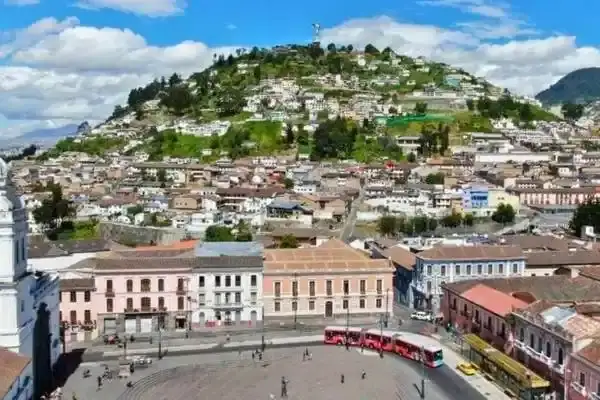
Quito’s Historic Center is the largest and best-preserved colonial district in all of South America — that’s not marketing, that’s UNESCO talking. The whole area earned World Heritage status back in 1978, the first city in the world to receive it alongside Kraków.
Walking through here feels like stepping into a living museum, except the churches are still active, the markets still sell lunch for $2.50, and street vendors still hand you fresh empanadas. For perspective, the UNESCO-listed historic center packs 32 museums, 24 churches, 7 convents, 6 monasteries and 13 plazas into 320 hectares — one of the densest concentrations of preserved colonial architecture in Latin America. Plan at least half a day; a full day if you climb the Basílica towers and stop for coffee at La Ronda.
1. Start Your Day at Plaza Grande
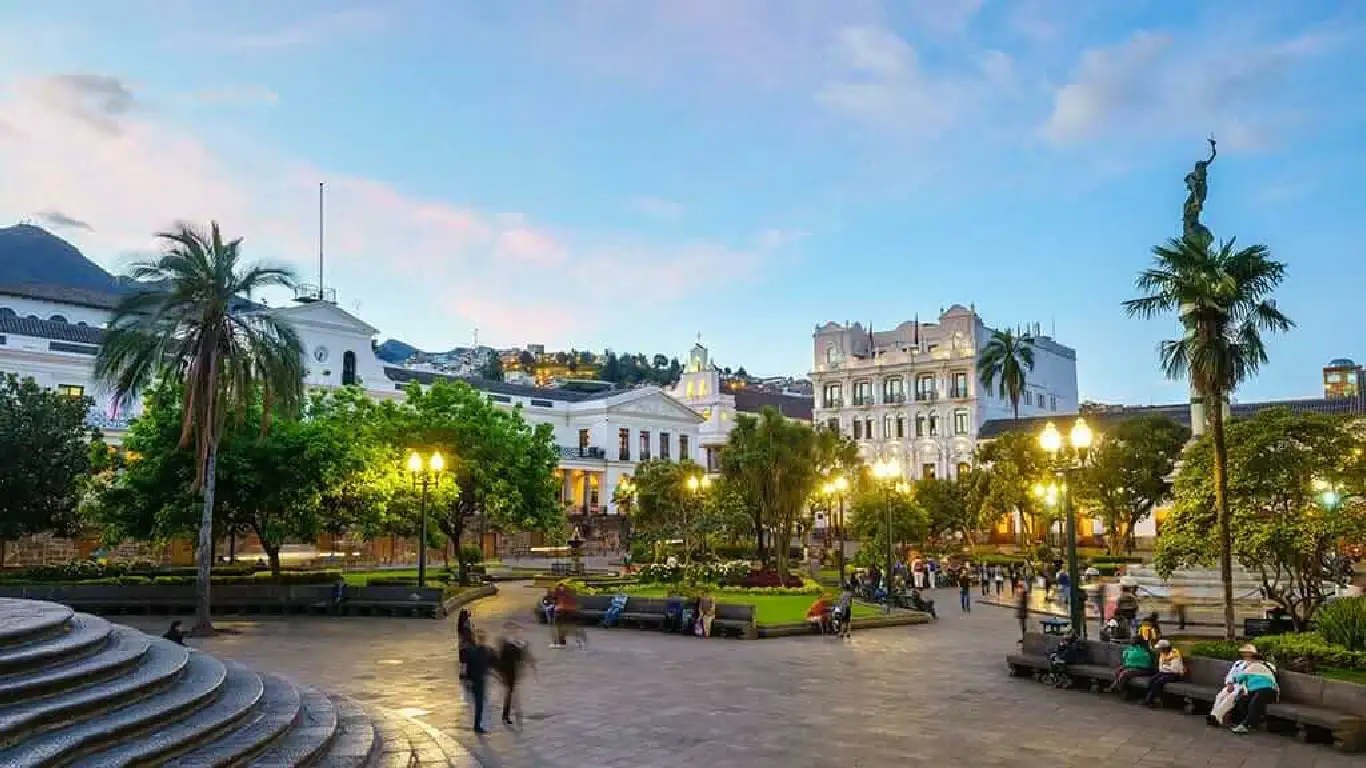
Every visit to Quito should begin at Plaza de la Independencia — locals call it Plaza Grande. This is where Ecuador’s political heart beats: the Carondelet Presidential Palace sits on the west side, the Metropolitan Cathedral on the south. Grab a bench and watch the changing of the guard (it happens every Monday at 11:00 AM). The cathedral itself is free to enter and houses the remains of Mariscal Sucre.
2. Step Inside La Compañía de Jesús
This is the one building in Quito that makes everyone stop talking. La Compañía took 160 years to build, and every surface — ceiling, walls, columns — is covered in gold leaf. Seven tons of gold, to be specific. It’s $5 to enter, and I’ve never met a single traveler who regretted paying it. Photography is allowed, but no flash. Go early in the morning when the light hits the nave through the east windows.
3. Wander Down La Ronda Street
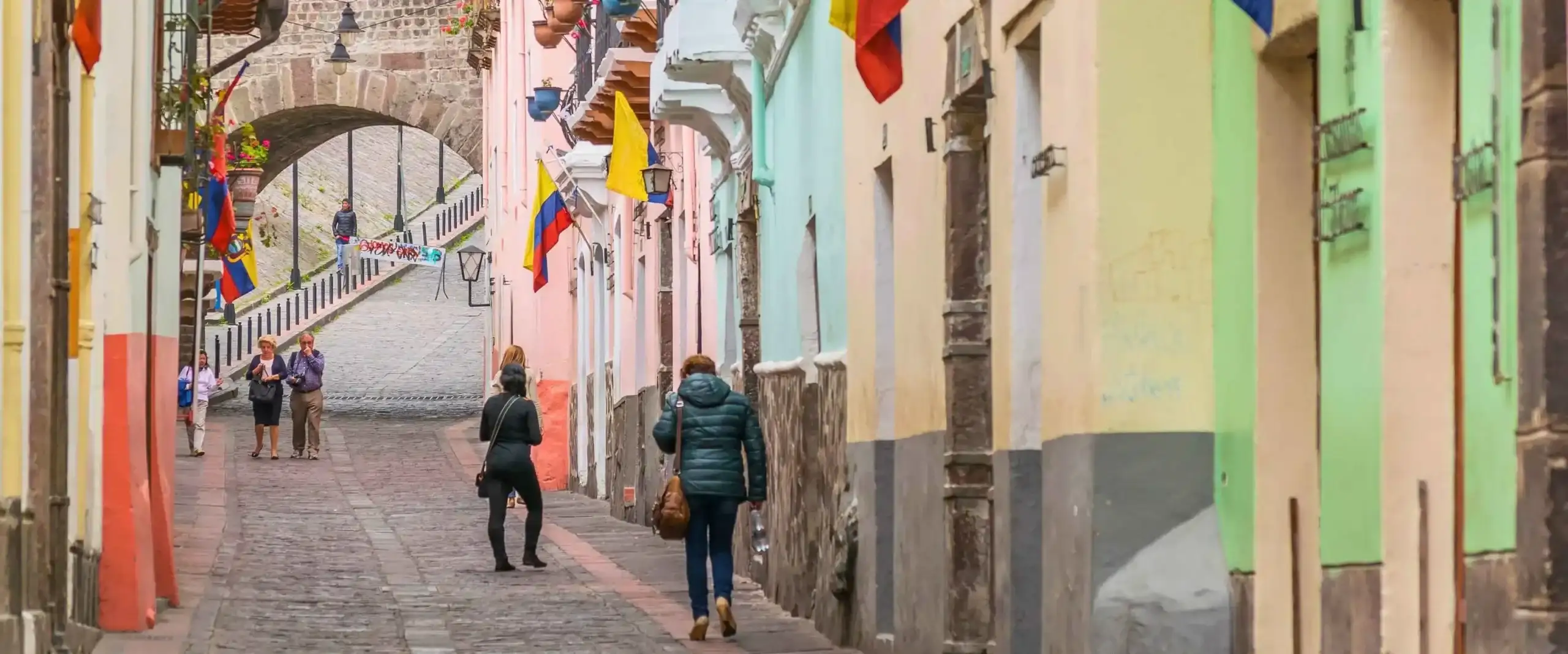
La Ronda is Quito’s oldest street and the bohemian soul of the old town. By day, it’s a quiet cobblestone lane with artisan workshops. By night, it transforms — live music spills out of peñas (folk music bars), and the smell of canelazo (hot cinnamon sugarcane liquor) fills the air. Walk the full length. It takes about 20 minutes without stops, but you’ll stop. Everyone stops. Our Calle La Ronda guide covers what opens when, and which doorways are worth stepping through.
4. Climb the Basílica del Voto Nacional Towers
The largest neo-Gothic basilica in the Americas, and here’s what makes it uniquely Ecuadorian: instead of gargoyles, the exterior is decorated with local animals — iguanas, armadillos, tortoises, and Galápagos boobies. For $2, you can climb the main tower. The last section involves walking across an exposed wooden plank bridge between the two towers. The 360-degree view of Quito from the top is worth every nervous step. Planning the wider trip? Send us your dates and we will put the route together.
Best Viewpoints in Quito
Quito sits at 2,850 meters in a narrow valley flanked by volcanoes. That altitude is the first thing most visitors notice, and our guide to Quito elevation covers how it feels and how long it takes to adjust. The geography means incredible viewpoints are everywhere — you just need to know where to look.
5. Visit the Virgen del Panecillo
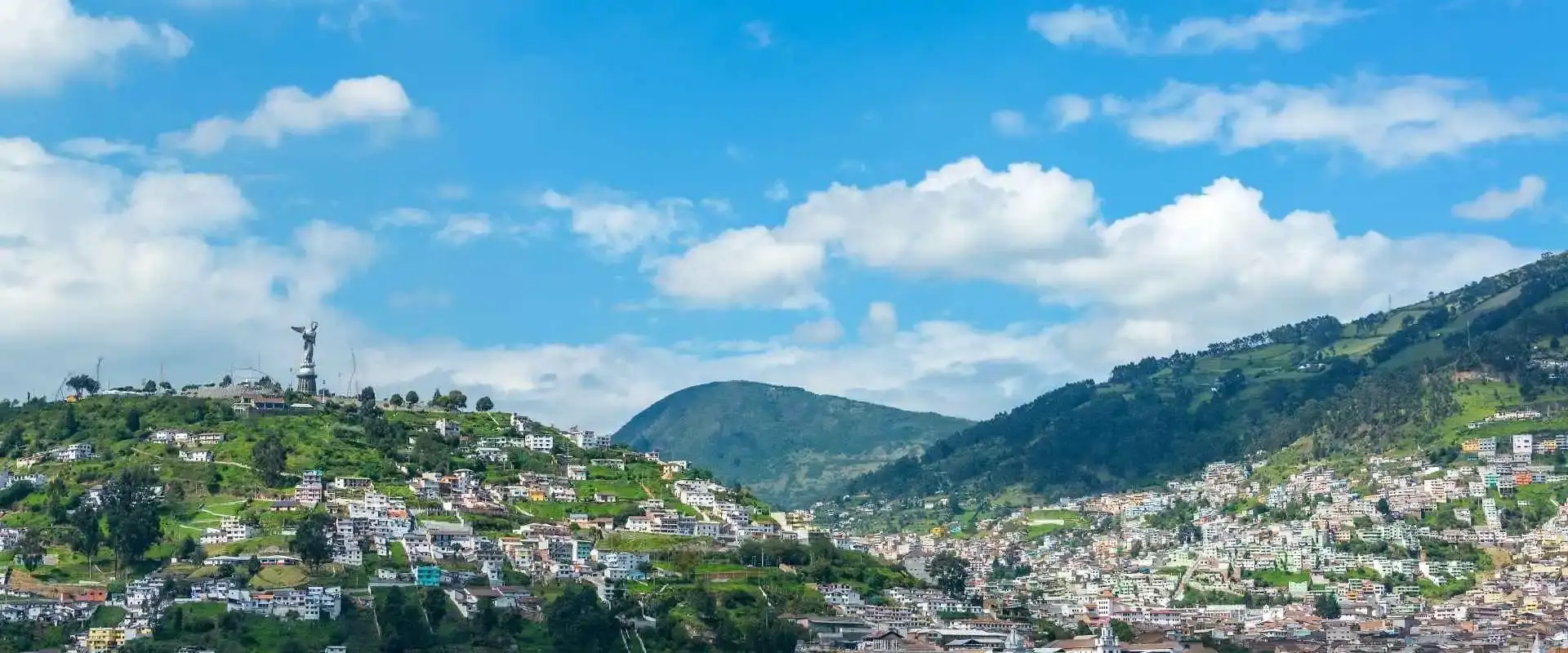
The 45-meter aluminum Virgin Mary statue on El Panecillo hill is visible from almost anywhere in Quito. A taxi from the old town costs $3-4. The view is panoramic — the entire old town stretching north, with Pichincha volcano behind it. Go in the morning before clouds roll in around 2 PM. She’s the only Virgin Mary in the world depicted with wings.
START IN QUITO, END IN THE GALÁPAGOS
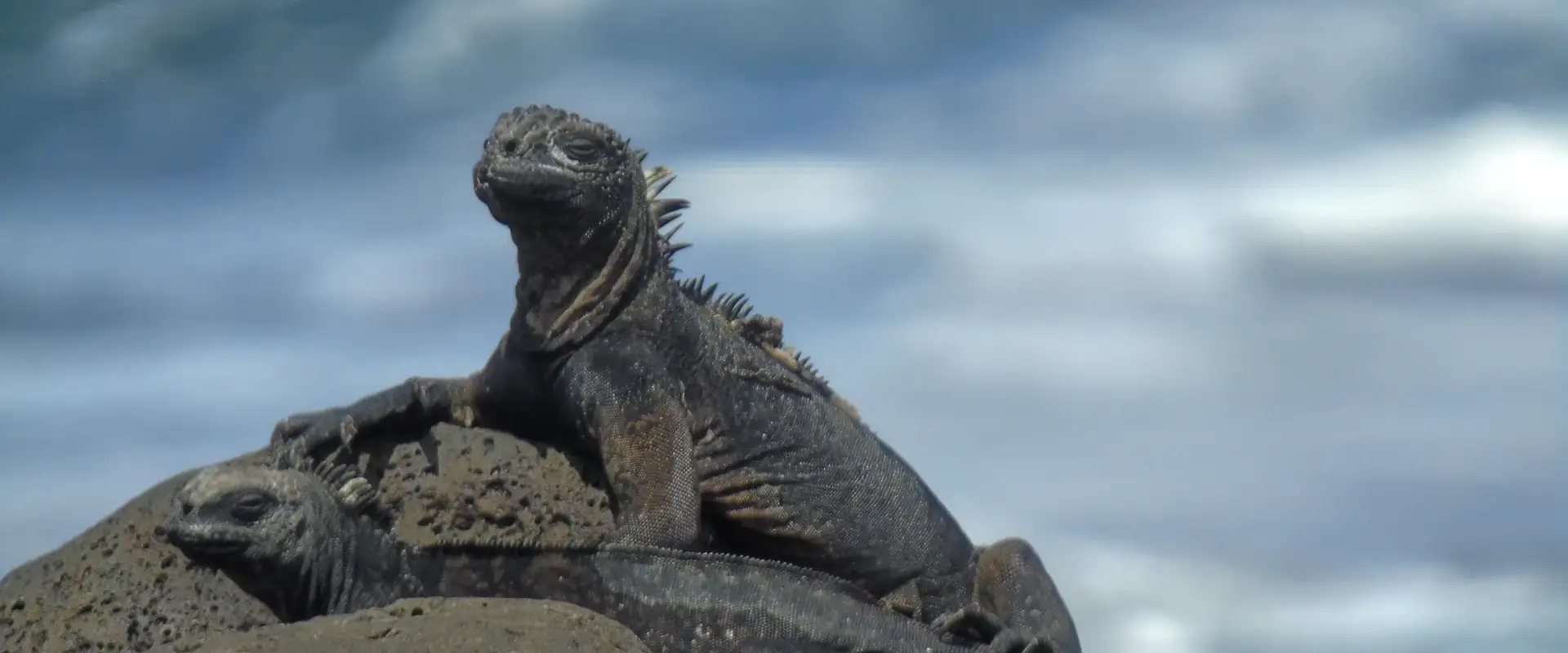
9 Day Ecuador and Galapagos Tour: Andes, Amazon and Santa Cruz
Quito, Cotopaxi, Quilotoa, Baños and the Amazon with your own guide, then three nights on Santa Cruz with tortoises, beaches and snorkeling.
From $1,990 per person
View itinerary6. Ride the TelefériQo Cable Car to 4,050 Meters
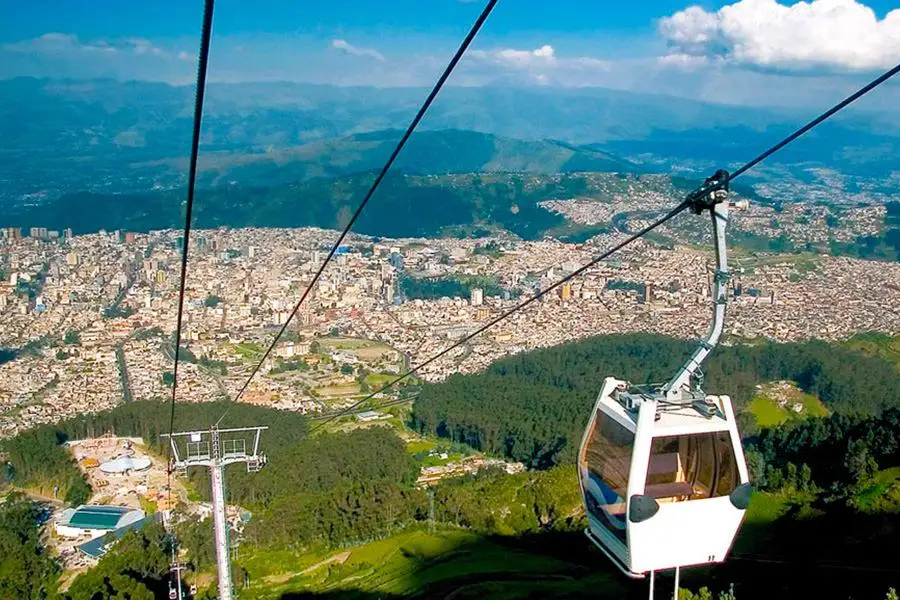
The TelefériQo takes you from 2,950m to 4,050m in about 18 minutes. At the top, you’re standing on the flanks of Pichincha volcano with the entire city below. On a clear day, you can see Cotopaxi, Cayambe, Antisana, and sometimes Chimborazo. Tickets cost $8.50 for adults. Dress warm — temperature drops significantly. If you’re acclimatized, you can hike to the Rucu Pichincha summit (4,698m). Hours, queues and what the ride is actually like are in the Quito cable car guide.
7. Find Peace at Itchimbía Park
A local favorite that most tourists miss. Itchimbía Cultural Center sits on a hill east of the old town with some of the best sunset views in the city. The glass-and-steel building hosts rotating art exhibitions, and the surrounding park is perfect for a quiet afternoon. No crowds, no entrance fee, just Quito’s skyline turning gold as the sun sets behind Pichincha.
Unique Cultural Experiences in Quito

Beyond the colonial architecture, Quito has a cultural scene that most visitors barely scratch. Here’s what I recommend when people ask me for things to do in Quito that go deeper than the usual tourist trail.
8. Capilla del Hombre (Chapel of Man)
Oswaldo Guayasamín was Ecuador’s most important artist, and the Capilla del Hombre is his masterpiece — a museum-monument dedicated to the struggles and resilience of Latin American people. The murals are massive and emotionally overwhelming. His home next door (Casa Museo Guayasamín) shows his private collection of pre-Columbian and colonial art. Combined ticket: $8. Allow at least 90 minutes.
9. Eat at Mercado Central Like a Local
Forget the tourist restaurants on Plaza Foch. If you want to eat like a quiteño, head to Mercado Central. A full almuerzo (soup, main course, juice, dessert) costs $2.50-3.50. Try the seco de chivo (goat stew) or hornado (slow-roasted pork). Sit wherever looks busiest — that’s the freshest food. For more options, see our upcoming best restaurants in Quito guide.
10. Take a Free Walking Tour of the Historic Center
Several companies offer free walking tours of Quito’s old town, and they’re genuinely excellent. The guides are local, passionate, and cover history, architecture, food, and street art. Tours start at Plaza Grande and last 2.5-3 hours. You pay what you think it was worth — $10-15 per person is standard. Go on your first full day and use what you learn to plan the rest of your trip.
11. Experience Quito’s Nightlife in La Mariscal
La Mariscal (also called Gringolandia) is Quito’s main nightlife district. Plaza Foch is the epicenter: bars, restaurants, live music, and craft beer spots. For something more authentic, skip Foch and head to Bandido Brewing for local craft beers, or Café Democrático on La Ronda for live folk music on Thursday and Friday nights. Nothing really gets going before 10 PM. The Quito nightlife guide has the rest — which bars, which nights, and how to get home.
Best Day Trips from Quito
When the best things to do in Quito beyond the city call you, the answer is a day trip. Quito is also the launchpad for Ecuador’s best day trips. The Cotopaxi day trip, the Otavalo market day trip, and the Mitad del Mundo equator line are all within easy reach, and any of them slots neatly onto a longer Quito stay.
Half the reason Quito is such a great base is what surrounds it. Within 2-3 hours, you can reach volcanoes, cloud forests, indigenous markets, and hot springs. Each one links to a full detailed guide.
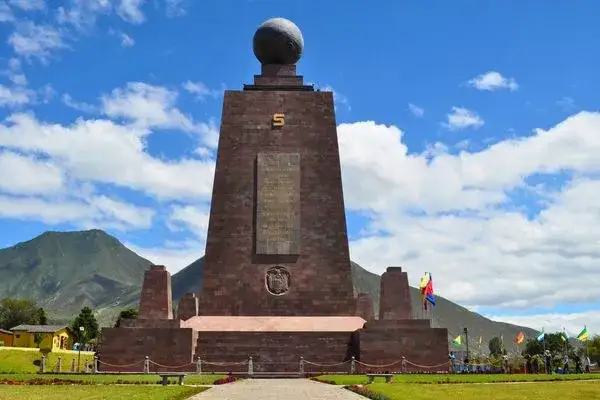
12. Stand on the Equator at Mitad del Mundo
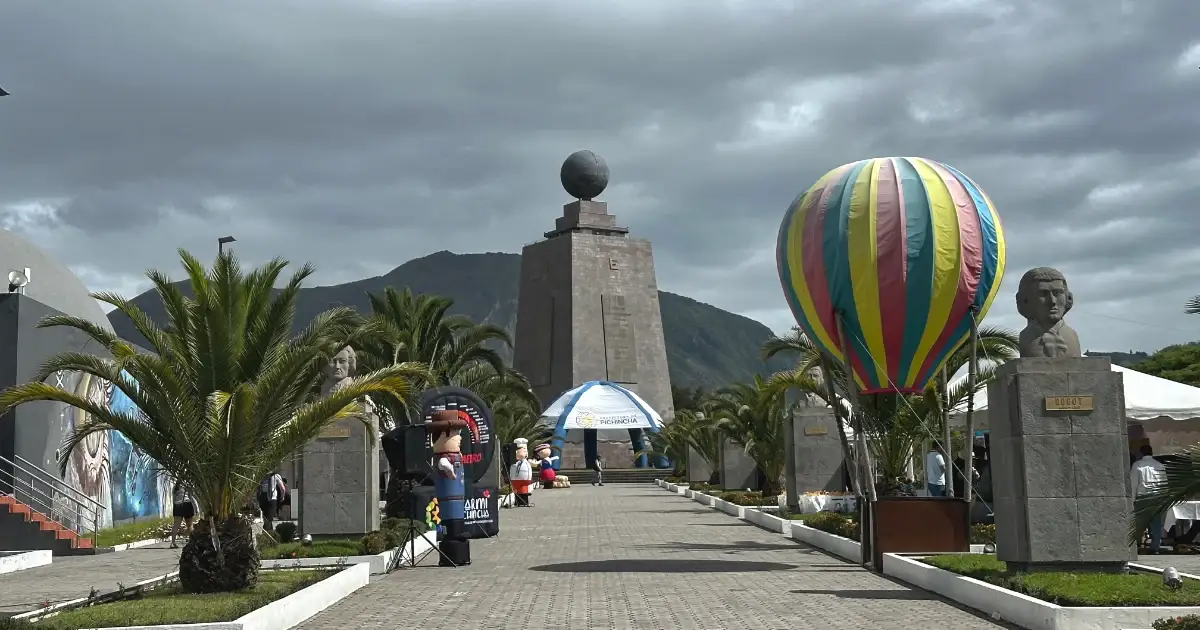
The Middle of the World monument is 25 km north of Quito. The big monument is actually 240 meters off the real equator line — the real equator runs through the Intiñan Solar Museum next door, where you can try balancing an egg on a nail. Touristy? Absolutely. Still fun? Also yes. Take the Metrobús from Ofelia station — it’s $0.35 each way.
13. Day Trip to Cotopaxi Volcano
Cotopaxi is one of the world’s highest active volcanoes (5,897m) and just 90 minutes from Quito. A day trip includes hiking to the José Rivas refuge at 4,800m and visiting Limpiopungo lagoon. You don’t need to be a mountaineer, though the altitude will humble you. Our complete Cotopaxi day trip guide covers everything from what to wear to which operators are worth booking.
14. Shop at Otavalo’s Famous Indigenous Market
The Otavalo market is the largest indigenous market in South America. Saturdays are when it explodes to full size. Handwoven textiles, alpaca sweaters, leather goods, paintings, jewelry. Our Otavalo market day trip guide has negotiation tips. Pro tip: the animal market starts at 6 AM and is the most authentic part of the whole experience.
15. Hike to Quilotoa Crater Lake
Quilotoa is a volcanic crater lake with surreal turquoise water that changes color throughout the day. About 3 hours from Quito — a long but rewarding day trip. The hike down takes 30 minutes; getting back up takes about an hour at 3,900m altitude. You can kayak on the lake for $3. For the full route, see our Quilotoa day trip guide.
16. Soak at Papallacta Hot Springs
These thermal pools sit at 3,300 meters in the eastern Andes, surrounded by cloud forest and mountains. The public pools ($9 entry) are great, but the Termas de Papallacta spa resort is worth every dollar. About 1.5 hours east of Quito — an easy half-day trip.
Free Things to Do in Quito
Quito is one of the most budget-friendly capitals in South America. Many of the best experiences cost nothing.
17. Explore Quito’s 30+ Colonial Churches (Most Are Free)
Quito has more colonial churches per square kilometer than any other city in the Americas. The Metropolitan Cathedral, San Francisco (the largest colonial complex in South America), Santo Domingo, and San Agustín are all free. Each has a different architectural style. San Francisco alone took 150 years to build. You could spend an entire day church-hopping through the old town.
18. Relax in Parque La Carolina
Quito’s largest urban park is where locals go to escape the city without leaving it. On weekends: families picnic, joggers circle the paths, pickup soccer games everywhere. There’s a botanical garden ($3.50), a lake with paddle boats, and a vivarium with native reptiles. The park runs 1.5 km through the Iñaquito district. Perfect for a lazy morning break from sightseeing.
19. Discover Quito’s Street Art Scene
The San Juan and La Floresta neighborhoods have become open-air galleries. Massive murals cover entire building facades — indigenous themes, political commentary, surrealist art. La Floresta has transformed into Quito’s hipster quarter with independent cafés, bookshops, and galleries. Walk along Isabel La Católica street and the surrounding blocks for the best urban art in Ecuador.
Top Things to Do in Quito City at a Glance
20. Getting Around Quito: Transport Tips
Quito is long and narrow — 50 km north-south, only 5 km wide. The Ecovía, Trole, and Metrobús run north-south for $0.35 per ride. For taxis, use InDriver or Cabify apps — safer than hailing cabs. For the old town, walk — main sights are within a 15-block radius. Heading to the airport? The old $8 Aeroservicios bus no longer runs — see our Quito airport to city center guide for all options.
21. Staying Safe in Quito: What You Need to Know
Quito has petty crime, like any large Latin American capital. The old town can be sketchy after dark — stick to well-lit streets. La Mariscal is generally safe but keep your phone in your pocket. Use registered taxis or apps. Millions of tourists visit Quito every year without incident. Common sense goes a long way. For more detail, see our Quito safety guide.
Quito Activities at a Glance
FAQ: Things to Do in Quito
Looking for more on Things To Do In Quito? Browse our related coverage on things to do in quito ecuador, things to do in quito guide, things to do in quito tour, and reach out to our local experts for personalized planning.
How many days do you need in Quito?
Three days is the sweet spot. Day one for the old town, day two for a major day trip (Cotopaxi or Otavalo), day three for the TelefériQo, La Mariscal, and anything you missed. With 4-5 days, add Quilotoa and Papallacta hot springs.
Is Quito safe for tourists?
Generally safe with normal precautions. Stick to well-traveled areas, use taxi apps, and avoid the old town alone after dark. Petty theft is the main risk — violent crime targeting tourists is rare.
What are the best free things to do in Quito?
Walking the UNESCO Historic Center, visiting colonial churches (most are free), Parque La Carolina, street art in La Floresta, sunset views from Itchimbía Park, and tip-based free walking tours.
What is the best time to visit Quito?
June through September is the dry season with the best volcano views. But Quito’s altitude means spring-like weather year round (15-22°C). Rain season afternoons have bursts that clear by evening. There really isn’t a bad time.
What to do in Quito for one day?
Focus on the Historic Center: Plaza Grande, La Compañía Church, La Ronda, Mercado Central, and sunset from El Panecillo or the Basílica towers. Add the TelefériQo if time allows.
What should I wear in Quito?
Layers. Mornings are cool, afternoons warm, evenings drop again. Light jacket, comfortable walking shoes, and sunscreen (UV is intense at 2,850m). Quito locals dress casually — jeans and a t-shirt are fine.
Final Thoughts: The Best Things to Do in Quito Ecuador
The visitors who enjoy Quito most are the ones who slow down. Pick a neighborhood each day, eat where locals eat, and leave room for the unplanned — the street musician on La Ronda, the surprise view from a random side street, the conversation with a market vendor who insists you try her grandmother’s recipe. If you want the deep dive on specific topics, pair this with our Quito Old Town guide, the where to stay in Quito neighborhoods breakdown, and the airport-to-city-center transfer guide.
Heading north? See the Otavalo Market day trip and the local Quito markets. Bottom line: there’s no shortage of things to do in Quito, and the best things to do in Quito aren’t always the obvious ones. Whether you’re after free things to do in Quito, top things to do in Quito at sunset, or the unique things to do in Quito Ecuador most travelers skip — pick the categories that match your time and pace.
Quito rewards curiosity. It’s a city where a $3 almuerzo tastes better than a $30 tourist dinner, where a free church can leave you more amazed than a paid museum, and where the best views come from places nobody charges admission for.
Planning a bigger Ecuador trip? Check out our guides to day trips from Quito, Galápagos Islands, and Mindo Cloud Forest. Need help with logistics? See where to stay in Quito and our airport transfer guide.