
Quito Old Town Guide 2026: 6 Honest Highlights & Real Walking Tips
Quito Old Town guide 2026: 6 honest highlights, walking route, 2026 prices, safety by hour. The UNESCO centro historico from a local fixer.

the Quito Trips team, local guides in QuitoUpdated · 8 min read
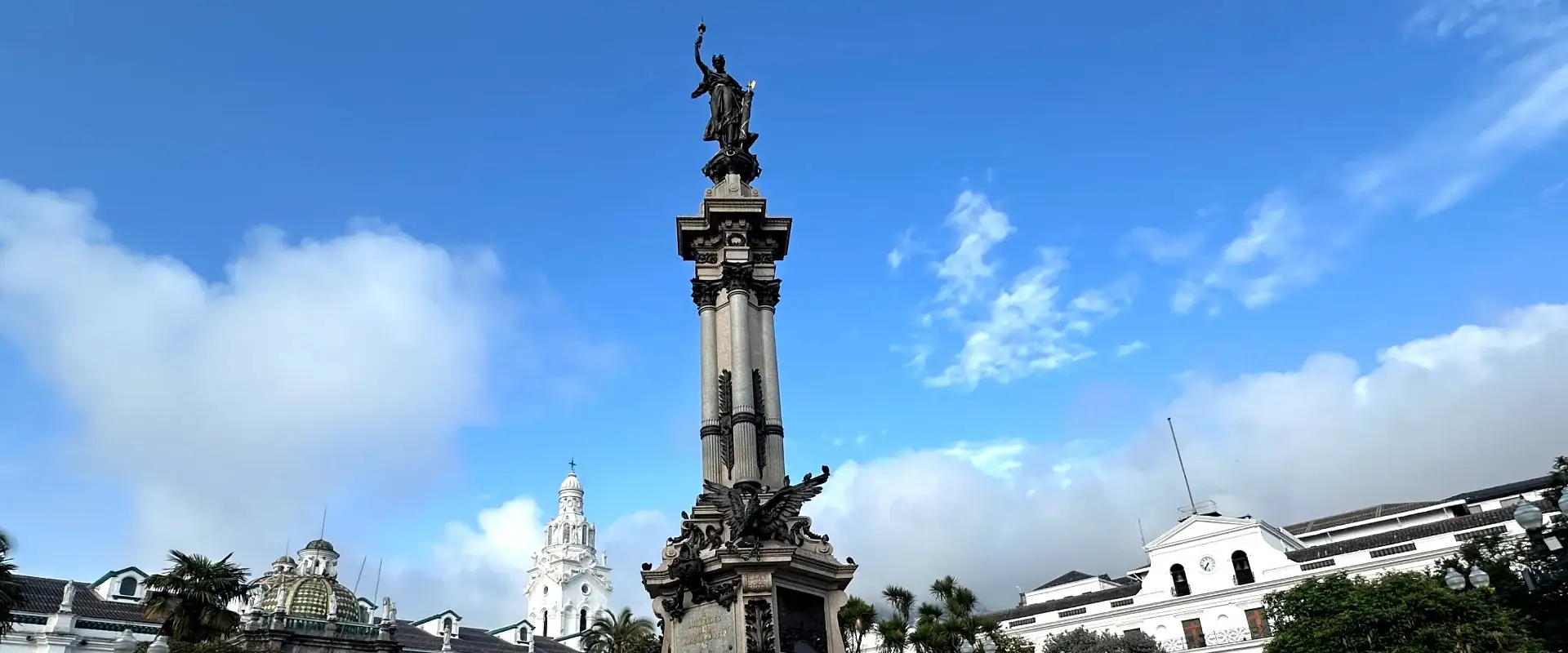
Quito Old Town walking tour: lesser-known corners and history
TL;DR
- UNESCO World Heritage Site covering 130+ blocks of preserved colonial architecture
- Start at Plaza Grande (Plaza de la Independencia), where everything else branches off
- Top churches: the Cathedral, Basilica del Voto Nacional, Iglesia de la Compañía de Jesús
- Climb the Basílica towers for a view over the whole city
- Visit daytime (10am-4pm); avoid alone after dark
- García Moreno Street has several churches, plazas and museums within walking distance
- Tour takes 5-6 hours at a relaxed pace, or 2-3 hours if you rush
- Bring cash: museums and markets don’t take cards
Quito Old Town is the colonial center of Ecuador’s capital: 320 hectares of 16th-century plazas, churches and cobblestone streets that became the world’s first UNESCO World Heritage Site in 1978. The Quito historic center (centro historico quito) packs 32 museums and 24 churches into a grid you can walk. This guide covers the 6 highlights worth your time (Plaza Grande, La Compañía, the Basílica del Voto Nacional, the Metropolitan Cathedral, the Central Market and La Ronda) with 2026 prices, day-versus-night safety and the things to do in Quito Old Town that most travel guides skip. I’ve sent guests down this route for years, and this is what I tell them when they ask where to start.
Pair it with the Galápagos: 9 Day Ecuador & Galápagos Tour
The 6 things to do in Quito Old Town Ecuador (worth your time)
Secret #1: The Church of the Society of Jesus took 160 years to build.
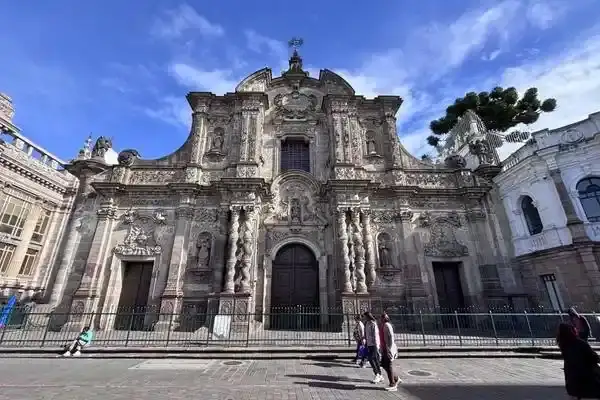
Work on this Jesuit church started in 1605 and didn’t finish until 1765. About 7 tons of gold leaf cover the inside, which puts it among the most ornate Baroque churches in Latin America. Legend says finishing it bankrupted the Jesuits.
Secret #2: The Basilica is technically unfinished.
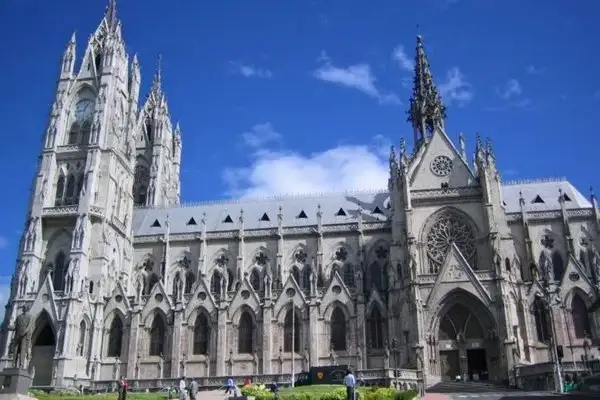
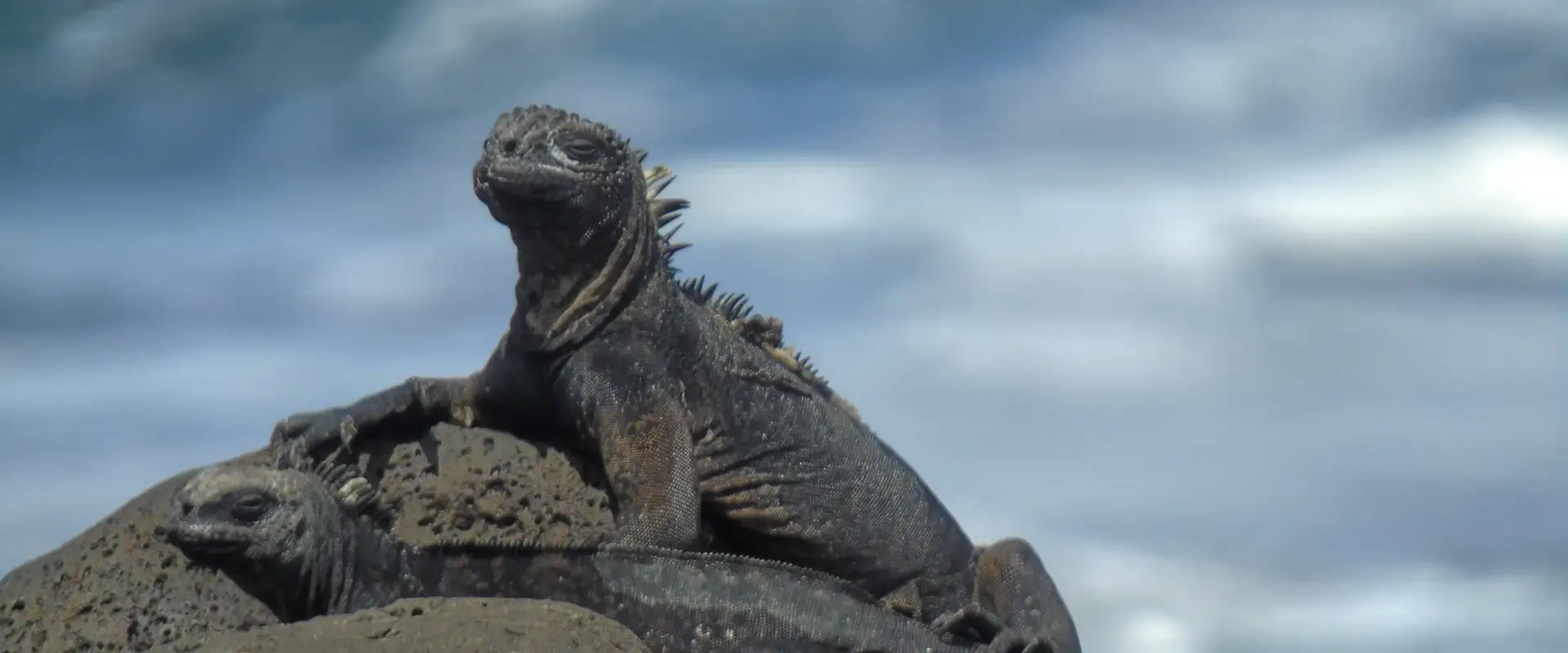
The Basilica of the National Vow had its first stone laid in 1892 and was consecrated in 1988, yet quiteños will tell you it’s still unfinished. The legend says the world ends the day the last stone goes in, so nobody is in a hurry. Instead of the usual monsters, the gargoyles are Galapagos animals (iguanas, tortoises, frigatebirds), and you won’t find that anywhere else.
Secret #3: Plaza Grande has been the center of power for 500 years.
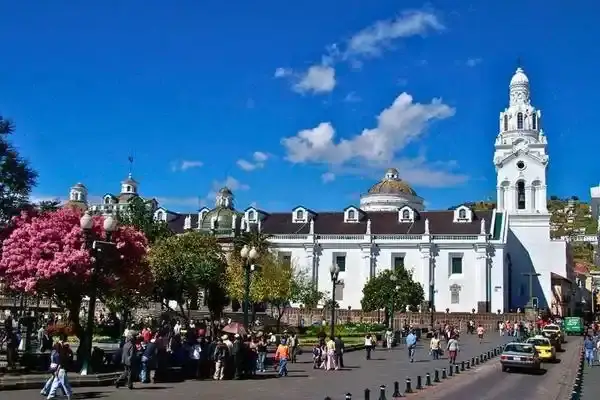
Almost every big moment in Ecuador’s political history happened on this square, from Spanish colonial rule to independence to modern protests. The Presidential Palace (Carondelet Palace) is still the seat of government, and parts of it are open for free visits on weekends.
Secret #4: La Ronda Street is older than the city itself.
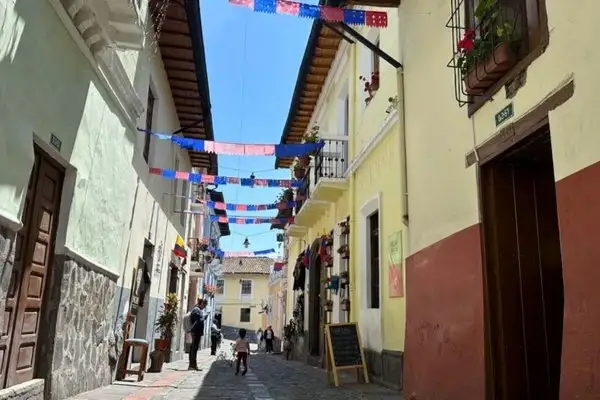
La Ronda predates the official founding of Quito in 1534. It was the city’s first residential street, and for centuries artists, poets and musicians lived there. It has since been restored and now holds craft workshops, bars and live music venues, in buildings that go back to the 16th century. Want this as part of a longer Ecuador trip? Tell us your dates and we will build it around you.
Secret #5: The city sits atop an Inca city.
The Spanish didn’t build Quito from scratch. They built directly on top of Inca Quito, an important Inca administrative center, and Inca stonework still survives under the streets and colonial foundations. The Central Bank Museum has some of the best-preserved pieces.
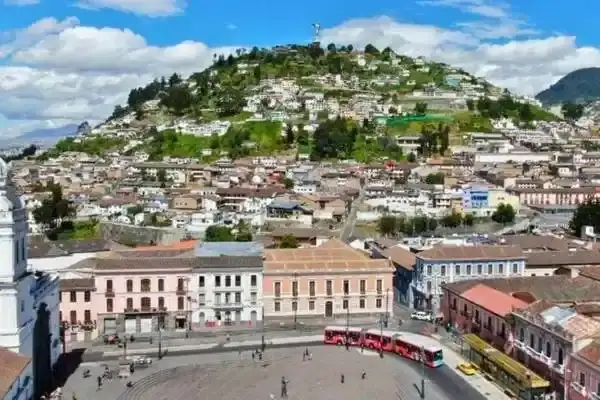
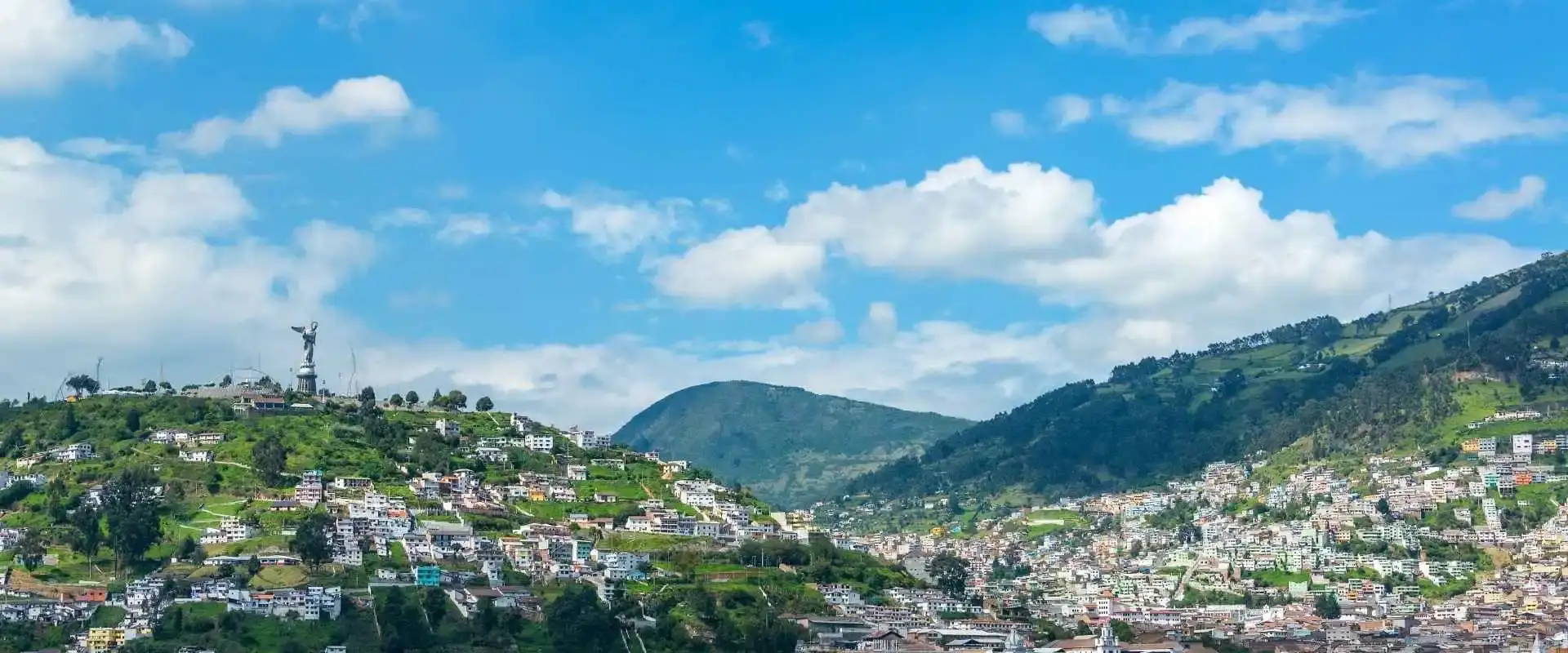
Secret #6: The Virgin of El Panecillo was built in pieces. The Virgin of Quito, 45 meters tall, stands on El Panecillo hill and was put together from 7,000 separate aluminum pieces. She’s the only winged Virgin Mary in the world, and she stands on a serpent, a symbol of evil defeated. From the base you can see the entire city.
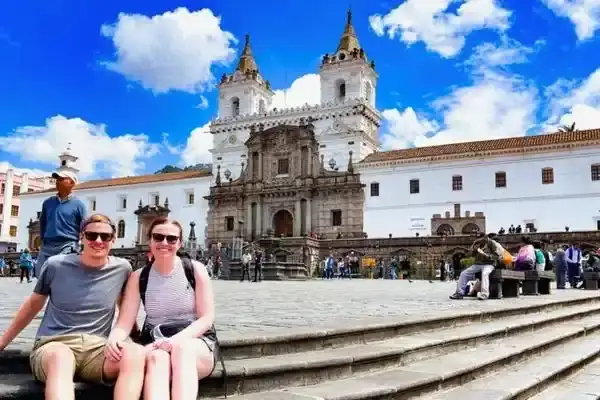
Photography spots worth your time
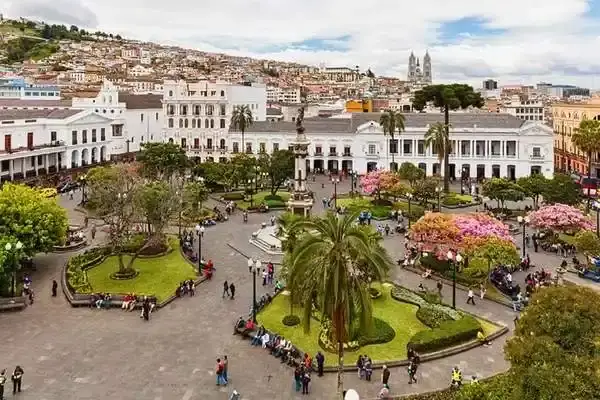
Plaza Grande, the independence square
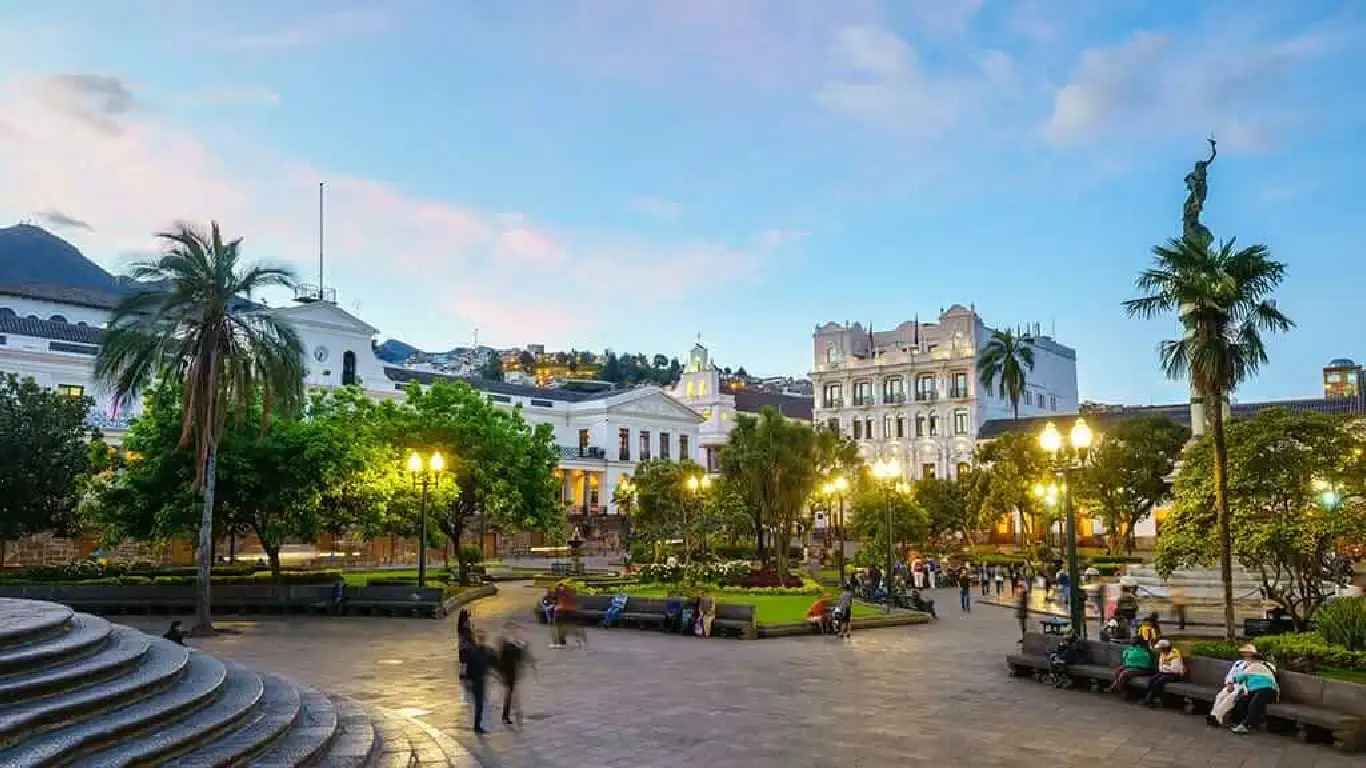
Start here. The square is the geographic and historical center of the Old Town, framed by the Cathedral, the Archbishop’s Palace, the Municipal Palace and the Presidential Palace. Get there around 11:00 a.m., when the light is best for photos.
Hours: Always open | Cost: Free
Church of the Society of Jesus (Iglesia de la Compañía de Jesús)
If you only go inside one church in Ecuador, make it this one. Photos aren’t allowed inside, so give your eyes time: the gilded walls and ceiling are hard to take in on the first look.
Hours: Mon-Fri 9:30-18:00, Sat and holidays 10:00-16:00, Sun 12:00-16:00 | Cost: $6 for foreign adults (official rates)
Basilica of the National Vow
Climb the towers for the best view over Quito. For shooting the colonial rooftops, it beats El Panecillo by a long way. Expect steep stairs and narrow passages, so it’s not for anyone nervous about heights, but the view pays you back.
Hours: Church 9:00-17:30, towers Mon-Fri 9:00-17:00 | Cost: $2 for the church, $4 for the towers (foreign adults, per the basilica’s site, June 2025)
Start in Quito, end in the Galápagos
9 Day Ecuador and Galapagos Tour
Andes, Amazon and Santa Cruz
- 9 days
- Medium effort
From $1,990 per person
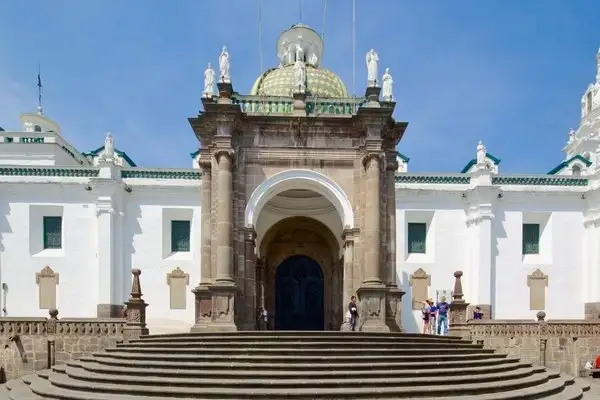
Metropolitan Cathedral
Ecuadorian heroes are buried here, independence leader Sucre among them. The outside looks better than the inside, but the history inside carries a lot of weight.
Hours: Monday to Saturday, daytime | Cost: The museum and the dome climb are paid separately; fees change often, so ask at the ticket desk on Plaza Grande
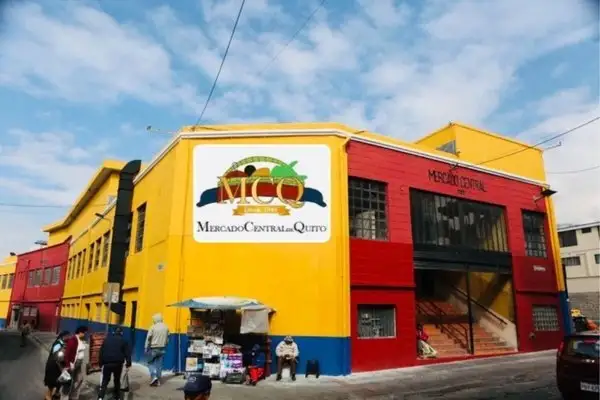
Central Market
Two blocks from Plaza Grande. Upstairs, at the shared tables, a $3 lunch gets you soup and a main course, with juice and a small dessert on the side. The people eating next to you will be locals.
Hours: Daily, 8:00 a.m. to 5:00 p.m. | Cost: Free admission
La Ronda
Leave this one for the afternoon. Between 3:00 p.m. and 6:00 p.m. the street fills with musicians and artisans. Order a canelazo, a hot drink made with aguardiente.
Quito’s Old Town is one of the best-preserved colonial centers in the Western Hemisphere, and people still live and work in it. I’ve walked these streets more times than I can count and I still spot details I missed before. Want a guided walking tour through Quito Old Town instead? See our route map.
The churches are the headline, but what I like most is that this isn’t a museum district. Office workers grab lunch at the market, people stop into church on the way home, kids play in the plazas. This walk takes you past the main sights and a few side streets most visitors skip, with practical safety tips and some background on what you’re looking at when you stare up at those old facades.
Quito churches: the 10 worth stepping into
The old town has more than 20 churches, convents and chapels inside a few blocks, and you don’t need to enter all of them. These are the ten I send people to, in the order I’d walk them from the north end. La Compañía, the Basílica and the Cathedral are covered above, so here are the other seven plus the practical details for all ten.
San Francisco convent
The Franciscans started it in 1535, the year after the Spanish founded Quito, under Friar Jodoco Ricke. It’s the largest religious complex in the city: church, several cloisters, an orchard and the San Andrés school. Tradition says the stone atrium sits where Atahualpa’s captains had their houses. The Fray Pedro Gocial museum inside the convent (Cuenca 477 and Sucre) opens daily 9:00-17:00; foreign visitors pay $6. Go in for the carved cedar choir stalls.
El Sagrario
Right next to the Cathedral on García Moreno. It was built in the late 17th century over a ravine that had to be filled and bridged with an arch first. The thing to look at is the carved, gilded wooden screen at the entrance to the nave, attributed to Bernardo de Legarda.
Santo Domingo
Francisco Becerra drew the plans in 1581 and the church was finished in the mid-17th century: cedar ceilings, lots of gilding. Its Rosary Chapel sits on top of the arch over the street, the one now called the Arco de Santo Domingo. It faces Plaza Santo Domingo, a short walk from La Ronda, so it fits well at the end of the day.
San Agustín
Built between 1606 and 1617. In the convent’s chapter hall the 1809 act of the Quito governing junta was signed, the first cry of independence in Spanish South America. The cloister holds Miguel de Santiago’s paintings on the life of Saint Augustine. On Chile and Guayaquil, and usually far quieter than La Compañía or San Francisco.
La Merced
The Quito architect José Jaime Ortiz built it for the Mercedarian order between 1701 and 1747. Stone columns, round arches, a two-story cloister. On Chile and Cuenca, one block from Plaza San Francisco.
Santa Bárbara
A small neoclassical church on García Moreno and Manabí. In front stands the first of the seven stone crosses that gave that stretch of García Moreno its nickname, the Street of the Seven Crosses. Five minutes is enough, on your way up to the Basílica.
Carmen Alto monastery
Carmelite nuns still live here, on the plot where Saint Mariana de Jesús, Ecuador’s first saint, lived until her death in 1645. Part of the monastery is a museum of religious art with a restored colonial kitchen, and by the entrance the nuns sell cookies, nougat and candied stuffed limes. The Carmen Alto Museum faces the Arco de la Reina on García Moreno and Rocafuerte.
Quito churches: hours and entry fees
| Church or museum | Hours | Foreign adult |
|---|---|---|
| La Compañía de Jesús | Mon-Fri 9:30-18:00; Sat and holidays 10:00-16:00; Sun 12:00-16:00 | $6 |
| San Francisco (Fray Pedro Gocial museum) | Daily 9:00-17:00 | $6 |
| Basílica del Voto Nacional | Church 9:00-17:30; towers Mon-Fri 9:00-17:00 | $2 church, $4 towers |
| Carmen Alto Museum | Tue-Fri 9:30-15:45; weekends and holidays 9:30-16:45 | $4 |
| Metropolitan Cathedral | Mon-Sat, daytime | Paid museum and domes; ask at the desk |
Rates checked in October 2026 on each church’s or the city museum network’s own page. Tourist visits stop during Mass. Cover shoulders and knees, and bring small bills, since almost no ticket desk takes cards. If you’d rather follow a set route on your own, our self-guided walking tour takes you through the main churches in order.
Safety tips for the Quito historic center (by hour)
Best times to visit: 10am-4pm. The busiest hours, and the best light, run from 11am to 3pm. Earlier or later there are fewer tourists and less going on. For where to sleep, see our honest Quito neighborhoods guide; Old Town is one of the picks.
After dark: Old Town empties out fast once the shops close. If you’re here after sunset, stay on the main streets (García Moreno and the main plazas) and take taxis between places. Don’t explore side streets alone at night.
Stick to the main routes. The tourist routes are safe and well lit. Avoid wandering into quiet side streets, especially on your own.
Questions about the old town
What are the main sights in the Quito historic center?
The 6 Quito Old Town stops that give you the most for your time are Plaza Grande (Independence Square + Carondelet Palace), La Compañía de Jesús (the gold-leafed Jesuit church), Basílica del Voto Nacional (climb the towers for the best view), the Metropolitan Cathedral, the Central Market (Mercado Central, lunch for $3-5) and La Ronda at sunset for empanadas and canelazo. Walked in that order, with a lunch stop, the route takes 5-6 hours.
How long does it take to see the old town in Quito?
A rushed visit hits the main sights in 2-3 hours. At an easy walking pace, all 6 highlights plus lunch take 5-6 hours. A full day (8+ hours) gives you time to climb the Basílica towers, see the Museo de la Ciudad, eat at La Ronda twice and wander side streets. For most travelers, half a day on the highlights is plenty.
Is Old Town Quito Ecuador safe to visit?
Yes, during the day (roughly 10 AM-4 PM). Tourist police patrol Old Town Quito Ecuador heavily in those hours and the streets are busy. After dark, stay on La Ronda’s main pedestrian street (it stays lively until midnight) and the main plazas. Skip empty side streets and the base of El Panecillo hill after sunset. In crowded markets, watch for pickpockets, as you would in any colonial center.
Should I hire a guide for the old town?
A licensed guide fills in the history you’d miss on your own: the Inca foundations under La Compañía, the political stories at Plaza Grande, the 160 years it took to build the gold-leafed church. Guides ($25-40 for 3 hours) wait at Plaza Grande, or you can book online. Going self-guided with our route works too, since Quito Old Town is easy to get around with a map. It comes down to your travel style and budget.
Do you pay to enter the churches in the Quito historic center?
The big ones charge. La Compañía de Jesús costs $6 for foreign adults, the Fray Pedro Gocial museum at San Francisco $6, the Basílica towers $4 (plus $2 for the church) and the Carmen Alto museum $4. The Cathedral charges for its museum and dome climb. Smaller churches such as Santa Bárbara or La Merced are open for Mass and you can step in quietly. Photo rules vary: La Compañía doesn’t allow photos inside.
What is the best time of year to visit Quito Old Town?
June-September brings the driest weather and the clearest views from the Basílica towers, which matters for photos. October-May is rainier but quieter, and in December Plaza Grande looks lovely with the Christmas decorations up. The buildings look the same in any season, so choose by weather and crowds. Avoid Holy Week if you dislike processions, or come for them on purpose, since Quito’s Good Friday procession is one of the biggest in the country.
Where is Old Town Quito and how do I get there?
Old Town Quito (the centro historico quito) sits in the southern half of central Quito, roughly between Plaza Grande and Plaza San Francisco. From Mariscal Sucre airport (UIO), it’s a 50-minute taxi ride ($25-30 fixed fare). From La Mariscal neighborhood, it’s a 10-minute Uber ($3-5) or 20-minute walk down Av. 10 de Agosto. The Trolebús Line 1 also drops at Plaza del Teatro for $0.35. Most Old Town hotels sit within 4 blocks of Plaza Grande.
What is the most famous church in Quito?
La Compañía de Jesús, the Jesuit church on García Moreno street. It took from 1605 to 1765 to build and almost every surface inside is covered in gold leaf. Entry is $6 for foreign adults and it opens Monday to Friday 9:30-18:00, with shorter hours on weekends.
How many churches can you see in one day in Quito?
Six to eight without rushing. They all sit within about 15 minutes’ walk of Plaza Grande. Start on a weekday at 9:30 at the Basílica del Voto Nacional, walk down García Moreno to Carmen Alto, La Compañía, El Sagrario and the Cathedral, and leave San Francisco, La Merced and Santo Domingo for the afternoon. Sundays are harder because of Mass times.
Where is Sucre buried in Quito?
In the Metropolitan Cathedral on Plaza Grande. The independence hero Antonio José de Sucre rests in his own mausoleum chapel next to the sacristy, which you see on the cathedral museum visit.
More guides for your Old Town day
Other Quito guides
Useful external resources
Keep reading
 Quito Self-Guided Walking Tour 2026: Old Town Route & Free Tour TipsQuito Old Town walking tour 2026: honest self-guided route, free walking tour Quito tips, prices, duration, safety. UNESCO route, fixer style.
 21 Best Things to Do in Quito, Ecuador (2026 Local Guide)Things to do in Quito picked by a local: 21 honest picks. Old Town, viewpoints, free walks and day trips. Real recommendations, no brochure list.
 The best day trips from Quito: Complete guide 2026The best day trips from Quito last between one and three hours and include volcanic landscapes, indigenous markets, and crystal-clear crater lakes.