El Altar Ecuador: The Collapsed Volcano Behind Laguna Amarilla
El Altar Ecuador — this guide brings together everything you need to know, from local recommendations to practical travel tips. We cover el altar ecuador guide and el altar ecuador tour so you can plan with confidence.
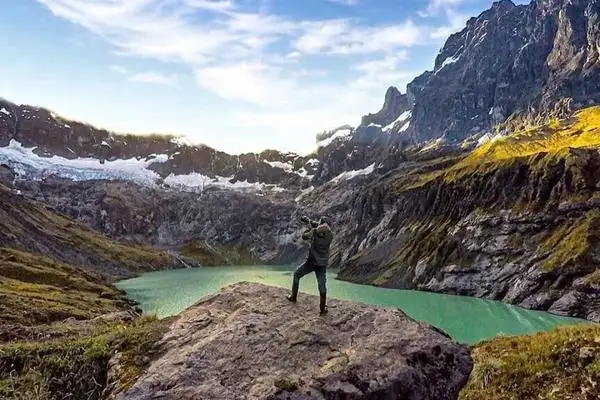
El Altar volcano (often searched as Altar mountain) is a 5,319-meter extinct volcano in central Ecuador whose summit collapsed thousands of years ago, creating a dramatic horseshoe-shaped caldera with nine jagged peaks surrounding a glacial lagoon called Laguna Amarilla. Located inside Sangay National Park, about 25 km southeast of Riobamba, it’s widely considered the most beautiful mountain in Ecuador.
The first time I saw El Altar was from the Riobamba-Baños highway on a crystal-clear morning. The sun hit those nine towers of rock and ice, and I understood immediately why the Spanish named it “The Altar” — it looks like a gothic cathedral. The original Kichwa name is Capac Urcu, meaning “the powerful mountain.” Both names fit perfectly.
This guide covers how to trek to El Altar’s crater lake, the climbing history, what gear you need, and why this mountain is criminally underrated in Ecuador’s trekking scene.
Cuenca, the Volcanoes and the Galápagos: 14 Day Tour
Why El Altar is Ecuador’s Most Spectacular Volcano
El Altar was once higher than Chimborazo. Geologists estimate the original summit reached around 5,700 meters before a catastrophic caldera collapse — possibly triggered by a lateral eruption similar to Mount St. Helens — shattered the cone into the ring of peaks you see today.
The nine named summits around the caldera rim include El Obispo (The Bishop, 5,319m — the highest), La Monja (The Nun), El Canónigo (The Canon), El Tabernáculo, and others. Each has its own climbing character. The religious naming theme comes from early Spanish colonizers who thought the silhouette looked like a cathedral altar with priests around it.
At the center of this amphitheater sits Laguna Amarilla (Yellow Lagoon), a glacial lake that changes color depending on conditions — sometimes turquoise, sometimes yellow-green from sulfur deposits and glacial sediment. It’s surrounded by hanging glaciers that calve ice chunks into the water. The whole scene feels more Patagonian than Ecuadorian.
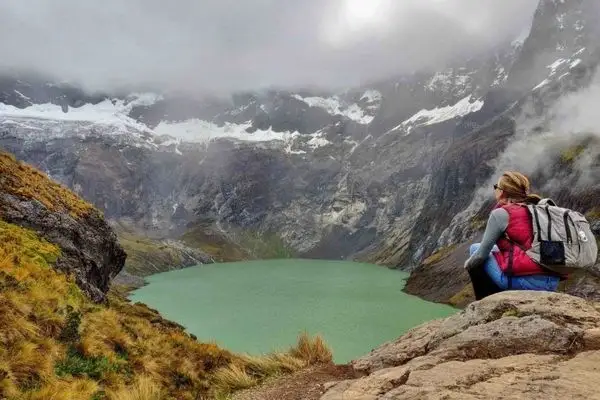
Trekking to Laguna Amarilla (El Altar Crater Lake)
The Route
The El Altar Ecuador hike has one goal: Laguna Amarilla, Ecuador’s most photographed crater lake. The standard trek starts from the community of Candelaria, about 1.5 hours by car from Riobamba. From Candelaria (3,400m), follow the Collanes Valley trail south toward the caldera. The path crosses farmland, then climbs through páramo grassland along the Río Collanes. Planning the wider trip? Send us your dates and we will put the route together.
The trek to the Collanes Valley campsite takes 4-5 hours (about 14 km). From the campsite (3,900m), a steep secondary trail climbs another 2-3 hours to the caldera rim and down to Laguna Amarilla at about 4,200m. Most people do this as a 2-day trek: day one to campsite, day two to the lake and back.
What to Expect
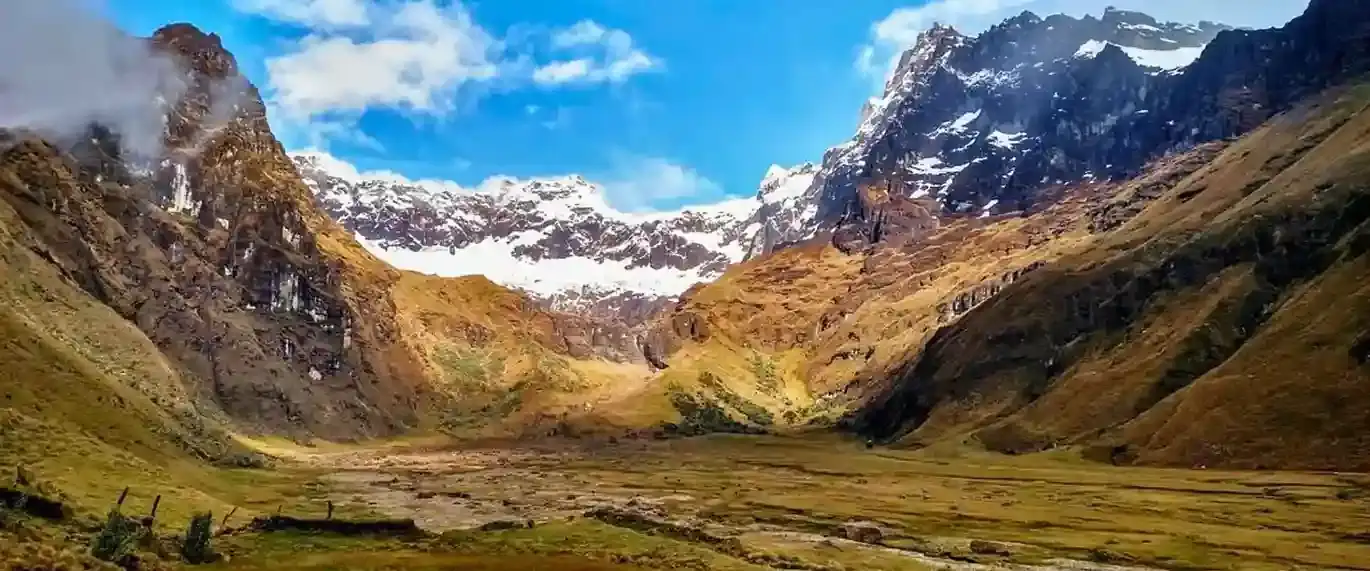
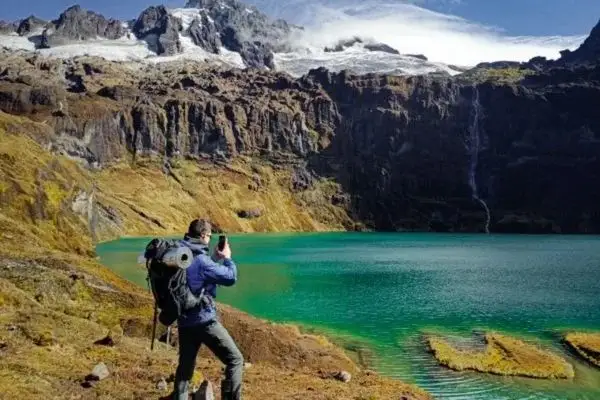
The Collanes Valley is one of the most beautiful hiking corridors in Ecuador. Wide open páramo with El Altar’s towers rising ahead of you the entire time. Wild horses graze in the valley. Condors circle the peaks. On clear mornings, you get the full panoramic — all nine summits reflected in the valley streams.
The final climb to the crater lake is steep and can be muddy. The last section involves scrambling over moraine rock. Rain is common even in “dry” season (June-September). Temperature drops significantly above 4,000m — expect near-freezing conditions at night and possible hail during the day.
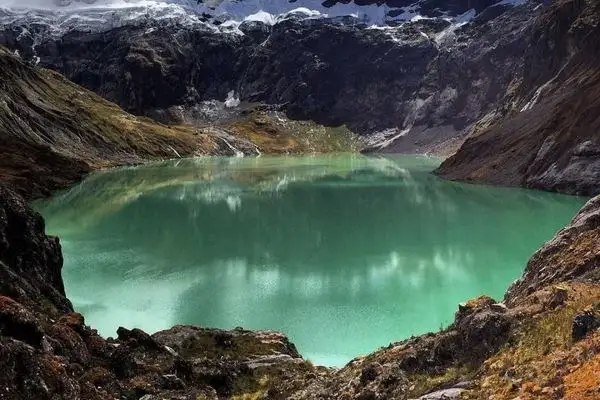
Practical Information for the El Altar Trek
Difficulty: Moderate to challenging. No technical climbing needed for the lake trek, but altitude and weather are factors. Good fitness required for the crater rim climb.
Duration: 2 days minimum (camp in Collanes Valley). 3 days if you want to explore the caldera more thoroughly or if weather delays you. Day trips are possible but extremely long (12+ hours) and not recommended.
Cost: Mule hire from Candelaria is $15-20 per mule per day (highly recommended for camping gear). Local guides charge $30-50 per day. Park entrance is $10 for foreigners. Total budget: about $80-120 for a 2-day guided trek.
Best season: June through September has the least rain, but El Altar creates its own weather. Even in August, pack for rain. October through May is wet — the trail becomes a mud fest and the lake is often socked in by clouds.
Gear: Waterproof boots, rain jacket, warm layers for camp, tent rated for cold and wind, sleeping bag rated to -5°C or colder. Bring trekking poles — the moraine section is slippery.
Climbing El Altar’s Summits
El Altar’s nine peaks offer some of the most technical alpine climbing in Ecuador. El Obispo (5,319m), the highest point, requires ice climbing skills and has sections of Grade III-IV ice. It was first summited by an Italian team in 1963 and is still considered one of Ecuador’s hardest climbs.
La Monja Grande and El Canónigo are also challenging — steep ice and rock with limited protection options. The hanging glaciers are retreating rapidly due to climate change, making some routes more dangerous as exposed rock becomes unstable.
Only experienced alpine climbers with proper equipment should attempt the summits. You need a certified ASEGUIM guide, full glacier gear, and at least 3-4 days in the caldera for weather windows. Maybe 50-100 people summit El Obispo in a given year — compared to thousands on Cotopaxi.
TWO WEEKS, FULLY PLANNED
14 Day Ecuador and Galapagos Tour: Volcanoes, Cuenca and the Islands
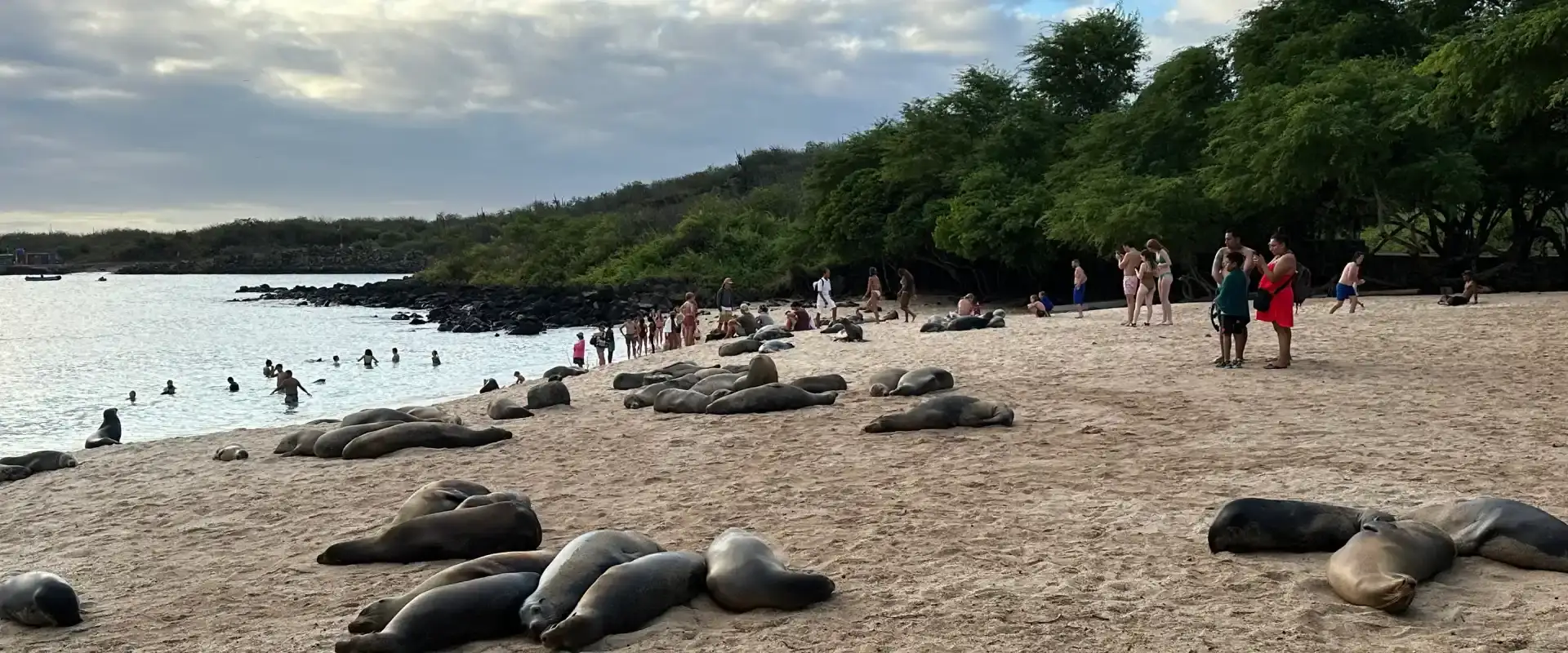
Quito, Cotopaxi, Quilotoa, Chimborazo, Ingapirca and Cuenca, then a week on Santa Cruz and Isabela with a yacht day.
From $3,390 per person
View itineraryHow to Get to El Altar From Riobamba
From Riobamba, take a bus or taxi to the village of Candelaria (about 1.5 hours, last section on unpaved road). Buses run from Riobamba’s Terminal Terrestre twice daily — check current times at the station. A taxi costs about $25-30.
From Quito, the fastest route is the bus to Riobamba (4 hours, $6-8) and then local transport to Candelaria. Some tour operators in Riobamba offer complete packages including transport, guide, mules, and camping gear — expect $150-200 per person for a 2-day all-inclusive trek.
El Altar sits within Sangay National Park, and you can combine it with other park destinations. Chimborazo is just 30 km to the northwest — a natural pairing for a highland adventure.
Are There Glaciers on El Altar?
Yes — El Altar still holds small glaciers on its highest peaks, though they’ve shrunk dramatically. When I first started guiding trips to El Altar in the early 2000s, the ice caps on El Obispo and El Canónigo were noticeably larger. Today, climate change has reduced the glacial coverage by more than 60% compared to the 1970s.
The remaining ice on El Altar Ecuador sits above roughly 4,800 meters on the three tallest peaks: El Obispo (5,319 m), El Fraile Grande (5,180 m), and El Canónigo (5,259 m). From the Collanes Valley looking up at the amphitheater, you’ll still see hanging ice and snow streaks along the ridge lines, especially after the dry-season storms in November. Avalanche risk from these weakened glaciers is one of the main reasons technical climbing on El Altar is considered so dangerous.
What Gear Do You Need for the El Altar Trek?
The Laguna Amarilla trek isn’t technical, but Ecuadorian high-altitude weather will punish anyone who shows up unprepared. Here’s the gear list I give every client before we leave Riobamba.
- Waterproof hiking boots — ankle support, broken in. The Collanes Valley is pure mud after any rain.
- Gaiters — non-negotiable. They keep mud and scree out of your boots.
- Hardshell jacket and rain pants — Gore-Tex or equivalent. Weather shifts in 20 minutes up here.
- Fleece or down mid-layer — nights in the Collanes refuge drop to 0°C.
- Thermal base layers — merino or synthetic, never cotton.
- Warm hat, gloves, buff — even in the “dry” season.
- Sun protection — SPF 50+, sunglasses with UV protection, wide-brim hat. Equatorial UV at 4,200 m burns fast.
- Trekking poles — save your knees on the final descent to Candelaria.
- Headlamp with spare batteries — for the 3 AM start to the Laguna Amarilla lookout.
- Water bladder (3 L) + iodine tablets — refill from the Collanes streams.
- Sleeping bag rated to -5°C — the Collanes refuge provides basic mattresses, nothing else.
- Day pack (30 L) — for the summit push from the refuge.
If you’re trekking independently without a tour, you’ll also need a 60-70 L backpack, a small camping stove, food for 2-3 days, and a topographic map. Most visitors renting gear in Riobamba can get boots, jackets, and sleeping bags for around $5-8 per item per day.
El Altar and the Seven Main Volcanoes of Ecuador
Ecuador’s Andes pack more active and dormant volcanoes into a small country than almost anywhere on Earth. Seven peaks stand out as the classic icons of the Avenue of the Volcanoes, and El Altar holds a unique place among them — it’s the one that already collapsed.
- Chimborazo (6,263 m) — Ecuador’s highest peak. Inactive. The farthest point from Earth’s center.
- Cotopaxi (5,897 m) — active, the most iconic glaciated cone in the country.
- Cayambe (5,790 m) — active, the only snow-capped peak on the equator.
- Antisana (5,704 m) — active, remote, glaciated, sits in its own ecological reserve.
- El Altar / Capac Urcu (5,319 m) — extinct, collapsed, nine peaks around Laguna Amarilla.
- Illiniza Sur (5,248 m) — extinct, glaciated, popular acclimatization peak.
- Sangay (5,286 m) — one of the most continuously active volcanoes on the planet.
Where El Altar differs: every other peak on this list is either still active or recently extinct and intact. El Altar alone is a giant that already finished its life cycle — a 5,000 m horseshoe of rock walls and a yellow-sulfur lake where the cone used to be. That’s why locals call it the “cathedral” of the Andes.
Frequently Asked Questions
Looking for more on El Altar Ecuador? Browse our related coverage on el altar ecuador guide, el altar ecuador tour, el altar ecuador travel, and reach out to our local experts for personalized planning.
Is El Altar an active volcano?
No. El Altar is classified as extinct — its last eruption was thousands of years ago. The caldera collapse that created its famous horseshoe shape happened in prehistoric times. There’s zero volcanic risk. The “Laguna Amarilla” sulfur coloring comes from ancient hydrothermal deposits, not active volcanic gas.
Can you hike to El Altar without a guide?
For the Collanes Valley and Laguna Amarilla trek, yes — the trail is relatively well-marked until the moraine section. However, a local guide from Candelaria is strongly recommended ($30-50/day). They know the weather patterns, can help with mule logistics, and the community depends on trekking tourism for income.
Is El Altar harder than Cotopaxi?
The lake trek is easier than summiting Cotopaxi — no glacier, no rope, no 2 AM start. But climbing El Obispo (the summit) is significantly harder than Cotopaxi — it requires technical ice climbing and is one of Ecuador’s most demanding peaks. Two very different experiences.
When is the best time to trek El Altar?
June through September offers the best chance of clear skies, especially July and August. Morning clarity is key — clouds typically build from the Amazon side by noon. Even in dry season, pack rain gear. The “green season” (October-May) makes the trail muddy and the lake is often invisible behind clouds.
El Altar: Ecuador’s Cathedral of Rock and Ice
If you’ve already done Cotopaxi and Chimborazo and want something wilder, El Altar is the answer. The trek to Laguna Amarilla through the Collanes Valley is one of Ecuador’s finest hikes — no crowds, genuine wilderness, and a volcanic landscape unlike anything else in the country. It’s part of the incredible diversity of Ecuador’s 84 volcanoes, and for many hikers, it becomes the favorite. For more volcano treks, check our guides to Cotopaxi National Park and Quilotoa Crater Lake.