Quito Cable Car (Teleférico de Quito): The Complete Visitor’s Guide
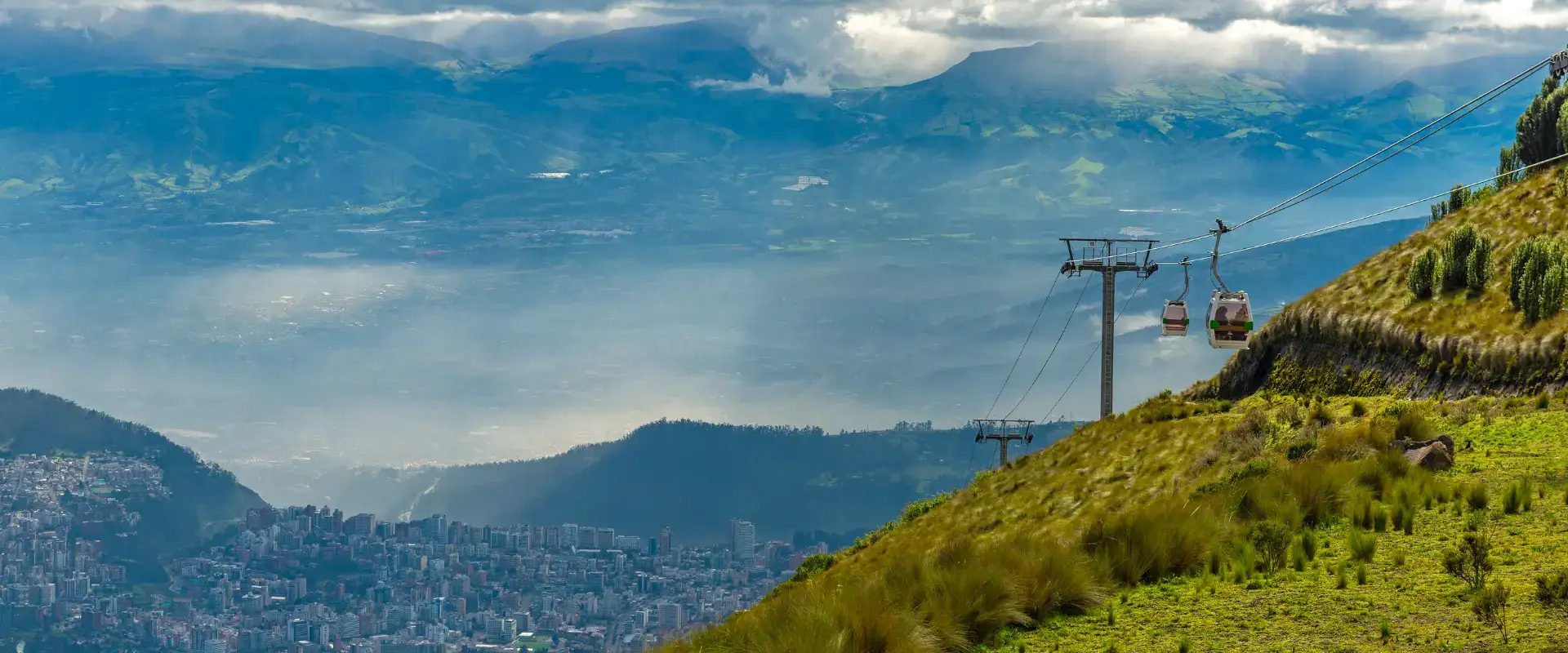
The Quito cable car — the Teleférico cable car Quito locals call the TelefériQo — climbs from 2,950 m to a 4,050 m ridge at Cruz Loma in about 20 minutes. This guide covers the official $9.00 ticket price, the new 2026 hours, altitude tips and how to ride the cable car Quito Ecuador travelers rate as the city’s best view. Learn more about Pichincha volcano.
Below, you’ll find everything you need: ticket prices, opening hours, altitude health tips, directions, and the best activities once you reach the summit.
Start in Quito: the 9 Day Ecuador & Galápagos Tour
Need to Know
- Price: $9.00 adults · $7.00 under-18 (2026 official tariff)
- Hours: Mon–Thu 10–6 · Fri 8–6 · Sat–Sun 8–7 · last ticket 5:00/5:30 PM
- Altitude: 2,950 m base → 4,050 m at Cruz Loma (dress warm)
- Getting there: 15-min taxi/InDriver from La Mariscal, $8–10
- Ride time: about 20 minutes each way
What Is the Teleférico Quito (Quito Cable Car)?
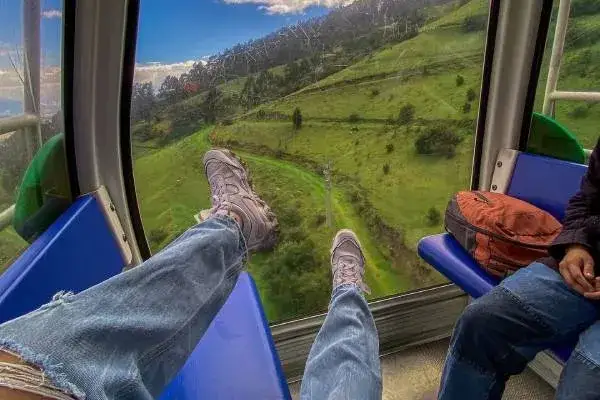
The Teleférico Quito (formally Teleférico de Quito) is a gondola-style cable car located on the western slopes of the city, along Avenida Occidental. It connects the base station at 2,950 meters above sea level to Cruz Loma viewpoint at 4,050 meters — a dramatic ascent of 1,100 meters completed in just 20 minutes. That is faster than your body can adjust, which is why the Quito elevation guide matters before you ride.
Built to give both tourists and locals easy access to the upper reaches of the Pichincha volcanic range, the Teleférico has become one of Quito’s most beloved attractions. The ride is smooth, scenic, and wide-open — in every sense of the word.
Quito Cable Car Altitude: How High Does It Go?
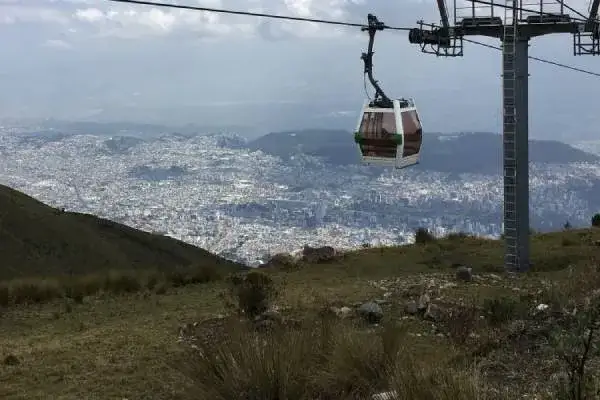
The Quito Cable Car altitude is one of the most searched questions about this attraction, and for good reason — the numbers are genuinely impressive. From the top, the view of the city stretches the full length of the valley.
- Base station: 2,950 meters (9,678 feet) above sea level
- Top station (Cruz Loma): 4,050 meters (13,287 feet) above sea level
- Elevation gain: 1,100 meters in 20 minutes
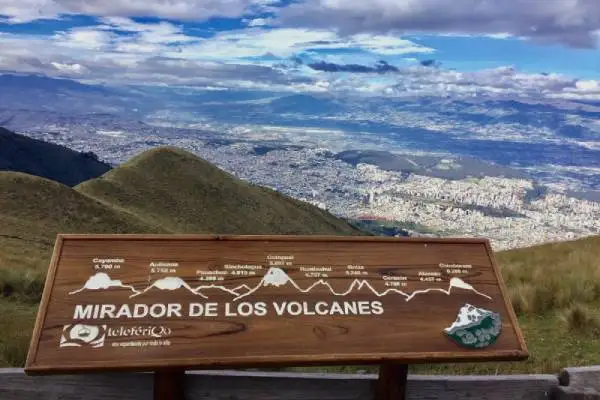
At 4,050 meters, you are standing higher than the highest peaks in the Alps or the Rocky Mountains. On clear mornings, you can see Cotopaxi, Cayambe, and other Andean giants from the viewpoint platform. The air is noticeably thinner at this altitude — take it slowly when you arrive, especially if you have just landed in Ecuador from a low-altitude city.
Quito Cable Car Tickets: How Much Does It Cost?
The Quito Cable Car cost is very reasonable for what it delivers:
- Adults: $9.00 (regular) — $5.25 with Ecuadorian ID
- Under 18: $7.00 (regular) — $3.25 with Ecuadorian ID
- Seniors & visitors with disabilities: $6.50 — $2.50 with Ecuadorian ID
- Bike pass: $5.25 one ascent / $9.00 full day
- Pets over 30 cm: $5.00 · Lockers: $2.00
Your ticket covers the full round-trip gondola ride — up to Cruz Loma and back down — so there is no need to hike down unless you want to. Tickets are sold at the entrance booth and no advance booking is required on most weekdays. Weekends tend to be busier, so arriving early is always a smart move.
Quito Cable Car Hours: When Is It Open?
The Teleférico Quito hours vary slightly between weekdays and weekends:
- Monday to Thursday: 10:00 AM – 6:00 PM
- Friday: 8:00 AM – 6:00 PM
- Saturday, Sunday & holidays: 8:00 AM – 7:00 PM
- Last ticket: 5:00 PM weekdays · 5:30 PM weekends and holidays
Two things trip people up: the last ticket sells well before closing (5:00 PM on weekdays, 5:30 PM on weekends), and weekday mornings start later than most visitors expect — Monday to Thursday the gondola doesn’t open until 10:00 AM. If you want Andean sunset light from Cruz Loma, go Saturday or Sunday when the ride runs until 7:00 PM. For current schedules, check the official TelefériQo hours and tariffs page. Not sure where this fits in your itinerary? Send us your dates and we will sort the order out.
How to Get to the TelefériQo Quito
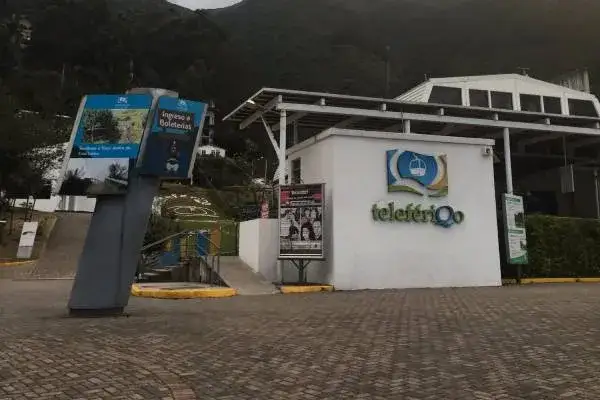
The TelefériQo Quito station sits in western Quito, on Avenida Occidental above the La Gasca neighborhood. Use a taxi app for the ride up and back; the same rules from our guide to is Quito safe apply around the base station after dark.
By taxi or ride-hailing app:
- From La Mariscal (Zona Rosa): approximately 15 minutes, typically $4–6 USD
- From the Historic Center: approximately 25 minutes, typically $6–8 USD
- Both Uber and InDriver operate in Quito and offer price-transparent alternatives to traditional taxis
By public bus: Several routes along Avenida Occidental stop near the Teleférico entrance. Ask the driver for the “Teleférico” stop. It’s the most budget-friendly option but takes longer than a direct taxi.
By vehicle: Parking is available at the base station complex if you are renting a car or traveling with a driver. You can find the Teleférico on Google Maps for precise navigation directions.
For a full orientation to getting around the city, see our Quito Ecuador travel guide.
Quito Gondola, Teleférico, or Cable Car: Same Ride, Three Names
Yes — the Quito Cable Car, the Teleférico de Quito, and the Quito gondola are all different names for the exact same attraction. Here’s a quick breakdown:
- “Cable car” — the term most commonly used by English-speaking tourists searching online
- “Teleférico” (sometimes spelled “Teleferiqo”) — the official Spanish name
- “Gondola” — an informal English term used because of the enclosed, gondola-style cabins
No matter which name you search for, you are looking at the same experience: a 20-minute enclosed gondola ride from Quito’s western edge to Cruz Loma at 4,050 meters. The Quito gondola nickname sometimes confuses first-time visitors who associate gondolas with Venice, but in Quito it refers to the cable car cabins.
Cable Car Quito Ecuador: What to Expect on the Ride
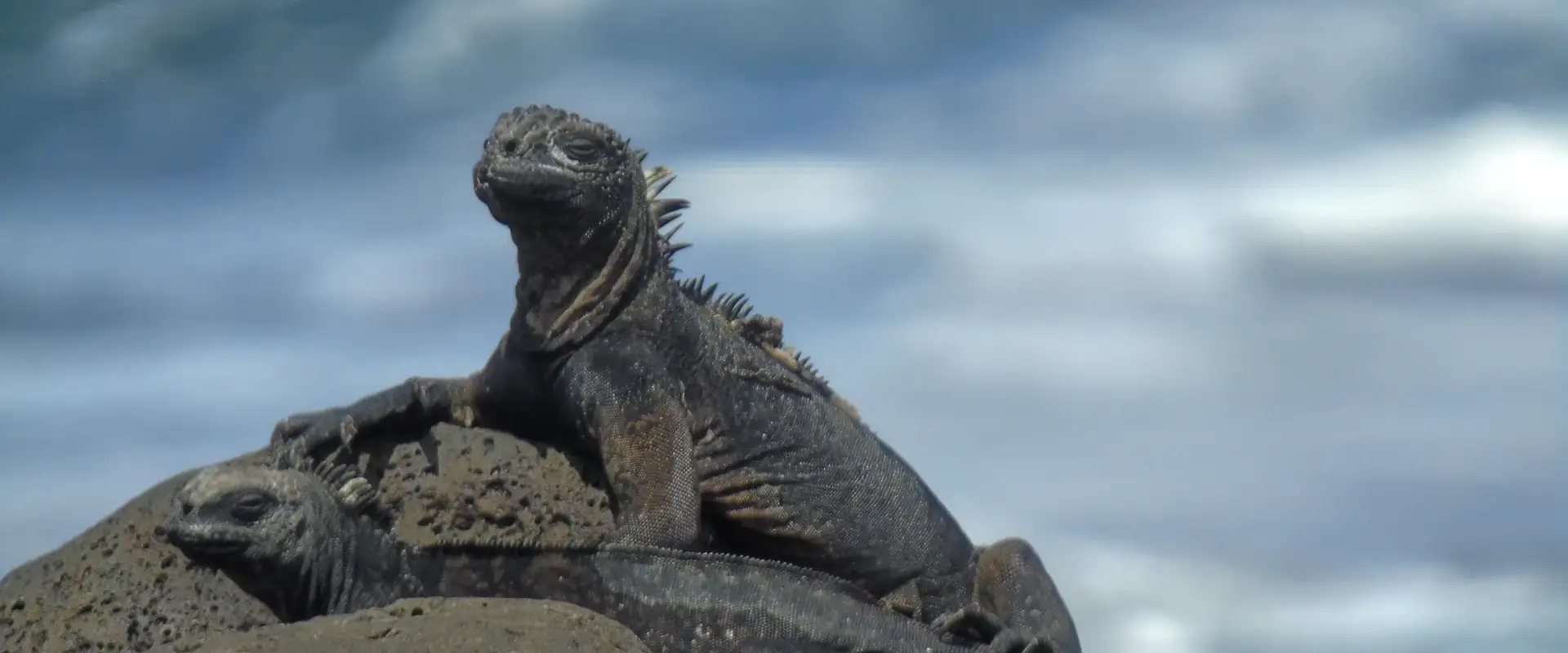
START IN QUITO, END IN THE GALÁPAGOS
9 Day Ecuador and Galapagos Tour: Andes, Amazon and Santa Cruz
Quito, Cotopaxi, Quilotoa, Baños and the Amazon with your own guide, then three nights on Santa Cruz with tortoises, beaches and snorkeling.
From $1,990 per person
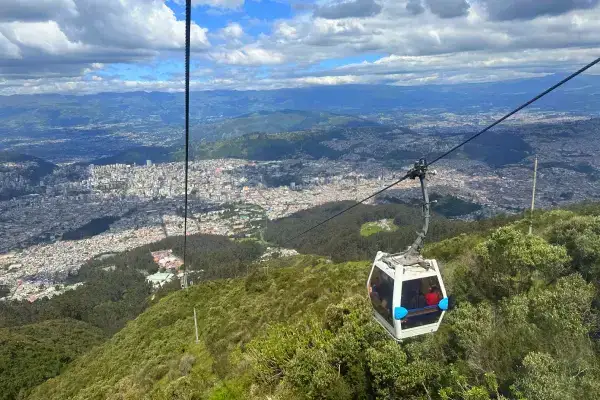
View itineraryThe gondola cabins are enclosed and comfortable, able to hold multiple passengers per car. As you ascend, Quito gradually unfolds below — a dense urban grid framed by volcanic ridges stretching north and south. You may pass through cloud layers on many mornings, and arriving above them to find clear skies and mountain views is one of those travel moments that stays with you. The TelefériQo is one of the 21 best things to do in Quito — pair it with a morning in the Quito Old Town for the full day.
The ride lasts approximately 20 minutes in each direction. Temperatures at Cruz Loma are typically 10–15°C cooler than in the city below, so a warm layer in your bag makes the summit experience far more comfortable. On a clear morning you can pick out six snow-capped giants from the cabin and the ridge: Cotopaxi, Cayambe, Antisana, Rumiñahui, the Illinizas, and Corazón.
Best Time to Visit the Quito Cable Car
The best time to visit the Quito Cable Car is on a weekday morning between 9:00 AM and 11:00 AM. Here is why:
- Clearest views: Quito’s afternoons frequently cloud over, especially during the rainy season. Morning skies tend to be clear and offer the best visibility of surrounding volcanoes.
- Smaller crowds: The site gets noticeably busier on weekend afternoons. Going early means shorter queues and a more peaceful experience at the summit.
- Best photography light: Morning golden hour and soft early light are ideal for landscape shots of the city and the Andes.
In terms of season, June through September (the dry season) consistently offers the clearest skies, making it the ideal window for both photography and the optional hike to Rucu Pichincha. That said, clear mornings occur year-round, so do not let an off-season travel date stop you.
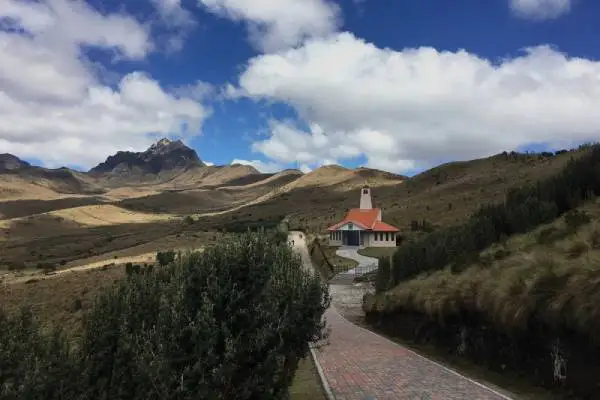
Hike to Rucu Pichincha Volcano from Cruz Loma
One of the most exciting activities available after arriving at Cruz Loma is hiking toward Rucu Pichincha, one of Pichincha’s twin volcanic peaks. This is a demanding but deeply rewarding trek:
- Duration: 3–4 hours each way (allow a full day)
- Elevation gain: approximately 700 meters from Cruz Loma to the summit
- Summit altitude: approximately 4,700 meters above sea level
The hiking trails are well-marked and begin just above the Cruz Loma arrival platform. You will hike through high-altitude páramo — Andean grassland — scramble over rocky terrain near the top, and if conditions cooperate, arrive at views of Quito and the Inter-Andean Valley that are once-in-a-lifetime.
Important: Only attempt the Rucu Pichincha hike in good weather and ideally with a local guide if you are unfamiliar with high-altitude trekking. Always inform someone of your plans before departing. You can also combine a guided Teleférico visit with Andean trekking through our best day trips from Quito page.
Andean Bears on the Upper Trails: Yes, Really
The páramo above the TelefériQo is real Andean bear habitat — the oso de anteojos (spectacled bear, Tremarctos ornatus). Sightings near the upper trails make local news every few years: a female with two cubs in 2016, a bear that strolled near the station in 2022, and in early 2026 conservationists from Fundación Cóndor Andino tracked a bear family in the Pichincha páramos. Roughly 50 individuals live in the wider Quito district. If you spot one on the Rucu Pichincha trail, keep your distance, don’t feed it, and enjoy one of the rarest wildlife encounters Ecuador’s capital can offer.
Altitude Sickness Tips and Health Precautions
At 4,050 meters, Cruz Loma is high enough to cause altitude sickness symptoms in some visitors — particularly those arriving directly from sea level. Common symptoms include headache, nausea, dizziness, and shortness of breath.
How to minimize the risk:
- Acclimatize in Quito first. Spend at least one full day in Quito (2,850m) before riding the cable car. Your body adjusts faster than you might expect.
- Ascend slowly. Once at the top, do not rush. Walk at a relaxed pace and breathe deeply for the first 15–20 minutes.
- Stay hydrated. Drink plenty of water before and during your visit. Avoid alcohol the night before.
- Eat lightly. A heavy meal before ascending can worsen nausea at altitude.
- Try coca tea. This traditional Andean remedy is widely available in Quito cafés and can help with mild altitude symptoms.
- Descend if needed. If symptoms become severe, ride the gondola back down — altitude sickness resolves quickly once you return to a lower elevation.
Children, elderly visitors, and those with heart or respiratory conditions should consult a doctor before visiting high-altitude sites like Cruz Loma.
What to Pack for Your Visit
Packing smart makes the experience significantly more enjoyable:
- Warm jacket or fleece — it is often 10–15°C cooler at the summit than in the city
- Windproof outer layer — Cruz Loma is exposed and wind can be strong
- Sunscreen (SPF 50+) — UV radiation is intense at altitude, even through cloud cover
- Sunglasses — essential for bright Andean conditions
- Comfortable walking shoes — required if you plan to hike
- Water bottle and light snacks — cafés are available at both the base and summit, but having your own water is always wise
- Camera or phone — the views are extraordinary and highly photogenic
Things to Do at the Base and Summit
The Teleférico complex offers activities at both ends of the cable car:
At the base station: Café and restaurant with Andean views, souvenir and artisan shops, and outdoor seating areas.
At Cruz Loma (top station): Cruz Loma viewpoint with 360° panoramic views of Quito and the Andes, a café for warm drinks and snacks, the starting point for the Rucu Pichincha hiking trail, and horseback riding along high-altitude trails. A detail most visitors miss: the summit building has extra oxygen pumped inside, so step in for a few minutes if the altitude hits you.
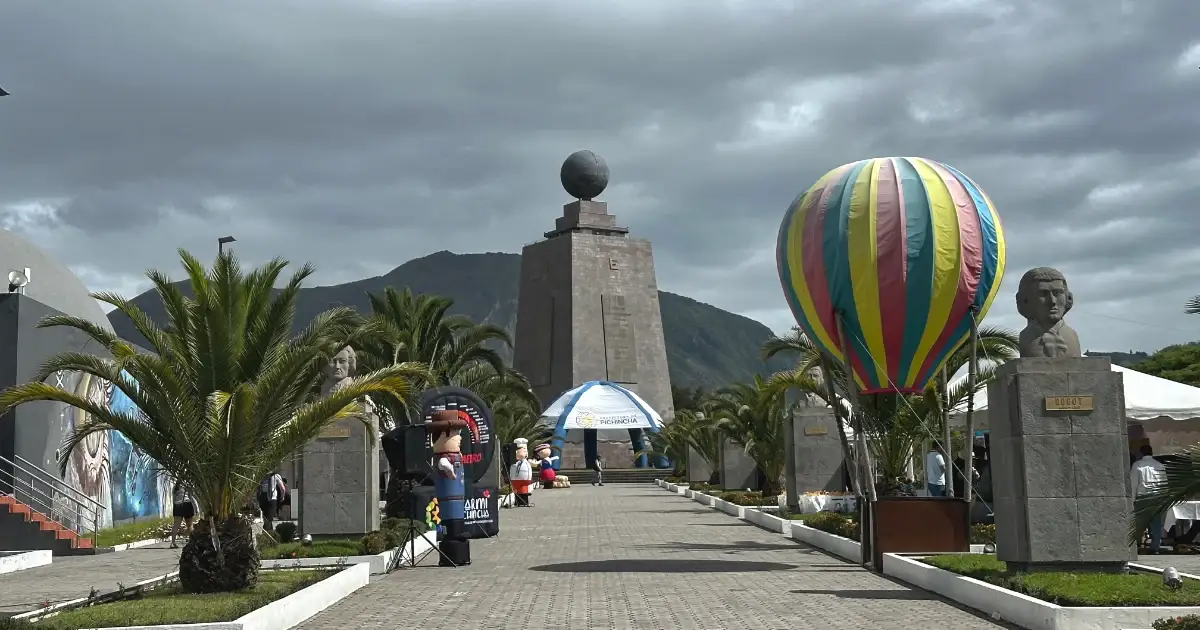
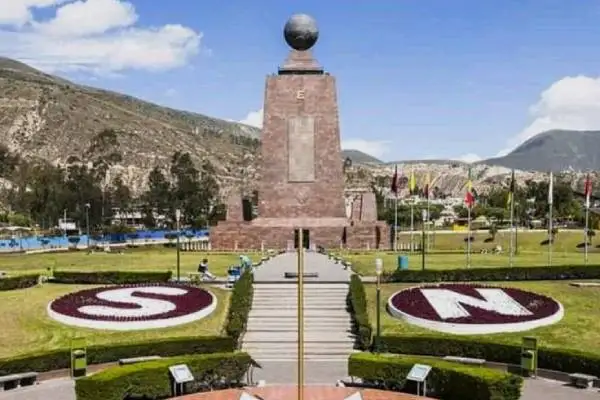
The horseback riding option is especially popular with families and visitors who want the high-altitude experience without the physical exertion of a full hike. If you are planning a full day out, consider pairing the cable car with a visit to the Mitad del Mundo monument — Ecuador’s iconic equatorial landmark — for an impressive combo day trip.
Quito Cable Car Tours and Combo Day Trips
SEE QUITO WITH A LOCAL GUIDE
Quito City Tour, Cable Car and Middle of the World
The Old Town, the TelefériQo up Pichincha and the Equator line in one day, with transport and a bilingual guide who knows the city.
From $90 per person
View itineraryVisiting the Teleférico as part of a guided tour is a great way to get more from your time and skip the logistics of navigating there independently. Quito Trips offers several curated options:
- Teleférico + Historic Center: Pair the cable car with a guided Quito Old Town walking tour through Quito’s UNESCO-listed colonial heart
- Teleférico + Mitad del Mundo: Visit both the cable car and the equatorial monument in a single efficient day
- Teleférico + Multi-day Andes adventure: The cable car pairs naturally with a trip to Cotopaxi National Park, one of Ecuador’s most dramatic volcanic landscapes, located just south of Quito
All tour options and Quito itinerary ideas can be found in our Quito Ecuador travel guide.
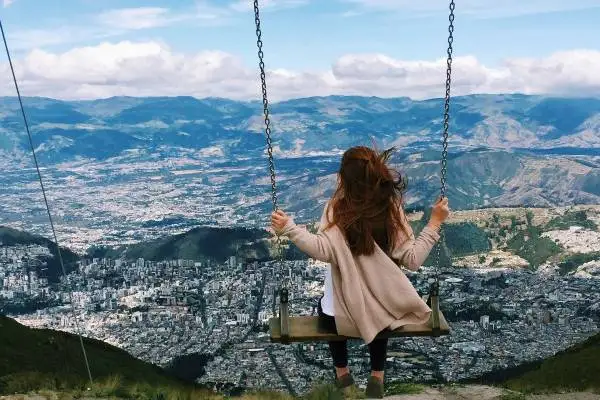
Photography and Instagram Spots at Cruz Loma
Cruz Loma ranks among the most photogenic viewpoints in all of Ecuador. Here is where to point your camera:
- City panorama: Stand at the main railing for sweeping shots of Quito spread across the valley — best in morning light
- Gondola in motion: Photograph the cable car cabins descending against the mountain and cloud backdrop
- Páramo landscape: The high-altitude grassland surrounding Cruz Loma has a wild, otherworldly quality, especially when morning mist rolls in
- Andean sunset: On weekends, when the cable car stays open until 9:00 PM, late afternoon light over the Andes can be extraordinary
Where to Eat and Drink
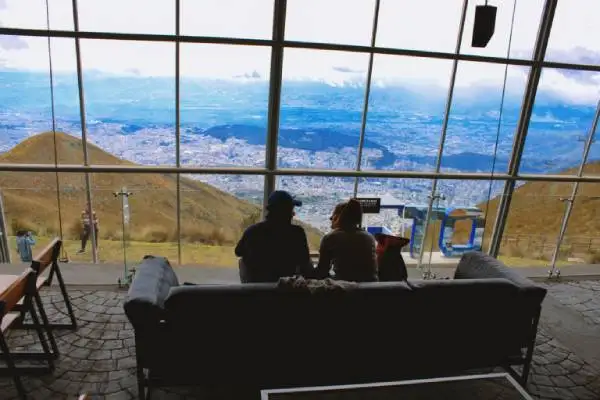
You don’t need to worry about going hungry or thirsty on your visit to the Quito Cable Car. There are cafés at both the base station and at Cruz Loma at the top. The base café offers meals, snacks, and drinks before and after your ride, while the summit café is perfect for a warm coffee or hot chocolate while you take in the views. Use your phone’s panorama mode or a wide-angle lens to capture the full scale of the landscape below.
Quick Answers: Quito Cable Car
What time does the Quito cable car open?
It depends on the day: Monday to Thursday 10:00 AM – 6:00 PM, Friday 8:00 AM – 6:00 PM, and weekends/holidays 8:00 AM – 7:00 PM. The last ticket sells at 5:00 PM on weekdays and 5:30 PM on weekends — don’t cut it close.
How much does the Quito cable car cost?
The official 2026 tariff is $9.00 for adults and $7.00 for visitors under 18 ($5.25 and $3.25 with an Ecuadorian ID). Seniors and visitors with disabilities pay $6.50. The ticket covers the full round trip to Cruz Loma.
What is the Quito cable car altitude?
The Quito cable car altitude tops out at 4,050 meters (13,287 feet) at Cruz Loma. The base station sits at 2,950 meters (9,678 feet), so the gondola climbs about 1,100 meters in roughly 20 minutes.
How do I get to the Teleférico in Quito?
The Teleférico sits on Avenida Occidental in western Quito — about 15 minutes by taxi from La Mariscal, or 25 from the Historic Center. Uber and InDriver both work well, and public buses along Avenida Occidental stop near the entrance for a budget option.
Is the Quito cable car the same as the teleférico and gondola?
Yes. The Quito cable car, Teleférico de Quito and Quito gondola are all the same attraction. “Cable car” and “gondola” are the informal English terms; Teleférico (also spelled TelefériQo) is the official Spanish name for the gondola system up to Cruz Loma.
What is the best time to visit the Quito cable car?
A weekday morning between 9:00 and 11:00 AM is best — clearest skies and smallest crowds. For the most reliable volcano views, go during the dry season (June to September) and skip cloudy afternoons.
Is the Quito cable car worth it?
For most visitors, yes. At under $9 it is one of the best-value things to do in Quito — 20 minutes up to a 4,050 m ridge with panoramic city and volcano views, plus easy trails toward Rucu Pichincha. Skip it only if the summit is socked in with cloud.
What should you wear on the Quito cable car?
Dress in layers. The base is mild but the top sits at 4,050 m where it is cold, windy and the sun is fierce — bring a warm jacket, sunglasses, sunscreen and sturdy shoes if you plan to walk toward Cruz Loma or Rucu Pichincha.
Have Andean bears been seen at the Quito cable car?
Yes — the páramo above the TelefériQo is spectacled bear (oso de anteojos) habitat, and sightings near the upper trails have made the news several times, most recently a bear family tracked by conservationists in the Pichincha páramos in early 2026. If you see one, keep your distance and don’t feed it.
Before You Go
- Go on a weekday morning (Fri–Sun from 8:00 AM; Mon–Thu opens 10:00 AM) for the clearest volcano views
- Bring $9.00 per adult — cash or card both work at the ticket office
- Pack a warm jacket, sunscreen, and water — Cruz Loma sits at 4,050 m
- Take it slow at the top; the summit building has oxygen if you need it
- Hiking Rucu Pichincha? Start before 10:00 AM and skip it if you arrived in Quito yesterday
The Quito cable car is the easiest way to stand at 4,050 m and watch the city spread out below the volcanoes. Go on a clear weekday morning, bring a warm layer, and give yourself an hour or two at the top — it is the best $9.00 you will spend in Quito.