Ecuador Amazon Rainforest: Complete Travel Guide 2026
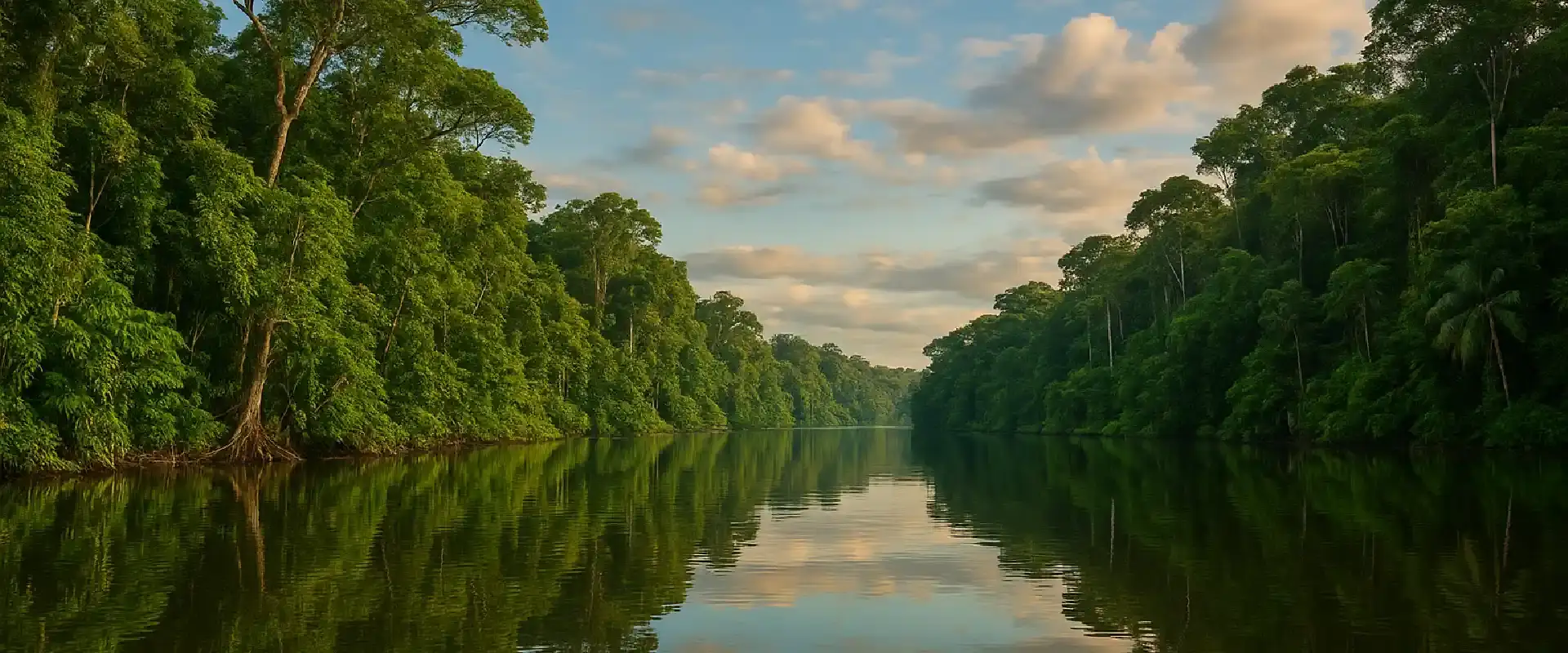
Ecuador’s Amazon rainforest covers one-third of the country and holds some of the highest biodiversity per square kilometer on Earth. People call it the Ecuador rainforest, the Ecuador jungle or simply El Oriente: it is all the same region east of the Andes. Most travelers visit Cuyabeno Wildlife Reserve or Yasuni National Park on 4-5 day lodge packages from Quito, costing $250-$600 per person. The best time to go is June through September when rainfall drops and wildlife gathers along rivers and lagoons. We’ve been organizing Ecuador Amazon rainforest trips for over 15 years, and this guide shares everything we tell travelers who walk into our Quito office — the honest version, not the brochure version.
frogs that sound like laser guns. And insects? The rainforest’s got over 1.5 million insect species. You won’t see them all, but you’ll definitely hear them.
Ecuador Amazon Rainforest Lodges: Budget to Luxury
Your lodge choice makes or breaks your Ecuador Amazon rainforest trip. And I’m not just saying that — I’ve stayed at almost all of them.
Budget Lodges ($60-$100/night) – Basic but comfortable. Think screened huts with mosquito nets. You’ll share bathroom facilities and meals. The energy here is great because you’re meeting other backpackers. The guides are solid, and you’ll see tons of wildlife without breaking the bank.
Mid-Range Lodges ($150-$300/night) – Private cabins with real bathrooms, good meals, and experienced guides. Most people go this route, and honestly, it’s the sweet spot. You get comfort without the premium price tag.
Luxury Lodges ($400+/night) – These are incredible. All-inclusive experiences with gourmet meals, naturalists, and personalized service. If you’re celebrating something special or you’ve got the budget, go for it.
Rather than squeeze every option in here, our full guide to the best Amazon lodges in Ecuador compares them by price, river access and what the rooms are actually like.
Ecuador Amazon Rainforest Activities and Daily Routines
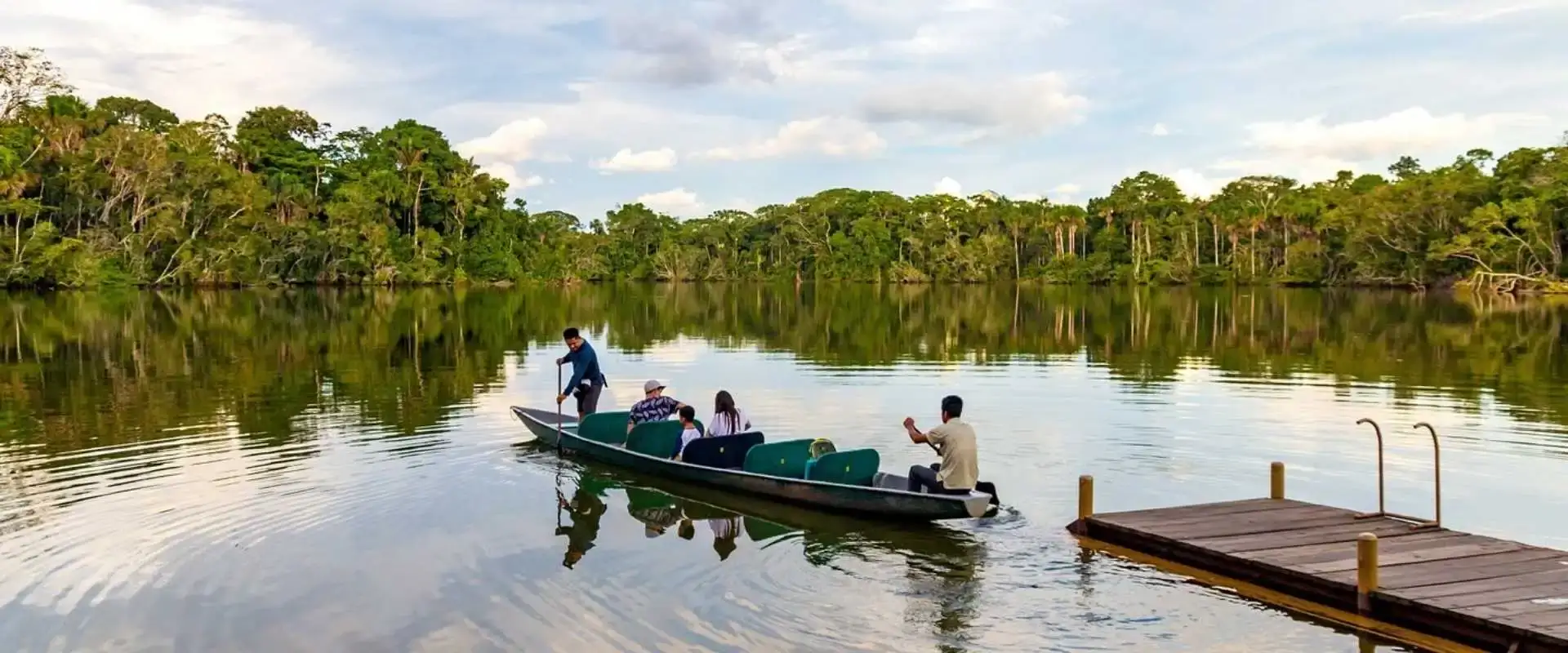
A typical day in the Ecuador Amazon rainforest starts early — like 5:30 AM early. Your guide will come knock on your door, and yes, it’s still dark out. Coffee or tea first, then you’re heading out on the water to catch the birds waking up. There’s something almost spiritual about being the only humans on a quiet river at that hour.
Mid-morning, you might do a jungle walk. You’ll learn to identify medicinal plants, listen for animals, and understand how the forest works. Your guide (who knows everything) will point out stuff you’d never see on your own. Lunch is back at the lodge—usually amazing food made by locals. If you would rather someone else handled the logistics, tell us what you have in mind.
Afternoons are flexible. Some people nap, some explore the Ecuador Amazon rainforest trails. Evening brings night walks or canoe rides where your guide uses a spotlight to spot caimans and nocturnal animals. Dinner, then maybe some stargazing. Sleep, repeat.
If you would rather compare packaged trips than build your own, we go operator by operator in our roundup of the best Amazon tours from Ecuador.
Costs, Budgets, and What’s Included
Let’s be real about money. A 5-7 day Ecuador Amazon rainforest trip from Quito typically costs:
- Flight Quito to Coca/Macas: $100-$200
- Lodge (all-inclusive): $60-$400+ per night, depending on the tier above
- Meals in Coca: $5-$15 per meal
- Activities/guides: Usually included in lodge price
- Total budget: $1,500-$4,000 for a solid week
Most Ecuador Amazon rainforest lodge packages include accommodation, meals, activities, and bilingual guides. That’s the beautiful part — it’s all bundled up. Just factor in your flights to Ecuador and internal flights to Coca. Check the Ecuador Ministry of Tourism for official travel requirements.
Ecuador Amazon Quick Comparison
Four ways into the Ecuadorian Amazon, and they are not interchangeable. Pick the row that matches what you actually want, then read that guide.
| Gateway | Getting there | What it is | The honest catch | How long | Typical cost |
|---|---|---|---|---|---|
| Tena | 5 h by road, no flight | Rafting, caves, waterfalls, Kichwa communities | Secondary forest. Not the place for big wildlife | 3-4 days | ~$200-260 for 3 days, independent |
| Cuyabeno | Fly to Lago Agrio, then canoe | Flooded forest and lagoons; animals come to the water | Mid-range lodges, reliable sightings | 4-5 days | ~$100 a day, all in |
| Yasuní | Fly to Coca, then hours by canoe | Primary terra firma forest, the most biodiverse place on Earth | The deepest and the priciest | 4-5 days | $240-640 a night at the lodge |
| Papallacta | 1.5-2 h by road | Thermal springs on the way down from Quito | Andean cloud forest, not Amazon proper | A day, or a stop | $9 entry, plus transport |
If wildlife is the whole reason you are coming, go to Yasuní or Cuyabeno and do not let price talk you into Tena. If you want to be in the water and in caves on a normal budget, Tena is the better trip and it costs a third as much.
Essential Tips for Your Amazon Adventure
- Book your lodge directly if possible you’ll save money and support local businesses
- Bring an underwater camera case for your phone you’ll want those river shots
- Don’t pack more than a small backpack; you’ll be moving between canoes frequently
- Learn a few Spanish words; guides appreciate the effort, and it opens doors
- Respect the wildlife we’re visitors in their home
- Bring cash for tips; cards don’t work in the jungle
- Take antimalarial medication if recommended by your doctor
- Stay hydrated you’re sweating more than you realize
LOCAL GUIDE AND DRIVER, EVERY DAY
12 Day Ecuador and Galapagos Tour: Andes, Amazon and Island Hopping
The Andes and the Amazon with your own guide and driver from Quito, then a week of island hopping on Santa Cruz and Isabela with a yacht day.
From $2,690 per person
View itineraryAndes, Amazon and Galápagos Island Hopping: 12 Day Tour
Best Time to Visit Ecuador’s Amazon Rainforest
June through September is your best window to visit the Ecuador Amazon rainforest. Rainfall drops significantly, trails dry out enough to actually hike without sinking knee-deep in mud, and animals gather around shrinking water sources — making them easier to spot. I’ve seen more wildlife in a single dry-season morning than during an entire rainy-season week.
That said, the rainy season (November through March) in the Ecuador Amazon rainforest has its own magic. Water levels rise, flooding the forest and opening up canoe routes that don’t exist in dry months. Fewer tourists mean you’ll often have the lagoons to yourself. And the frogs — they go absolutely wild at night. If you don’t mind rain gear and muddy boots, it’s actually a great time to visit.
How to Get to Ecuador’s Amazon Rainforest from Quito
Getting to the Ecuador Amazon rainforest from Quito is easier than most people expect. The fastest route is a 30-minute flight from Quito to Coca (Francisco de Orellana) with LATAM Airlines. From Coca, your lodge arranges boat transfers. Expect 2-4 hours on a motorized canoe depending on how deep into the jungle you’re going.
On a budget? Night buses from Quito to Lago Agrio take about 6-8 hours and cost $10-$15. From Lago Agrio, Cuyabeno lodges send boats to collect guests at the bridge. It’s a longer journey, but you save money and the bus ride over the Andes at sunrise is pretty spectacular. For Tena — the closest Amazon town — it’s a scenic 4-5 hour drive from Quito, making it the easiest self-drive option.
The full door-to-door version — bus times, the Coca flight, what the canoe leg costs — is in our guide to planning an Amazon trip from Quito.
Cuyabeno vs Yasuni: Which Amazon Rainforest Region Is Right for You?
There is a third option those two leave out, and it is the one most travellers can actually afford: Tena, five hours from Quito by road. It trades primary-forest wildlife for the best whitewater in the country, the Jumandy caves and Kichwa community tourism, at roughly a third of the price.
This is the question we get asked the most. Short answer: Cuyabeno is better for first-timers and budget travelers, while Yasuni is better for serious wildlife seekers willing to spend more.
Cuyabeno Wildlife Reserve is accessed from Lago Agrio and offers flooded forest canoe rides through blackwater lagoons, pink river dolphin sightings, and stays in community-run lodges starting around $250 for 4 days. The experience is magical — paddling through mirror-still lagoons at dawn with monkeys swinging overhead. Learn more about this protected area from Ecuador’s Ministry of Environment. It’s perfect if you’re combining the Ecuador Amazon rainforest with Galapagos or Quito sightseeing and want a solid 4-5 day jungle taste.
Yasuni National Park is the heavyweight of the Ecuador Amazon rainforest. UNESCO calls it one of the most biodiverse places on the planet — 644 bird species, 121 reptile species, and more tree species per hectare than all of North America combined. Access is through Coca by motorized canoe (2-4 hours into the park), and lodges here tend to be higher-end: Napo Wildlife Center and Sacha Lodge run $500-$1,200 for 4-5 nights. If wildlife photography or hardcore birdwatching is your thing, Yasuni is where you go.
Both deserve more than a section. Here is the deep dive on Yasuní National Park, and the one on the Cuyabeno Wildlife Reserve.
Wildlife in Ecuador’s Amazon Rainforest: What You’ll Actually See
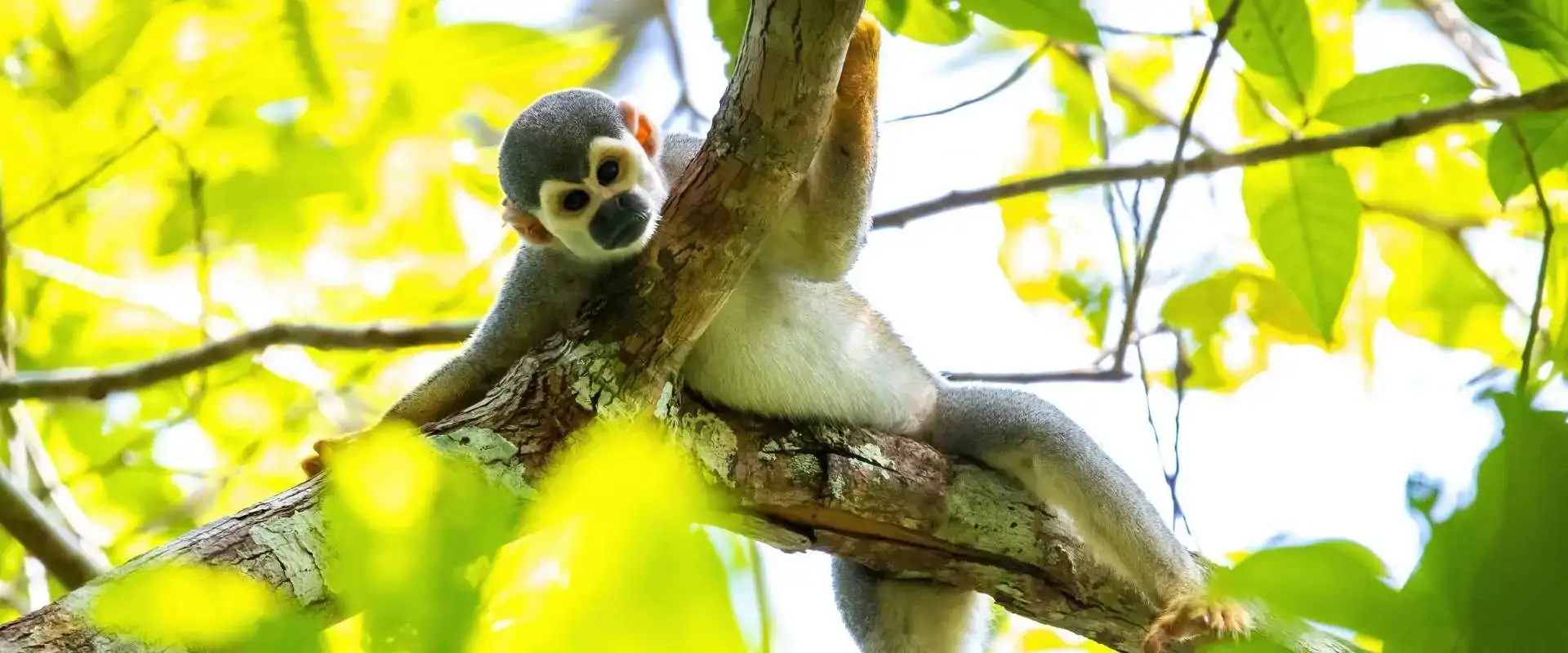
Let’s set realistic expectations about Ecuador Amazon rainforest wildlife. You’re not going to see a jaguar — they’re nocturnal, shy, and incredibly rare to spot. But you will see monkeys (squirrel monkeys, howlers, sometimes woolly monkeys), macaws, toucans, anacondas (if you’re lucky), caimans, and more species of frogs and birds than you knew existed.
Night walks are where things get wild. Your guide’s flashlight picks up tarantulas, tree frogs with neon-colored skin, and the red glow of caiman eyes along the water’s edge. The sounds alone are worth the trip — a symphony of insects, frogs, and howler monkeys that no recording could ever capture. Bring binoculars and a decent camera with zoom. Trust me on this one.
Two more worth reading before you book: how much of the Amazon is actually in Ecuador, and what you will be eating out there — our guide to typical Amazon rainforest food.
For the species-by-species version — what you will realistically spot, and when — read our Ecuador Amazon wildlife guide.
Frequently Asked Questions About Ecuador’s Amazon Rainforest
Looking for more on Ecuador Amazon Rainforest? Browse our related coverage on ecuador amazon rainforest guide, ecuador amazon rainforest tour, ecuador amazon rainforest travel, and reach out to our local experts for personalized planning.
Is it safe to visit Ecuador’s Amazon?
Yes, absolutely. I’ve been guiding Ecuador Amazon rainforest trips for fifteen years without incident. The lodges are well-established, guides are certified, and you’re never far from help. The biggest real risks are sunburn, dehydration, and the occasional mosquito bite.
What about malaria and diseases?
It’s a real consideration, but manageable. Check with your doctor about antimalarial medication. Use bug spray, sleep under mosquito nets, and wear long sleeves in the evening. I’ve guided thousands of people, and major illness is rare when precautions are taken.
How physically demanding is an Amazon trip?
Not super demanding, but you need basic fitness for the Ecuador Amazon rainforest. You’ll be walking on uneven terrain, climbing in and out of canoes, and dealing with heat and humidity. Consult the CDC Ecuador travel page for health recommendations before your trip.
Can I visit the Amazon with kids?
Totally. Many families bring kids aged 8 and up. Kids love the animals, the adventure, and sleeping in the jungle. Just make sure they’re vaccinated and bring their meds. Some lodges even offer family-specific packages.
What’s the difference between a lodge and a river cruise?
Lodges are stationary — you stay in one place and do day trips into the Ecuador Amazon rainforest. River cruises move you along the river, covering more ground but spending less time in any one spot. For deeper wildlife immersion, I recommend lodges. For variety and comfort, consider a cruise.