
Devil's Nose Train in Ecuador: Is It Running, Tickets and How to Get to Alausí
The Devil's Nose train in Alausí reopened on June 6, 2026. Current foreigner fares, departure times, how to book from abroad and how to reach Alausí.

the Quito Trips team, local guides in QuitoUpdated · 6 min read
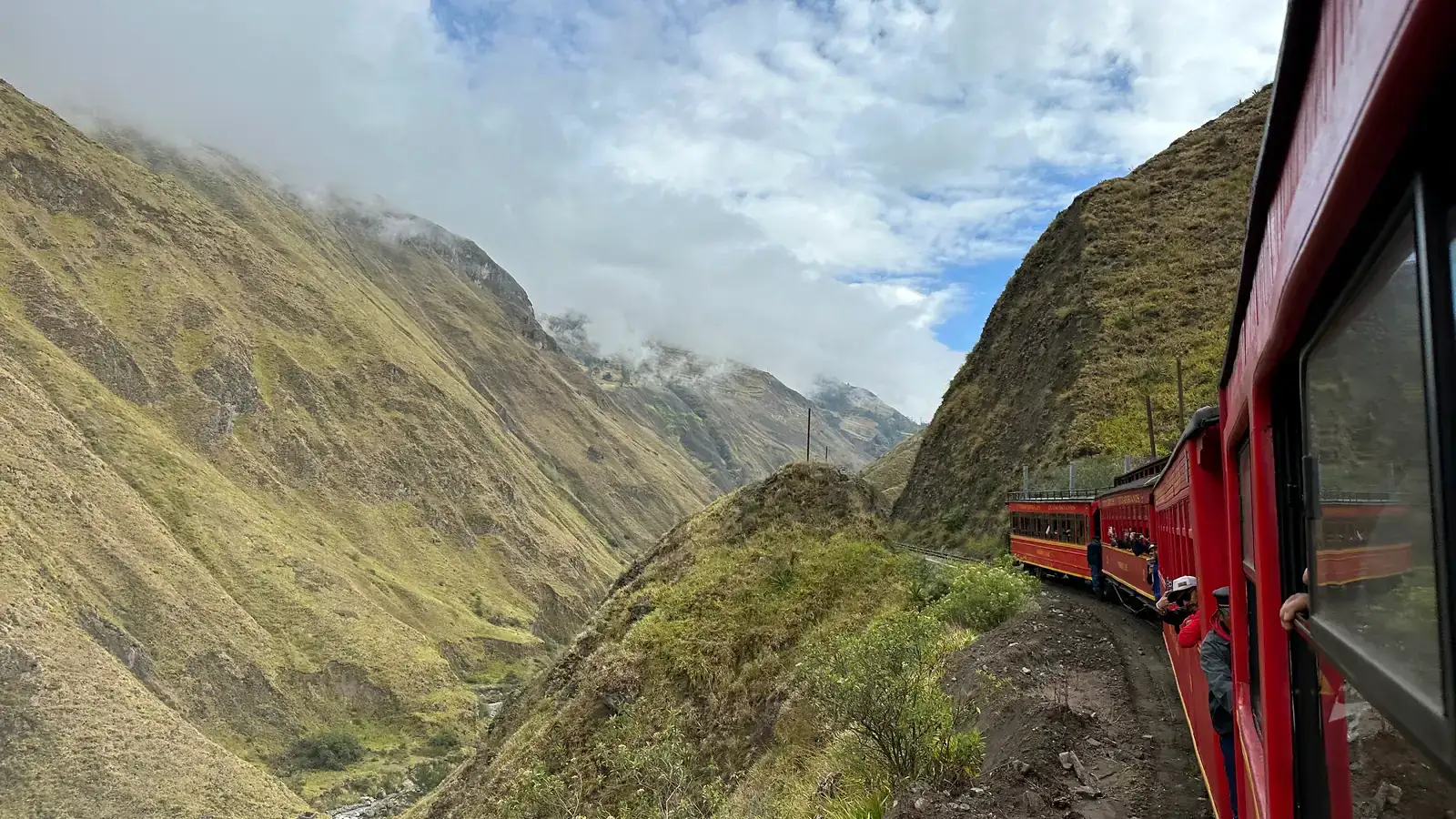
The Devil's Nose train runs again. After five years without service and two long shutdowns, the short heritage line from Alausí down to Sibambe reopened on June 6, 2026, and as of mid-October it leaves three times a day, Thursday to Sunday. A foreign adult pays $30 plus tax. This page gives you what you need to plan it from outside Ecuador: the current status, how to book, how the ride actually goes, and how to get to Alausí, a small Andean town about five hours south of Quito.
See the 4-day Cotopaxi to Cuenca tour through the Andes
Is the Devil's Nose train running right now?
Yes, with a caveat. The train restarted on June 6, 2026, according to a bulletin from Ecuador's Ministry of Infrastructure and Transport, and the booking page lists departures from October 1 to December 31, 2026. The caveat is the track record. Since the line came back in 2025 it has stopped three times: once for a mechanical fault, once for landslides on the track, and once for a mudflow that shut it for almost four months.
Most of what you will read online about this train was written before or between those closures. If a blog quotes a Wednesday departure, a $40 ticket or a train from Riobamba, it is out of date.
| Date | What happened |
|---|---|
| May 2020 | President Lenín Moreno orders the liquidation of Ferrocarriles del Ecuador. Every passenger train in the country stops. |
| March 26, 2023 | A landslide in the Casual area of Alausí kills 65 people. The train had already been out of service for three years. |
| August 20, 2025 | Official reopening of the Alausí to Sibambe section after a pilot run in July. The national government put in $685,000 (Teleamazonas). |
| Late 2025 | Two stops: four days in early September for a mechanical failure, and about three weeks until December 20 for locomotive damage and landslides on the track. |
| February 18, 2026 | A mudflow damages roughly 5 km of track. Service suspended. |
| June 6, 2026 | Back in operation, Thursday to Sunday, 08:00, 11:00 and 14:00 (El Universo). |
The operator today is the Municipality of Alausí, not the old national rail company, and the ticket money stays with the municipality. Updates on closures go out on the train's own social media first.
Devil's Nose train tickets: prices and how to book
Tickets are sold online through Ticket Éxito, Ecuador's main event ticketing site. These are the fares it lists for October to December 2026:
| Passenger | Foreign visitors | Ecuadorian nationals |
|---|---|---|
| Adult, 12 to 64 | $30 | $18 |
| Child 5 to 11, senior 65+, or person with a disability | $15 | $9 |
VAT and the platform's service fee are added at checkout. Ecuador uses the US dollar, so there is no currency conversion on a US card, though your bank may still charge a foreign transaction fee.
To book, have each traveler's full name, passport number and age ready. The seat map holds your choice for 15 minutes. Carriages shown as disabled are sold out. Weekend and holiday departures go first; Thursday and Friday trains are easier. Carry the passport whose number you used to book.
What the ride is like, minute by minute
The line covers 12.5 km between Alausí and Sibambe and comes back the same way, pulled by an electro-diesel locomotive. The descent works because of the switchbacks: on the face of Pistishí mountain the train runs forward into a dead end, stops, and then reverses down the next leg of track. The view flips sides each time, so neither side of the carriage is the better one.
| Stage | Time |
|---|---|
| Check-in at Alausí station | From 30 min before departure |
| Ride down through the switchbacks | 45 min |
| Stop at the Devil's Nose viewpoint | 10 min |
| Welcome by the Tolte, Nizag and Sibambe communities | 10 min |
| Traditional dance at Sibambe station | 20 min |
| Free time at the café and craft stalls | 25 min |
| Ride back up to Alausí | 30 min |
Bring small bills for the craft stalls and the café at Sibambe. The stalls are run by people from the communities that welcome the train.
Why it is called the Devil's Nose
Pistishí is a near-vertical wall of rock, and the line had to get down it. Engineers of the Guayaquil and Quito Railway solved it with the zigzag you ride today. The full railway ran 452 km from the coast to the capital; it was first planned under President Gabriel García Moreno and finished under Eloy Alfaro in 1908.
The name comes from the shape of the mountain and from what it cost to build. Ecuadorian newspaper Expreso cites an estimate of more than 3,000 workers killed on this section, many of them Jamaican laborers. No exact count exists, so treat that number as a rough figure.
How to get to Alausí
Alausí sits on the Pan-American Highway in Chimborazo province, south of Riobamba on the road to Cuenca. There is no airport; you arrive by road.
| From | How | Time | Notes |
|---|---|---|---|
| Quito | Cooperativa Patria bus from Quitumbe terminal | 5 to 5.5 h | 2026 reference fare $10.35 (Quitumbe terminal) |
| Riobamba | Cooperativa de Transportes Alausí bus from the Terminal Terrestre | About 2 h | Departures from 04:45 to 20:00 (La Prensa, January 2026) |
| Quito, guided tour | Car with driver-guide | Two days with a night on the way | Pairs with Cotopaxi, Quilotoa or Chimborazo |
Here is the timing problem most visitors miss. The first train is at 08:00 and you need to be at the station by 07:30. From Quito that means sleeping in Alausí the night before, or sleeping in Riobamba and catching the 04:45 or 05:00 bus. Riobamba has more hotels and restaurants and is the base for Chimborazo volcano, so many people split the trip there.
Coming from the south, there are buses from Cuenca as well. Ask at the Cuenca bus terminal for a service that stops in Alausí, and confirm the time the day before. The road into Alausí from the highway drops through tight curves; take something for motion sickness if you need it.
Alausí is the natural southern end of the Avenue of the Volcanoes, the highway that runs south from Quito between two lines of volcanoes and ends near Chimborazo.
If the train is not running
You may land on a Monday, find the line suspended, or miss out on seats. Alausí still earns a few hours:
- Walk up to the statue of Saint Peter, the town's patron, on the hill across town from the station. From the top you see the town, the rail line and the valley falling toward Sibambe.
- Have lunch in the center and walk the station street. The whole town is small enough to cover on foot in an hour.
- With an extra day, hire a local guide for the Ozogoche lakes, high in the páramo above 3,800 m on the edge of Sangay National Park.
- Hikers can start the Inca Trail to Ingapirca from Achupallas, a parish in the same canton. It takes about three days on foot and ends at the Ingapirca ruins.
Fitting the train into an Ecuador trip
Very few people travel to Alausí only for the train. It works best as one stop on a route south from Quito. These are the Quito Trips programs that cover the same area:
- Chimborazo day trip from Quito, for the volcano alone.
- Avenue of the Volcanoes tour: Quilotoa, Baños and Chimborazo in 3 days.
- Cotopaxi to Cuenca in 4 days. Day 3 drives from Riobamba toward Ingapirca on the Pan-American Highway, the road that passes Alausí.
- 7-day Ecuador tour from Quito to Cuenca, with more nights in the highlands.
None of these includes the train by default. If you want it added, send us your dates through plan my trip and we will check whether the line is running that week. If you are continuing south, our Cuenca guide picks up where this road ends.
Frequently asked questions
Is the Devil's Nose train running in 2026?
Yes. It restarted on Saturday, June 6, 2026, after a mudflow on February 18 damaged about 5 km of track. Trains leave Alausí Thursday to Sunday and on public holidays at 08:00, 11:00 and 14:00. The service has stopped several times since 2025, so check the booking page a day or two before you travel.
How much is a Devil's Nose train ticket for foreigners?
For October to December 2026 the booking site lists $30 for a foreign adult aged 12 to 64 and $15 for foreign children aged 5 to 11, seniors 65+ and travelers with disabilities. Ecuadorians pay $18 and $9. These are base fares: VAT and a service charge are added at checkout.
Can I buy Devil's Nose train tickets online from abroad?
Yes, through the train's page on ticketexito.com, which has an English version. You need each passenger's name, passport number and age. Seats you pick are held for 15 minutes while you pay.
How long is the Devil's Nose train ride?
About two and a half hours from departure to return, based on the operator's own timetable: 45 minutes down to Sibambe, roughly an hour of stops at the viewpoint and the station, and 30 minutes back up. Check-in opens 30 minutes before departure.
Who runs the Devil's Nose train now?
The Municipality of Alausí. The national rail company, Ferrocarriles del Ecuador, was liquidated in 2020, and the Alausí to Sibambe section is now administered, operated and maintained by the local government with technical support from the Ministry of Transport.
How do I get from Quito to Alausí?
Cooperativa Patria runs a bus from Quito's Quitumbe terminal that takes 5 to 5.5 hours, with a 2026 reference fare of $10.35. You cannot reach the 08:00 train from Quito on the same morning, so plan to sleep in Alausí or in Riobamba, which is about 2 hours away by bus.
Can you still ride on the roof of the Devil's Nose train?
No. Roof riding belongs to the old photos. Today every passenger rides inside the carriages, in an assigned seat.
Keep reading
- Vilcabamba Ecuador: travel guide to the valley of longevityVilcabamba Ecuador guide: buses from Loja and Cuenca, Mandango and Podocarpus hikes, real prices, climate, expat life and what the longevity studies found.
 Alpaca vs Llama: A Local’s Guide to Telling Them Apart in EcuadorAlpaca vs llama: alpacas are smaller (90 cm) with finer wool; llamas reach 400 lbs and carry packs. Where to see both on a day trip from Quito.
 Andean Condor Habitat in Ecuador: The Urgent Fight to Save 150 BirdsAndean condor habitat in Ecuador is shrinking — only 150 birds left. Where they still roost, what threatens them, and the real conservation work in Antisana.