
Things to Do in Baños Ecuador: 13 Local Favorites for 2026
Things to do in Baños Ecuador from a local: the Casa del Árbol swing, Pailón del Diablo, hot springs, the waterfall route, where to eat and safety tips.

the Quito Trips team, local guides in QuitoUpdated · 10 min read
The best things to do in Baños, Ecuador run from swinging over a canyon at Casa del Árbol to standing under the roar of the Pailón del Diablo waterfall, soaking in volcanic hot springs and rafting the Pastaza River. This small Andean town (officially Baños de Agua Santa) fits waterfalls, thermal baths and real adventure into a couple of easy days, about three and a half hours south of Quito by bus.
Here’s the local version. Baños is small and walkable, and there is more to do than the size suggests. You can see the main sights in two days, but most travelers wish they’d stayed three. Below are 13 things worth your time, grouped so you can plan loose mornings and afternoons without a fixed schedule. We left out the places we wouldn’t send our own friends to.
Pair it with the Galápagos: 9 Day Ecuador & Galápagos Tour
What kind of town is Baños?
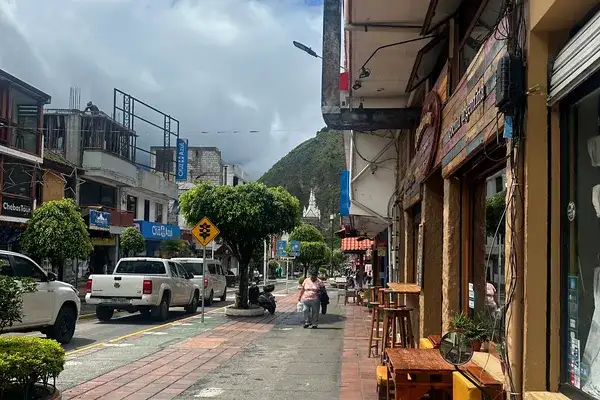
Baños de Agua Santa, usually just “Baños,” is a town of about 20,000 people in a green river valley at 1,820 meters (5,970 ft), where the Andes start dropping toward the Amazon. The name means “Baths of Holy Water,” after the thermal springs heated by the Tungurahua volcano above town. Volcano, waterfalls, jungle and hot water from below: that mix is why it became Ecuador’s adventure capital. It’s warm and cheap, and almost everything is a short walk or a $2 taxi ride away.
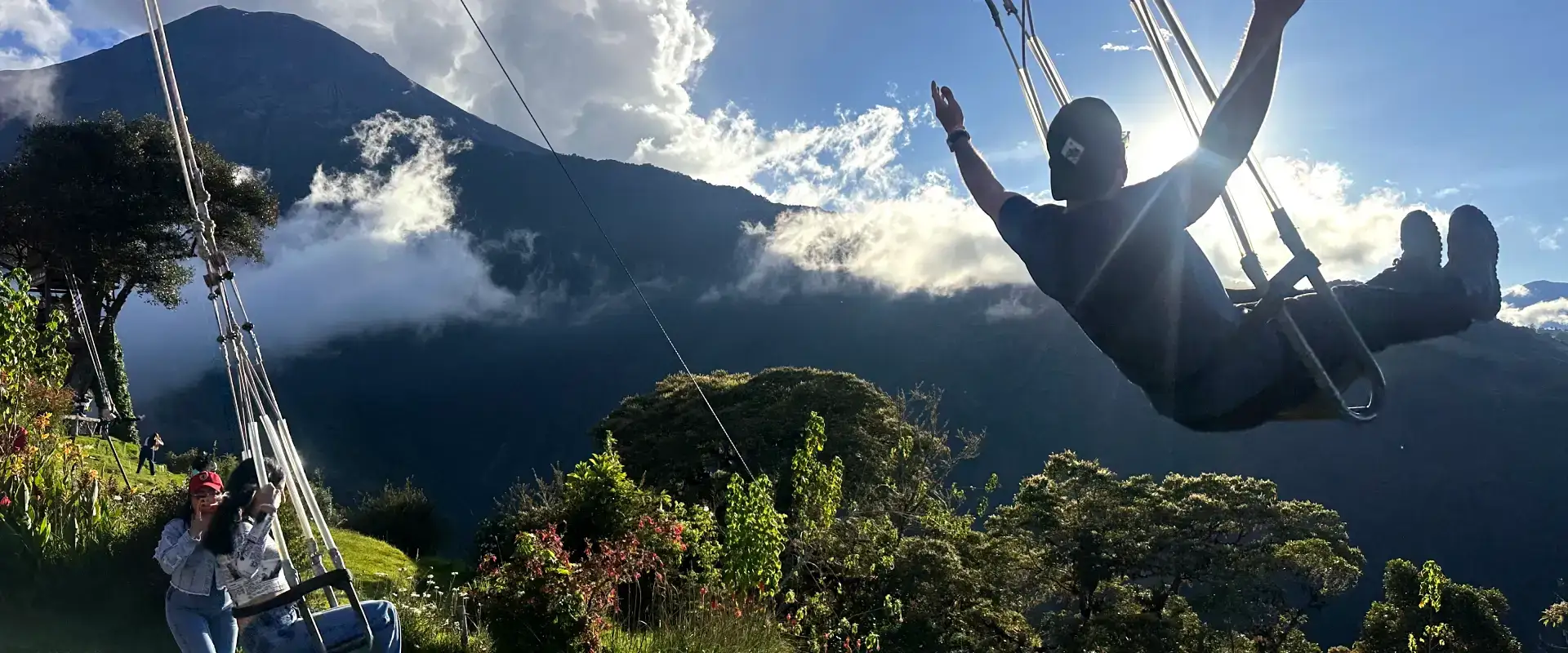
1. Swing at the end of the world at Casa del Árbol
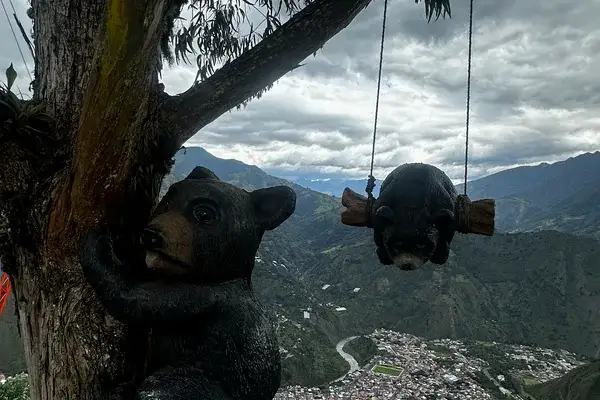
The famous one. Casa del Árbol is a treehouse on a ridge with a simple swing that sends you out over the valley, the “swing at the end of the world.” On a clear morning you can see Tungurahua in the background; on a cloudy one you swing straight into the mist, which I like just as much. It’s a 20-minute drive up from town (taxi or the tourist bus), entry is a couple of dollars, and there are now several swings and a small zipline, so the wait is short. Go early. By mid-morning the tour vans arrive.
2. Stand under the Pailón del Diablo waterfall
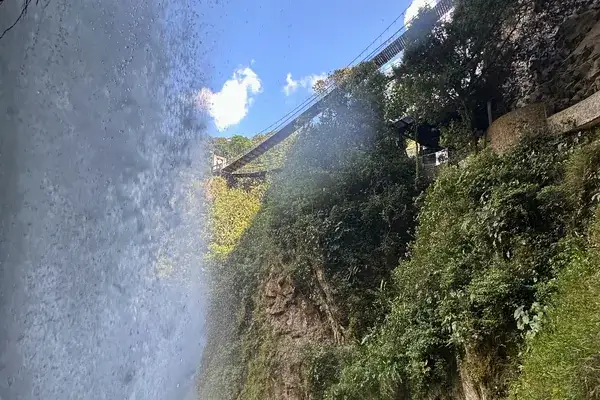
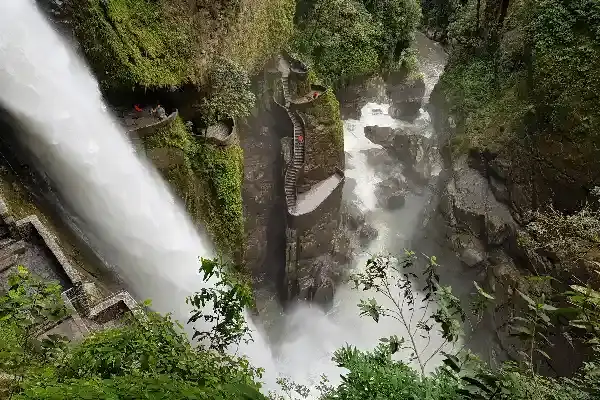
If you do one thing in Baños, make it this. The Pailón del Diablo (“Devil’s Cauldron”) drops about 80 meters into a narrow gorge, and you can get very close: a trail with stairs and suspension bridges ends on platforms where the spray soaks you in seconds. There are two entrances in Río Verde, each with its own small fee (about $3 for adults in 2025). It is loud and very wet. Wear shoes with grip, put your phone in a plastic bag and expect to get drenched. If you would rather someone else handled the logistics, tell us what you have in mind.
3. Cycle the Ruta de las Cascadas (waterfall route)
Start in Quito, end in the Galápagos
9 Day Ecuador and Galapagos Tour
Andes, Amazon and Santa Cruz
- 9 days
- Medium effort
From $1,990 per person
Ecuador
Cotopaxi, Quilotoa and Baños in 2 Days
Volcano, crater lake and Baños from Quito
- 2 days
- Easy
From $440 per person
The Ruta de las Cascadas is the road down the Pastaza canyon from Baños to Río Verde, about 18 to 20 km and mostly downhill. Rent a bike in town for $5 to $10 a day and stop wherever a waterfall catches your eye. The Baños chamber of tourism lists the main stops in this order:
- Agoyán, the first big fall, next to the hydroelectric dam just outside town.
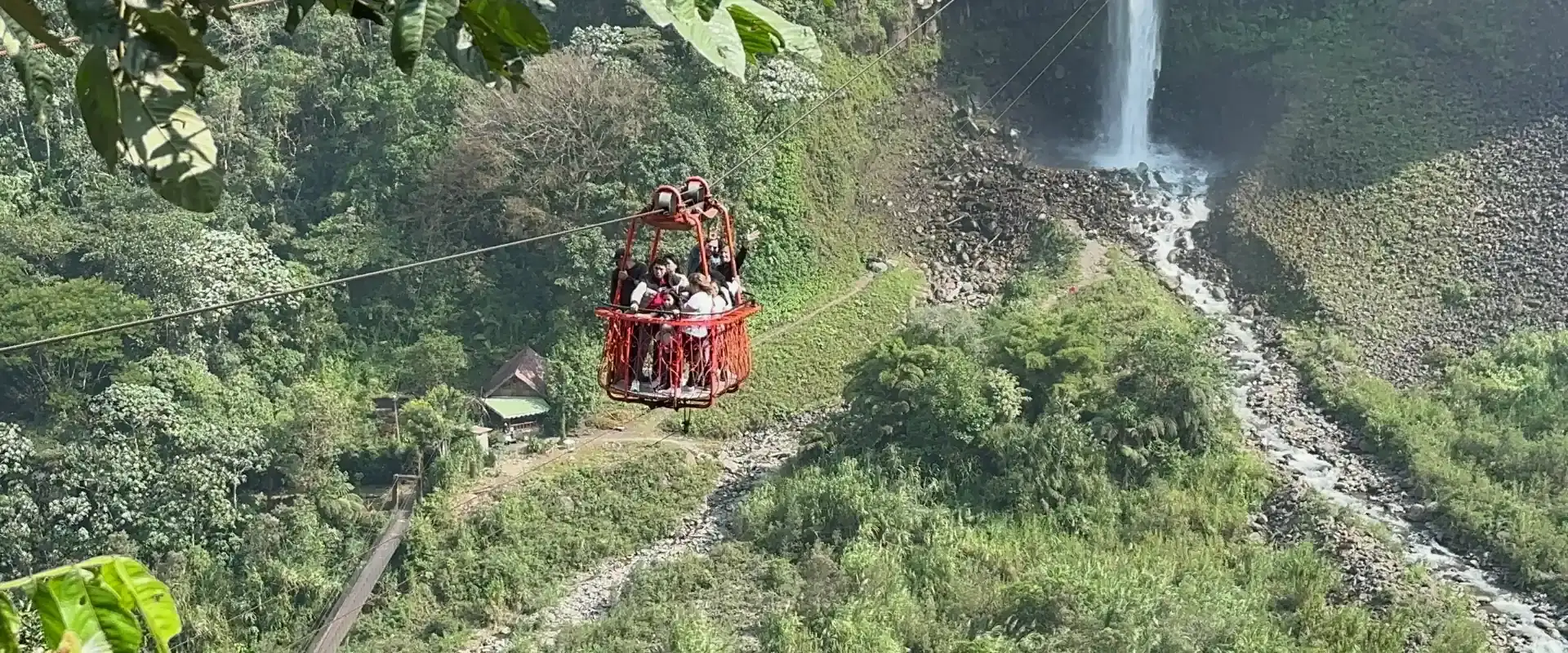
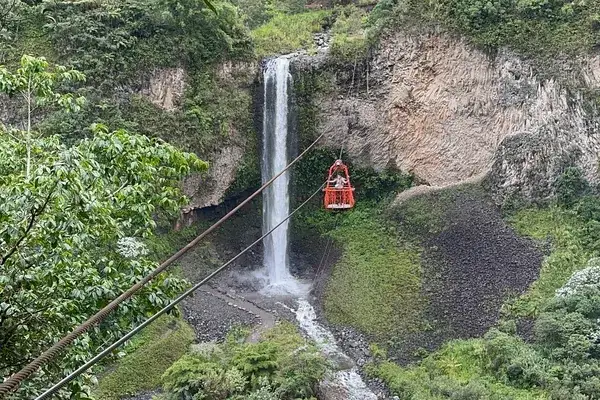
- Manto de la Novia (“Bride’s Veil”), where a tarabita (open cable car) crosses the gorge for $2.
- Pailón del Diablo, at Río Verde, the end of the ride for most people.
- El Rocío de Machay, a little further on, with a trail through the forest and far fewer visitors.
A few things I tell guests before they ride. Test the brakes in the shop, because the whole route is a descent. Wear the helmet. You share the road with trucks and buses, so ride single file on the shoulder, and start by 8 or 9 AM when there is less traffic. In Río Verde, pickup trucks wait to take riders and bikes back to Baños for a dollar or two, so nobody pedals back up. If cycling is not your thing, a chiva (open-sided party bus) does the same route with stops.
4. Ride the tarabitas (cable cars) across the gorge
Along the waterfall route you’ll pass several tarabitas, open cable cars that carry you across the Pastaza canyon on a wire. They look rickety and feel exciting, and for a couple of dollars you get a bird’s-eye view of the river and falls below. The one at Manto de la Novia is the classic. Skip it if heights bother you.
5. Soak in the Baños Ecuador hot springs
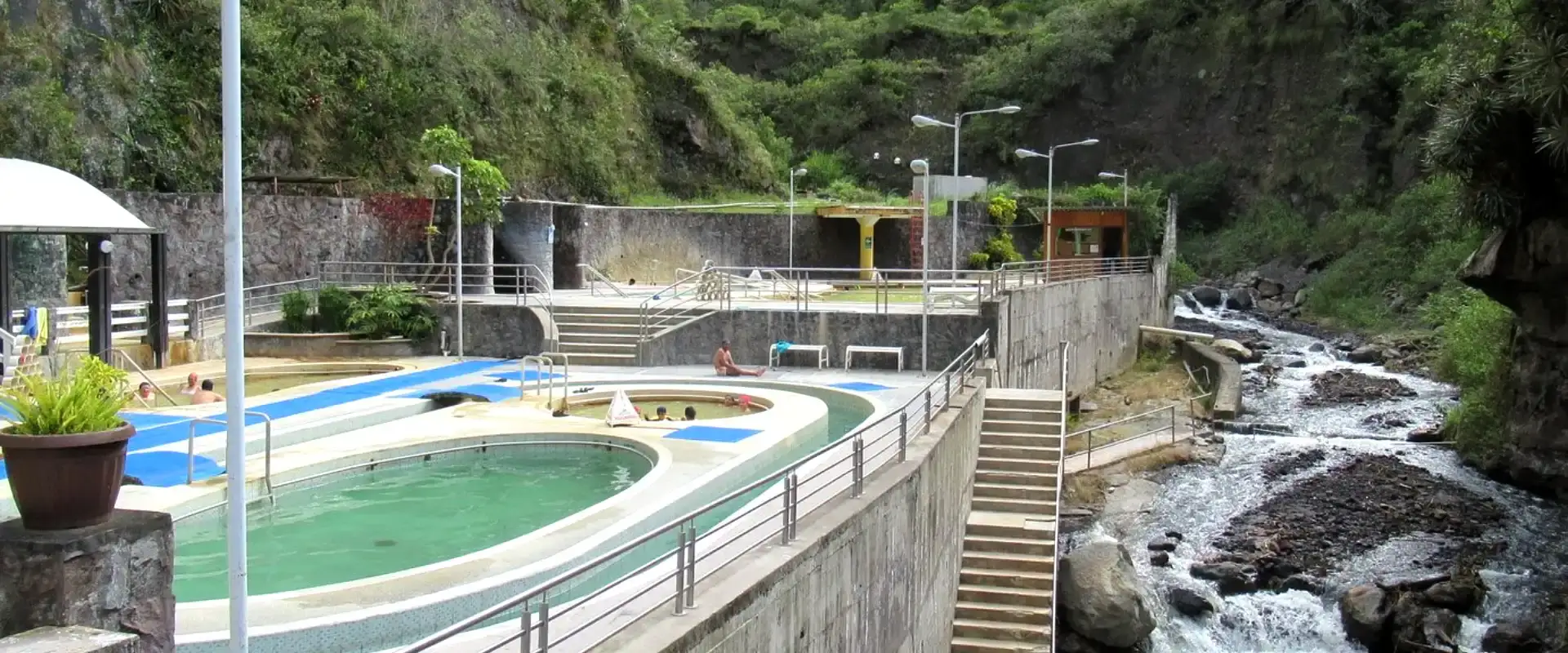
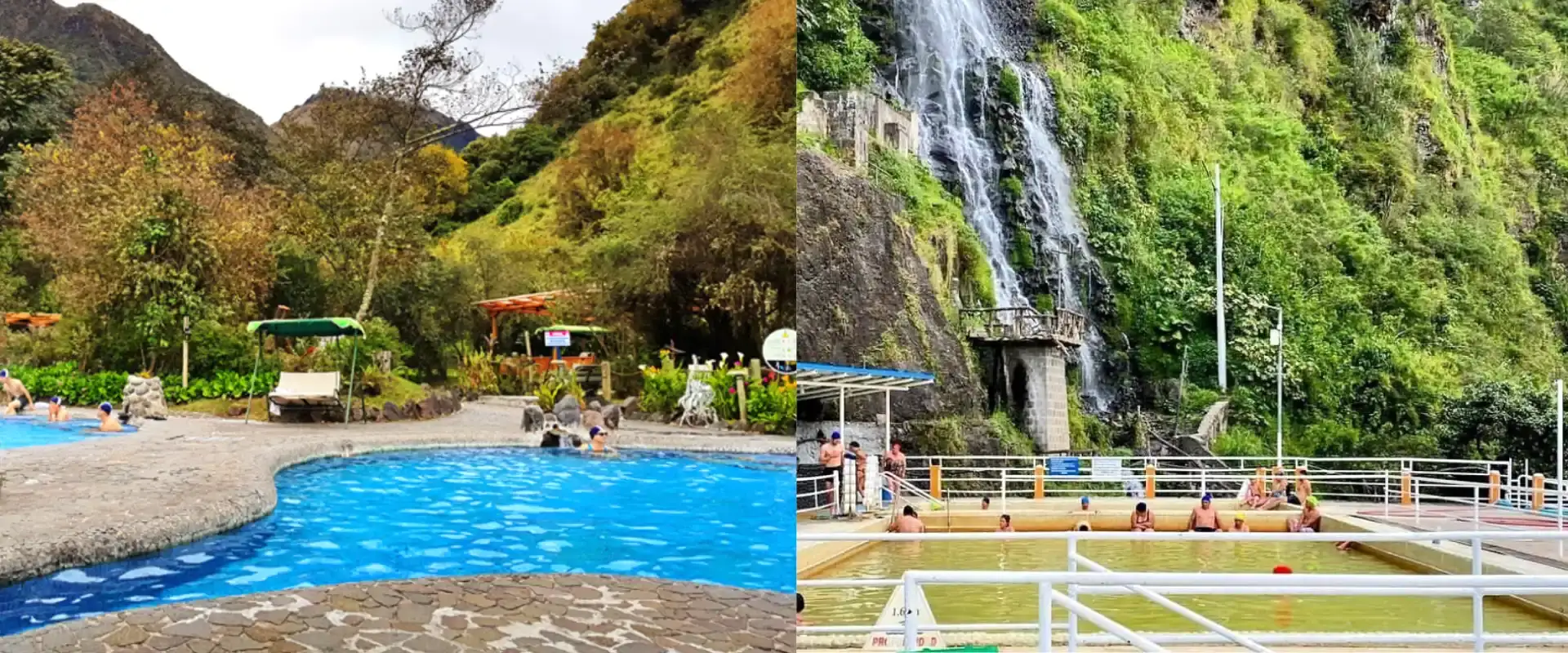
You can’t visit a town named “Holy Water Baths” and skip the water. The Baños Ecuador hot springs are volcanic thermal baths, and the best known is Termas de la Virgen, at the foot of the cliffs under a waterfall. The pools go from cool to almost too hot, and they are busiest after dark, when locals and travelers soak side by side under the lights. Bring a swimsuit, a swim cap (required) and $4 for entry. Our Baños hot springs guide compares the four public complexes.
6. Raft the Pastaza River
Baños is one of the best places in Ecuador for white-water rafting, and the Pastaza has warm-water Class III and IV rapids with jungle on both banks. Half-day trips leave from town with a guide, gear and transport included, and the standard runs need no experience. If rafting isn’t your thing, the same rivers feed canyoning (rappelling down waterfalls) and kayaking.
7. Watch Tungurahua volcano from the Bellavista cross
The whole town sits under Tungurahua, an active volcano that erupted on and off between 1999 and 2016. For the best view, hike up to the white Bellavista cross on the hillside, about 45 minutes of switchbacks from the center, or take a taxi if your legs are done. From the top you see red-roofed Baños below, the Pastaza valley winding east and the volcano’s cone straight ahead. Go for sunset.
8. Try the melcocha (taffy) pulled on the doorframes
Walk down Calle Maldonado and you’ll see people slapping ropes of golden sugarcane taffy against wooden pegs in their doorways. That’s melcocha, a chewy Baños specialty pulled by hand until it turns pale and glossy. Buy a fresh piece for a few cents, watch the technique and get a cup of jugo de caña (sugarcane juice) while you’re there.
9. Zipline and fly over the valley
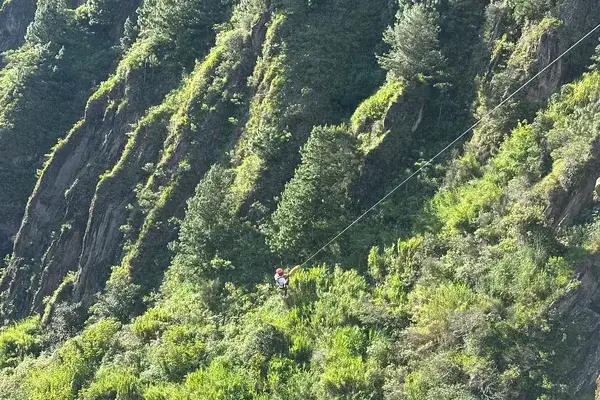
For a bigger rush than the swings, the canyons around Baños have long ziplines, some in the “superman” position where you fly face-down over the gorge. Operators cluster along the waterfall route. Prices are low by international standards. Pick an operator with visible harnesses and helmets and a busy morning queue.
10. Wander the Basílica and central market
When you need a slower hour, the Basílica de Nuestra Señora del Agua Santa anchors the town center. Its stone façade and painted panels tell the story of the “miracles” locals credit to the Virgin of Baños. A block away, the central market is where to eat like a local: llapingachos (potato patties) or a plate of hornado for two or three dollars, plus stalls of fruit you won’t recognize. It’s the calmest thing on this list.
More things to do in Baños beyond the highlights
Once you’ve seen the big sights, the extra things to do in Baños are where the town gets personal. Rent a quad or a buggy and drive the waterfall route yourself (you need a driver’s license). Book a day trip down to Puyo, an hour east, where the Andes meet the rainforest. Get a cheap massage; Baños is full of spas. Or take a café table on the main square and watch the town go by.
- Quad biking the waterfall route on your own schedule.
- A day trip to Puyo and the Amazon, an hour east.
- A massage after a day on the bike or the river.
- An easy morning walk to the San Martín zoo and the Inés María waterfall.
Where to eat in Baños
Baños eats cheaply. The best value is the almuerzo, the set lunch served from about noon to 2 PM: soup, a main plate with rice, juice and sometimes dessert, for a few dollars. Look for the comedor with a line of locals at 12:30. The Mercado Central has stalls with fritada, hornado and llapingachos, and it is where I take guests for their first lunch in town.
For dinner, two places have stayed popular for years and were still open in 2026:
| Place | What to order | Where | Price level |
|---|---|---|---|
| Café Hood | Pad Thai, curries, Buddha bowls; lots of vegetarian dishes | A quiet street near the Cascada de la Virgen | Moderate |
| Swiss Bistro | Cheese fondue, rösti, homemade bread | Luis A. Martínez and Eloy Alfaro | Higher than most of town |
| Honey Coffee & Tea | Coffee, chai, cakes; good wifi | Ambato and Pedro Vicente Maldonado, by the park | Moderate |
| Mercado Central | Almuerzo, fritada, hornado, fresh juices | Town center | Cheapest |
Street food fills the gaps: melcocha and jugo de caña on Calle Maldonado, and empanadas from the bakeries in the morning. Most comedores and street stalls take cash only. Tipping is not expected, but 10% at a sit-down restaurant is welcome. Restaurants open and close fast in a tourist town, so check the hours on the map before you walk over.
Is Baños, Ecuador safe?
Baños is one of the calmer places I work in. The U.S. State Department rates Ecuador as a whole at Level 2 (“exercise increased caution”), and its “do not travel” areas are on the coast, not in Tungurahua. What happens to travelers here is small stuff: a phone taken from a café table, a bag from a hostel dorm, a taxi that charges double. Keep your things with you, use the hostel locker and ask your hotel what a fair fare is before you get in a cab.
The bigger risk is the adventure itself. Before you pay for canyoning, rafting or a zipline, ask to see the helmets, harnesses and life jackets, and ask how long the guide has run that route. A real operator has an office in town and recent reviews on Google or TripAdvisor. A very low price usually means old equipment.
Then there is the volcano. Tungurahua’s eruptive period began in 1999; that October the town was evacuated, and residents came back on 5 January 2000. Activity dropped after 2016. The Instituto Geofísico monitors it constantly, and evacuation routes are signposted around town. Check the current alert before you travel, as you would anywhere near an active volcano. For the country picture, read our guide to whether Ecuador is safe.
How to get to Baños Ecuador from Quito
Getting to Baños Ecuador is easy. Buses leave Quito’s Quitumbe terminal, in the south of the city, throughout the day. The ride takes about 3 hours 15 minutes to 3.5 hours, and Cooperativa Baños lists the fare at $4.80. Our Baños day trip from Quito guide has the bus companies and departure times. If you’d rather skip the terminals, a guided route through the Avenue of the Volcanoes drops you at the door and adds Cotopaxi and the Quilotoa crater on the way. Once in Baños you won’t need a car: taxis, bikes and your own feet cover everything.
Best time to visit Baños
Baños works all year. It’s warmer and lower than Quito, so it rarely gets cold. Expect some rain in any month (this is the edge of the cloud forest), with the drier stretches usually from June to September and, more briefly, in December and January. Weekends and Ecuadorian holidays fill the hotels and the hot springs with domestic tourists, so come midweek for the quiet version. Pack layers, a rain shell and shoes you don’t mind soaking at the Pailón del Diablo.
Is Baños, Ecuador worth visiting?
Yes. In two or three days you can swing over a canyon at Casa del Árbol, get soaked at the Pailón del Diablo waterfall, cycle the waterfall route and soak in volcanic hot springs, all from a small, walkable town about three and a half hours from Quito. It’s affordable and warm, and most people want one more day.
What is Baños, Ecuador known for?
Baños de Agua Santa is called Ecuador’s adventure capital, and it is known for its volcanic thermal baths (the “holy water” in its name). People come for the Casa del Árbol swing, the Pailón del Diablo waterfall, the Ruta de las Cascadas, rafting on the Pastaza River and the view of Tungurahua volcano above town.
Is there a ‘devil’s cauldron’ waterfall in Ecuador?
Yes. The Pailón del Diablo, “Devil’s Cauldron” in English, is a waterfall of about 80 meters near Río Verde on the Ruta de las Cascadas. Trails, stairs and suspension bridges take you close to the base, and the spray will soak you. It is the most popular stop in Baños.
How many days do you need in Baños?
Two days covers the swing, the Pailón del Diablo, the waterfall route and a soak in the hot springs. With three days you can add rafting, canyoning or a zipline, and a day trip to Puyo in the Amazon without rushing.
Is Baños, Ecuador safe for tourists?
Baños is one of the calmer towns in Ecuador. The usual problems are petty theft (a phone left on a café table, a bag in a hostel dorm) and taxis that overcharge. Book adventure activities with operators that show you their gear and permits. Tungurahua volcano is monitored around the clock by Ecuador’s Instituto Geofísico.
How long is the Ruta de las Cascadas?
About 18 to 20 km from Baños to Río Verde, where the Pailón del Diablo is. It is mostly downhill. With stops it takes most of a morning by bike, and you come back by pickup truck or bus.
Where should I eat in Baños?
For a cheap lunch, the set almuerzo at the Mercado Central or any busy comedor. For dinner, Café Hood (Asian and vegetarian) and Swiss Bistro (fondue) are two long-running favorites. Try melcocha, the sugarcane taffy pulled in doorways on the main streets.
Pair Baños with the Galápagos
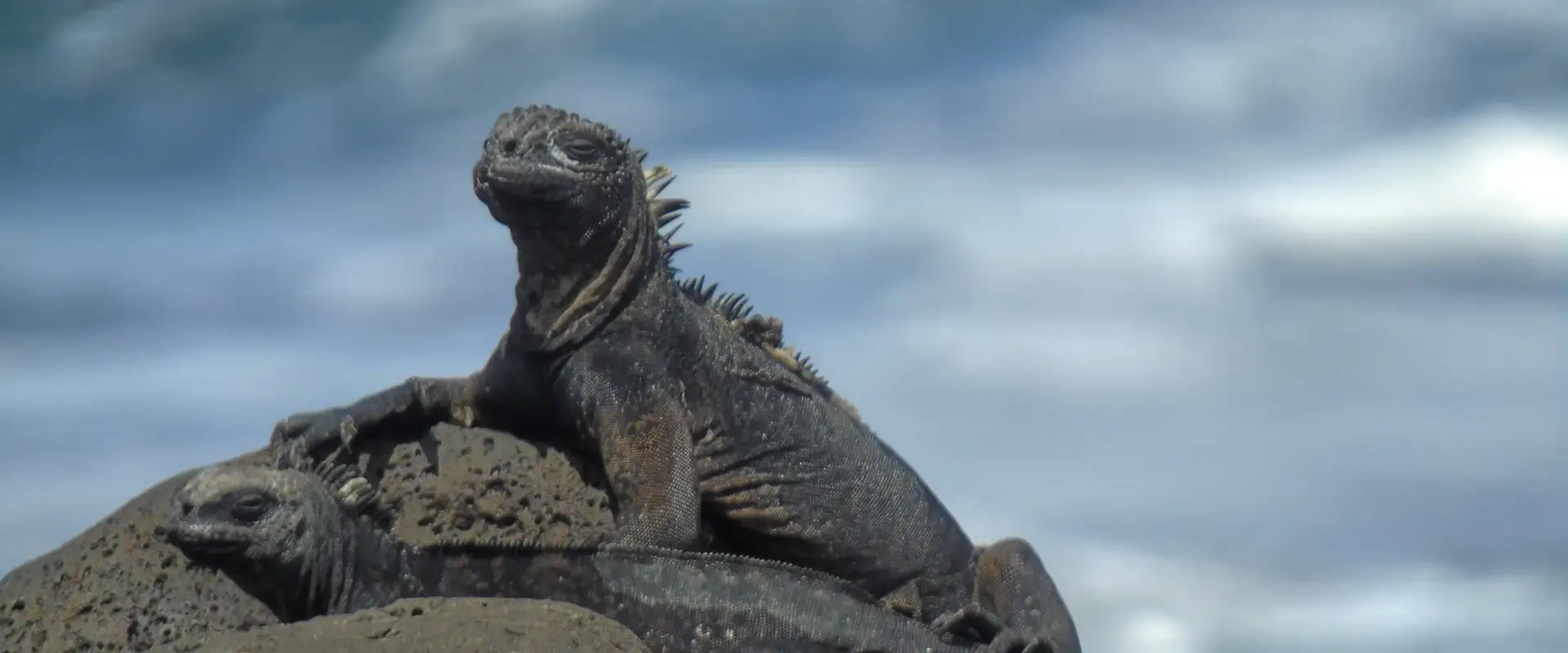
Here’s what many first-timers miss: Baños is a good warm-up. After a few days of waterfalls and hot springs on the mainland, the Galápagos is the obvious next step, and easier to add than people assume. If you’re already flying into Quito for Baños, a multi-day island package fits on the end of the trip.
The bottom line on Baños
For a town this small, the list of things to do in Baños, Ecuador is long, and that is the appeal. Give it two days and you’ll leave happy; give it three and you’ll start planning a return. Do the hot springs, the swing and the Pailón del Diablo first, then let the town fill in the rest. When you want to turn Baños into a full Ecuador trip, write to us. We’re locals and we’ll help you put it together, mainland and islands both.
Keep reading
 Baños Day Trip from Quito – Waterfalls, Adventure & the Famous SwingPlanning a banos day trip from quito? Here is how to get there, which waterfalls to see, what the famous swing is like and a timed plan for the day.
 Banos Hot Springs: 5 Thermal Pools in Ecuador’s Adventure TownBanos hot springs in Ecuador: the four public pools ($4 entry), hours, which one to pick, the Luna Volcán spa, what to pack and how many days to plan.
 Papallacta vs Banos Hot Springs: Ecuador’s Two Best ComparedPapallacta vs Banos hot springs, honestly compared: water, prices, travel time from Quito, and which one fits the trip you are planning.