
Ecuador Festivals: How to Plan a Trip Around One (2026-2027 Dates)
Ecuador festivals for travelers: Inti Raymi, Mama Negra, Carnival in Guaranda, Fiestas de Quito and Cuenca's Christmas parade, with dates and bases.

the Quito Trips team, local guides in QuitoUpdated · 8 min read
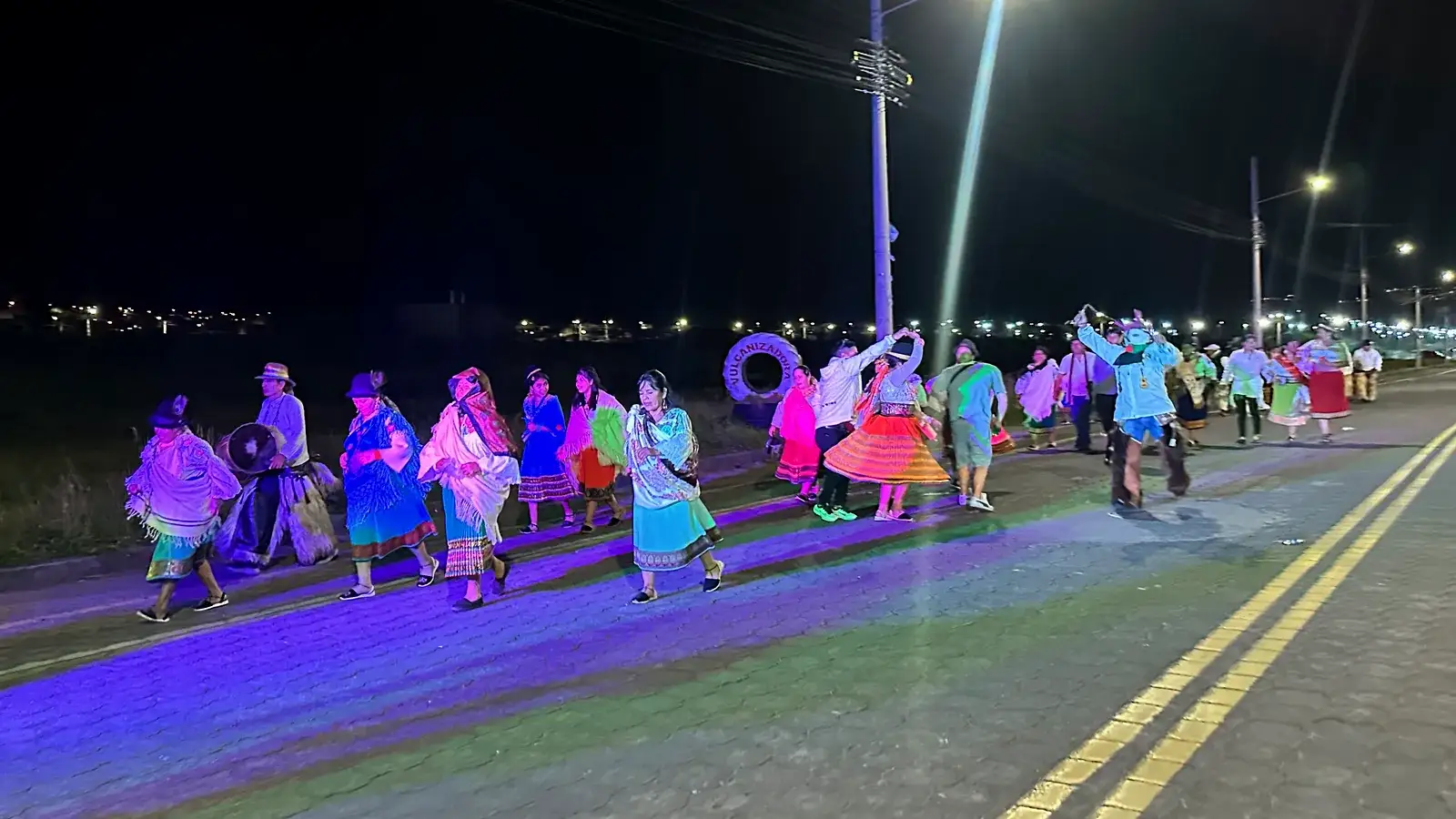
Ecuador festivals are mostly free street parties, and the towns run them themselves. That makes them easy to join and hard to plan, because many dates are set by the municipality a few weeks ahead. This guide covers the festivals worth building a trip around, with the next confirmed or calculable dates, where to sleep, and how to get there from Quito.
Two rules before you pick dates. Movable festivals hang on Easter: in 2027 Easter Sunday is March 28, so Carnival is February 8-9, Good Friday is March 26 and Corpus Christi is May 27. Town festivals (Yamor, Mama Negra in November) publish their programs on municipal social media a few weeks out, so treat any date for them as a pattern and confirm the week before.
Ecuador festivals calendar for travelers
| Festival | Town | Next dates | Base and travel time from Quito |
|---|---|---|---|
| Mama Negra (civic edition) | Latacunga | Around November 11, 2026 (date set by the municipality) | Latacunga, about 2 hours by bus |
| Día de los Difuntos | Nationwide | November 2, 2026 (holiday Mon 2 and Tue 3) | Anywhere; Quito bakeries sell the bread and drink |
| Fiestas de Quito | Quito | The week before December 6, 2026; local day off Monday December 7 | Old Town or La Floresta |
| Pase del Niño Viajero | Cuenca | December 24, every year | Cuenca, 55-minute flight |
| Año Viejo | Nationwide | December 31, at midnight | Any neighborhood |
| Diablada Pillareña | Píllaro | January 1-6, 2027 | Baños or Ambato |
| Carnival | Guaranda, Ambato | February 8-9, 2027 (local programs start earlier) | Guaranda or Ambato |
| Holy Week | Quito | Good Friday March 26, 2027 | Quito Old Town |
| Inti Raymi | Otavalo, Cotacachi, Cayambe | From June 21, 2027; Otavalo plaza dance usually June 25-27 | Otavalo, about 2 hours by bus |
| Yamor | Otavalo | Early September (2026 edition: September 4-13) | Otavalo or Cotacachi |
| Mama Negra de la Merced | Latacunga | Around September 23-24 (2026 parades: September 22-23) | Latacunga |
The national holiday dates for 2026 come from the Vice Ministry of Tourism calendar as reported by El Comercio. The 2027 dates for Carnival, Good Friday and Corpus come from Easter; the official 2027 holiday calendar had not been published when we wrote this.
Inti Raymi in Otavalo: the June solstice
Inti Raymi is the Kichwa festival of the sun, held at the June solstice to thank the sun and the earth for the harvest. Around Otavalo and Cotacachi, groups of dancers called sanjuanes move from community to community for days, stamping in circles to flutes and guitars, led by the Aya Uma, a figure in a two-faced mask. The high point is the toma de la plaza, when the communities dance into the town square. In Otavalo it happens at San Juan Capilla, and in recent years it has fallen on June 25 to 27 (El Comercio).
What to expect: this is a community ceremony that tolerates visitors, not a show. Ask before photographing dancers up close, and stay on the edges when the groups enter the plaza; in Cotacachi the meeting of rival communities has turned into fights in past years.
Where to stay and how to get there: sleep in Otavalo, about 95 km and two hours north of Quito. Buses leave Quito's Carcelén terminal about every 15 minutes for around $2.50. If the dates line up with a Saturday, you also get the full Otavalo market.
Otavalo Market and Mindo Cloud Forest: 3 Days
September: harvest festivals in the northern and central Andes
September is the busiest festival month in the highlands, as the corn harvest ends. Otavalo's Yamor had its 74th edition from September 4 to 13, 2026 (Ecuraíces). It opens with an evening parade down calle Bolívar and serves chicha del yamor, a fermented drink brewed from seven kinds of corn. Nearby Cotacachi runs its Fiesta de la Jora, another corn-beer festival, which in 2026 went from September 11 to October 11 on a smaller budget than usual.
Two hours south of Quito, Latacunga holds the first of its two Mama Negra festivals. The Mama Negra is played by a man in black face paint on horseback, carrying a doll and spraying the crowd with milk, followed by the Angel of the Star, the Moorish King, the Captain and hundreds of dancers. The September edition belongs to the devotees of the Virgen de la Merced, whose feast day is September 24; in 2026 the comparsas paraded on September 22 and 23. Before that come the jochas, evening gatherings where the main characters collect contributions for the party, listed each year on the official Mama Negra site of the Latacunga municipality.
Where to stay: Latacunga has plenty of simple hotels and is the base most hikers already use for the Quilotoa Loop. Buses run from Quito's Quitumbe terminal in about two hours. Pair the parade with Cotopaxi National Park, half an hour east of town.
Cotopaxi, Quilotoa and Baños Tour: 3 Days from Quito
Mama Negra in November and Día de los Difuntos
Latacunga repeats the Mama Negra in November for its independence day, November 11, 1820. This one is organized by the municipality, so it is bigger and more formal, with school and neighborhood delegations. The exact parade day is posted on the official site ahead of time; in 2025 it fell on the weekend of November 8 and 9.
Ecuador's Day of the Dead is November 2. Families visit cemeteries and drink colada morada, a thick hot drink of black-corn flour, blackberries, mortiño berries and spices, with guaguas de pan, sweet bread shaped like swaddled babies. You will find both in every Quito bakery and market from late October. In 2026 the holiday runs Monday November 2 and Tuesday November 3 (Cuenca's independence day), so expect full buses and hotels across the highlands that weekend (Expreso). For what else to eat in the mountains, see our guide to Sierra food.
Fiestas de Quito in December
Quito celebrates its Spanish founding on December 6, 1534 with parades, free concerts, chivas (open party buses with a band on board) and canelazo, a hot cinnamon and sugarcane drink. The party builds through late November and peaks in the days before the 6th. It is a local holiday only for Quito; in 2026 the 6th is a Sunday and the day off moves to Monday December 7 (Vistazo).
Where to stay: the Old Town puts you next to the street parties and La Ronda, while La Floresta and La Mariscal are quieter at night. Our Quito neighborhood guide compares them, and Is Quito safe? covers the night precautions that matter more during festival weeks.
Christmas Eve in Cuenca: the children's parade
Cuenca's Christmas Eve parade is the largest in Ecuador and runs from morning until mid-afternoon. Children dressed as shepherds and angels ride horses and decorated cars loaded with fruit, bread and roast pig, escorting the Niño Viajero image through the historic center. In 2025 the Archdiocese started with Mass in the cathedral at 8:30, and the parade left San Sebastián at 10:00 along calle Bolívar to the Carmen de la Asunción monastery, with around 100,000 people in the streets (Vistazo). Get a spot on calle Bolívar before 9:00.
How to get there: fly. The Quito to Cuenca flight takes about 55 minutes and the airport is 8 minutes from the center, against nine hours by bus (details in Quito to Cuenca). Book a room in the historic center early for December 23 and 24; our Cuenca hotels guide lists options by neighborhood, and things to do in Cuenca fills the days around it.
7 Day Ecuador Tour: Quito to Cuenca by the Avenue of the Volcanoes
New Year: burning the old year, then the devils of Píllaro
On December 31 every neighborhood builds an año viejo, a life-size dummy of paper, sawdust and old clothes, often made to look like a politician or a celebrity of the year, and burns it at midnight. During the day, men dressed as widows stop cars with a rope and ask for coins for the old year's funeral. Carry small change and play along.
The next morning, the Diablada Pillareña starts. From January 1 to 6, groups of devils in horned masks dance from the villages into the center of Píllaro, in Tungurahua province, each group led by a cabecilla who pays for it. The Diablada has been national intangible heritage since 2009, and the town publishes a route of about two kilometers through its main streets (Teleamazonas). Píllaro has few rooms; sleep in Ambato or in Baños, three to three and a half hours from Quito by bus, and see things to do in Baños for the rest of the stay.
Carnival: water fights in Guaranda, flowers in Ambato
Ecuadorian Carnival means water, flour, foam and eggs thrown at anyone in range, so wear clothes you can ruin and keep your phone in a sealed bag. Guaranda's Carnival, national heritage since 2002, is the most traditional one: weeks of comparsas, coplas (sung verses) and pájaro azul, a local cane spirit. In 2026 the program opened with the arrival of the Taita Carnaval on February 6, ten days before the holiday (El Diario).
Ambato does a drier version, the Fiesta de la Fruta y de las Flores, started after the 1949 earthquake. Its 75th edition in 2026 had a Sunday parade of 19 flower-and-fruit floats on February 15 (Primicias). Both towns sit on the Avenue of the Volcanoes, and Ambato is the easier base.
Planning tips for festival trips
Book rooms early for the small towns. Otavalo, Latacunga, Guaranda and Píllaro have limited hotels, and on festival weekends they fill with Ecuadorian visitors first. Bring cash in small bills, because food stalls and plaza vendors rarely take cards.
Watch the national holidays. Carnival, Holy Week and the November long weekend send half the country onto the roads, and buses from Quito's Quitumbe and Carcelén terminals sell out on the first day. Travel the day before, or early in the morning.
Mind the altitude and the sun. Most of these festivals are between 2,500 and 2,900 meters, you will be standing outside for hours, and the equatorial sun burns fast even when it feels cool. For month-by-month weather, see the best time to visit Ecuador.
We build trips around festival dates, so you see the parade and still reach the volcanoes or the Galápagos in the same week.
Plan your trip around a festival
Frequently asked questions
What is the biggest festival in Ecuador?
Carnival draws the most people, because it is a national holiday and the whole country travels. Guaranda, in Bolívar province, runs the best-known Carnival, with comparsas, water fights and its own sugarcane liquor. For indigenous culture, Inti Raymi around Otavalo in late June is the one to see, and for a city party, Fiestas de Quito in early December.
When is Carnival in Ecuador in 2027?
Monday February 8 and Tuesday February 9, 2027, which are national holidays. Carnival Tuesday always falls 47 days before Easter Sunday, and Easter 2027 is March 28. Expect four days of heavy domestic travel, from Saturday February 6, and book buses and hotels early.
When does the Inti Raymi festival take place?
It starts with the June solstice on June 21 and runs for about a week in Imbabura province. In Otavalo, the communities' dance into the plaza at San Juan Capilla has recently taken place on June 25 to 27, and in Cayambe the celebrations run into San Pedro on June 29.
Are festivals in Ecuador safe for tourists?
The big ones are generally safe in daylight, with the usual crowd precautions: phone in a front pocket, little cash, no valuables in a backpack. At Carnival you will get soaked with water and foam, so dress for it. At Inti Raymi in Otavalo and Cotacachi the plaza dance can turn rough between community groups, so watch from the edges.
What is the best month to visit Ecuador for festivals?
Late June for Inti Raymi in the northern Andes, or September, when Otavalo's Yamor, Cotacachi's Jora festival and Latacunga's Mama Negra overlap in the same few weeks. December works if you want Quito's foundation party on the 6th and Cuenca's Pase del Niño on the 24th.
Do I need a tour to see an Ecuador festival?
No. Most festivals are free street events, and Otavalo, Latacunga and Cuenca are easy to reach by bus or flight from Quito. A driver-guide helps when you want to combine the festival with places that are hard to reach by bus, like Cotopaxi or the Quilotoa crater, or when you only have a day.